A Practical Guide to Finding a Specialized Branding Agency - Learn about branding agency for arts organizations
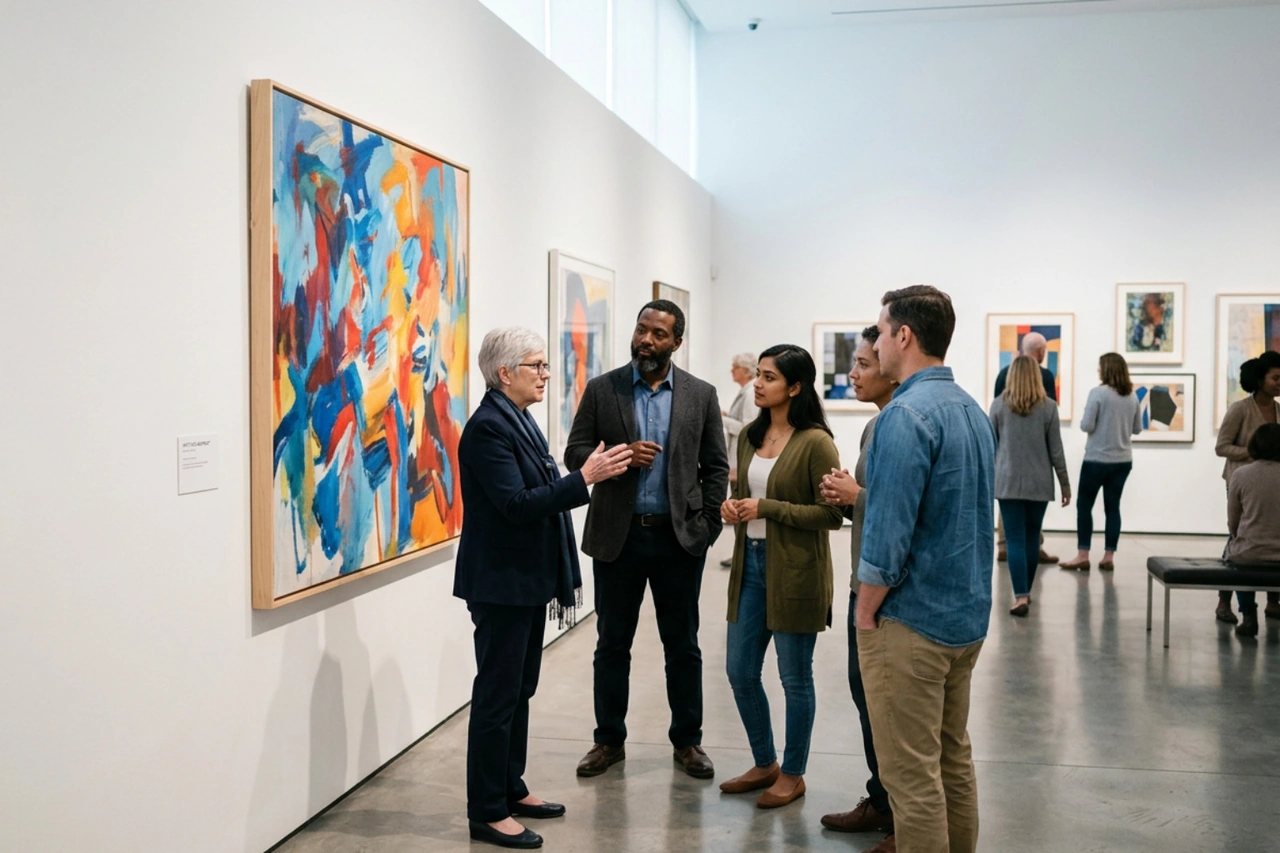
.svg)


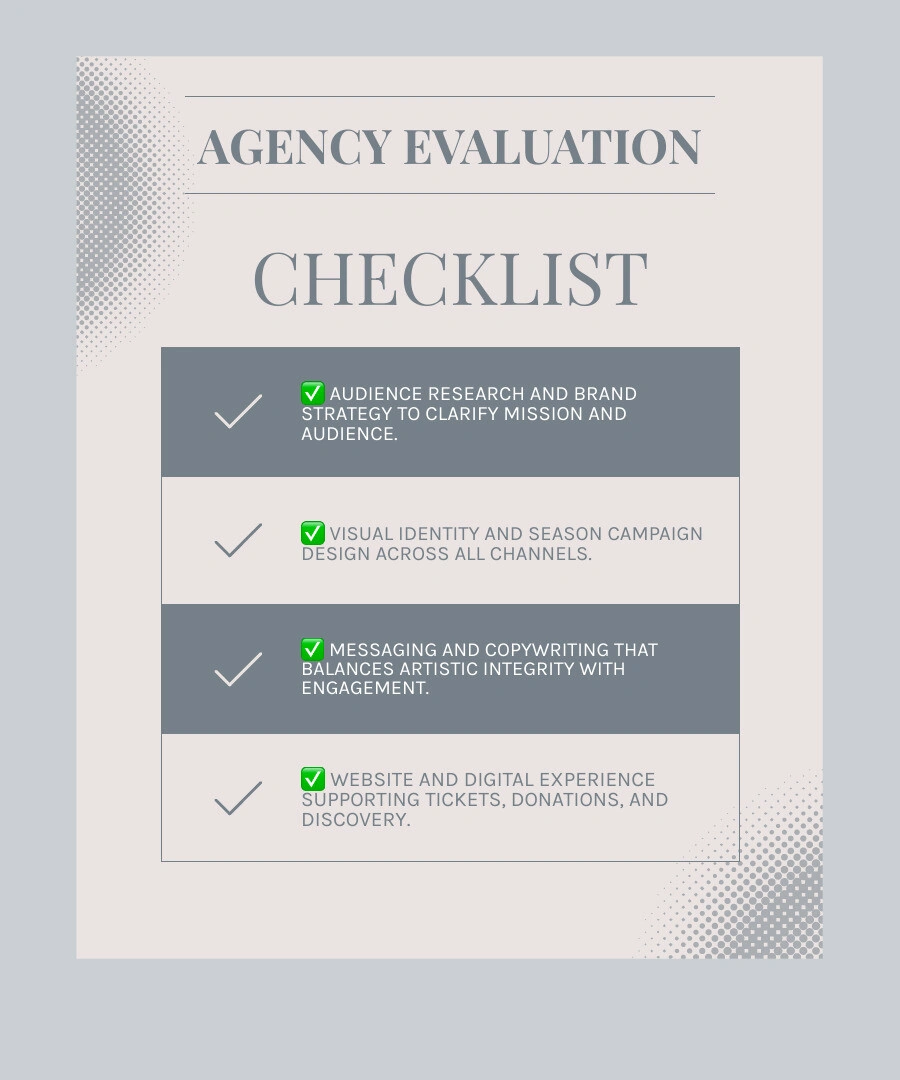
A branding agency for arts organizations should bring together cultural insight, clear strategy, strong visual design, and practical digital skills. The best fit understands that a theater, museum, ballet company, gallery, or festival must speak to many groups at once: artists, audiences, members, donors, boards, funders, and the local community.
Look for an agency that can provide:
Arts brands face a special challenge. Their work must retain its creative point of view while also helping people decide to attend, donate, subscribe, visit, or advocate. A clear brand gives every audience a consistent reason to care. As we say at Social Design House, clarity is a gift.
I am Ben Visser, founder of Social Design House, a Charlotte-based creative studio that has spent 16 years working as a fractional creative team. Our work as a branding agency for arts organizations draws on brand strategy and identity, Webflow and WordPress websites, content, performance marketing, and our AI Brand Framework, all built to help growing teams find their sweet spot.
Managing a cultural institution involves a delicate mix of creative passion and operational demands. Performing arts groups, museums, and community art centers do not sell standard commercial products. They offer meaningful experiences, cultural commentary, and community connection. This distinct role creates a very specific set of branding requirements.
Arts organizations must connect with wide audiences, from long-time supporters to first-time venue visitors. They also rely on support from city arts councils, corporate grants, and regional community creative initiatives. A specialized creative agency helps build a unified presence that reaches all these groups without confusing the core artistic mission.
The dynamic between creative directors and marketing teams requires shared vision. Artistic directors push boundaries, curate daring exhibitions, and stage contemporary performances. Marketing teams need to fill seats, sell annual subscriptions, and grow membership lists.
When a brand leaning too far toward abstract concepts loses potential patrons, ticket sales drop. When a brand becomes too generic, it loses its artistic edge. A specialized partner builds visual identities that honor the repertoire while creating clear invitations for new patrons. Strong Brand Strategy establishes visual guidelines and narrative rules so seasonal promotions can feel fresh while staying true to the main brand identity.
Arts groups answer to multiple leaders, including artistic staff, executive leadership, boards of directors, major donors, and public grantors. Each group holds different expectations:
Aligning these priorities requires strategic consensus building. Working with a dedicated partner helps institutions establish unified messaging, ensuring that campaigns speak clearly to patrons while reinforcing efforts to improve donor communication and fundraising initiatives.
Working with a specialized agency gives cultural groups a clear roadmap for long-term growth. Rather than creating isolated graphic pieces, a creative team builds a flexible system designed to work across printed programs, environmental graphics, and digital channels.
Comprehensive branding goes beyond a single logo update. Arts institutions need an adaptable visual and verbal language that scales across active performance calendars and exhibition schedules. Core services include:
Preserving artistic integrity requires listening closely to creative leaders. Rather than flattening an institution's visual style into standard corporate templates, experienced designers build story-driven systems.
By mapping out the complete patron journey, from discovering an event on social media to buying a ticket and entering the gallery, we create touchpoints that feel warm, engaging, and clear. For a closer look at our methodology, see our overview on how we approach branding for nonprofits.
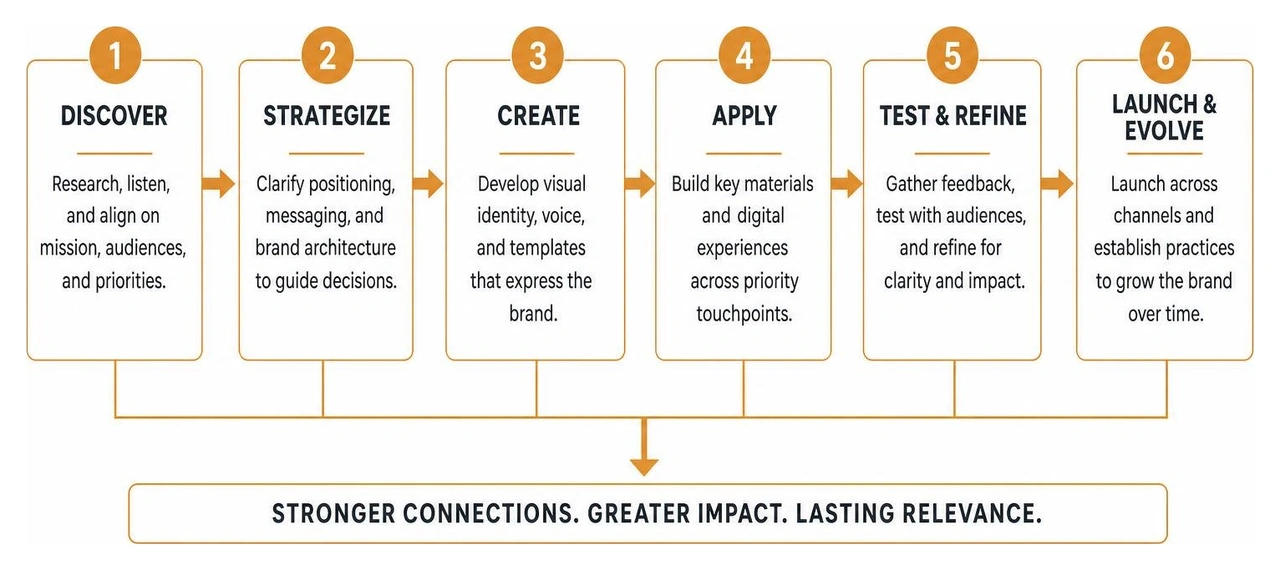
Updating a brand requires thoughtful timing, clear communication, and organized implementation. Most comprehensive arts rebranding projects take between 3 and 6 months. This timeline provides enough space for deep audience research, stakeholder consensus, visual testing, and asset delivery before a new season launch.
A typical rebranding initiative moves through structured phases designed to keep the project on schedule:
An arts organization's website serves as its main box office, gallery door, and donor reception desk. A modern digital experience must balance expressive creative branding with reliable technical functionality.
Modern arts websites need interactive event calendars, mobile-friendly seating charts, quick checkout flows, and seamless donation paths. Reviewing Museum Website Design Inspiration shows how thoughtful interface design highlights seasonal programming while making visitor planning effortless. Incorporating customized tools ensures your team can easily manage event entries while checking if you can build websites with donation functionality.
Selecting the right design partner requires evaluating cultural knowledge, technical capabilities, and workflow habits. Reviewing client histories, creative portfolios, and regional resources like Top Branding Agencies in Charlotte - Aug 2026 Rankings | Clutch.co helps narrow down qualified partners.
When reviewing candidate agencies, institutions should watch out for common project pitfalls:
Our work on projects like The Mint Museum highlights how modern visual strategies honor heritage while reaching fresh audiences. Institutions considering an update can learn more about how we redesign an existing nonprofit brand or website.
A comprehensive rebranding initiative typically spans 3 to 6 months. This timeline allows adequate time for stakeholder interviews, strategy creation, visual identity exploration, board presentations, and digital development. Planning your project around annual season announcements or major facility openings ensures maximum marketing impact.
Success is evaluated using both quantitative metrics and qualitative feedback. Core performance indicators include:
Audience research forms the foundation of a successful brand strategy. Conducting patron surveys, visitor focus groups, and ticket holder interviews helps reveal how people perceive the institution. Research highlights why regular attendees keep returning, what keeps new visitors from buying tickets, and how community members interact with regional arts programming. These insights guide design choices and messaging rules so your brand connects with diverse audiences.
Finding the right creative partner makes every marketing campaign, donor presentation, and seasonal announcement simpler and more effective. At Social Design House, we are a Charlotte-based 10-person creative studio with 16 years of experience operating as a fractional creative team. We bring genuine passion to helping cultural groups find their sweet spot.
Our core services span brand identity and strategy, web design and development on Webflow and WordPress, content creation and copywriting, and performance marketing. By using our AI Brand Framework, we help cultural leaders turn complex organizational goals into clear visual stories that fill seats, grow donor support, and strengthen community ties. Explore our work with Arts Museums and reach out to our team when you are ready to discuss your next season campaign. Excited to continue building memorable brand experiences together!