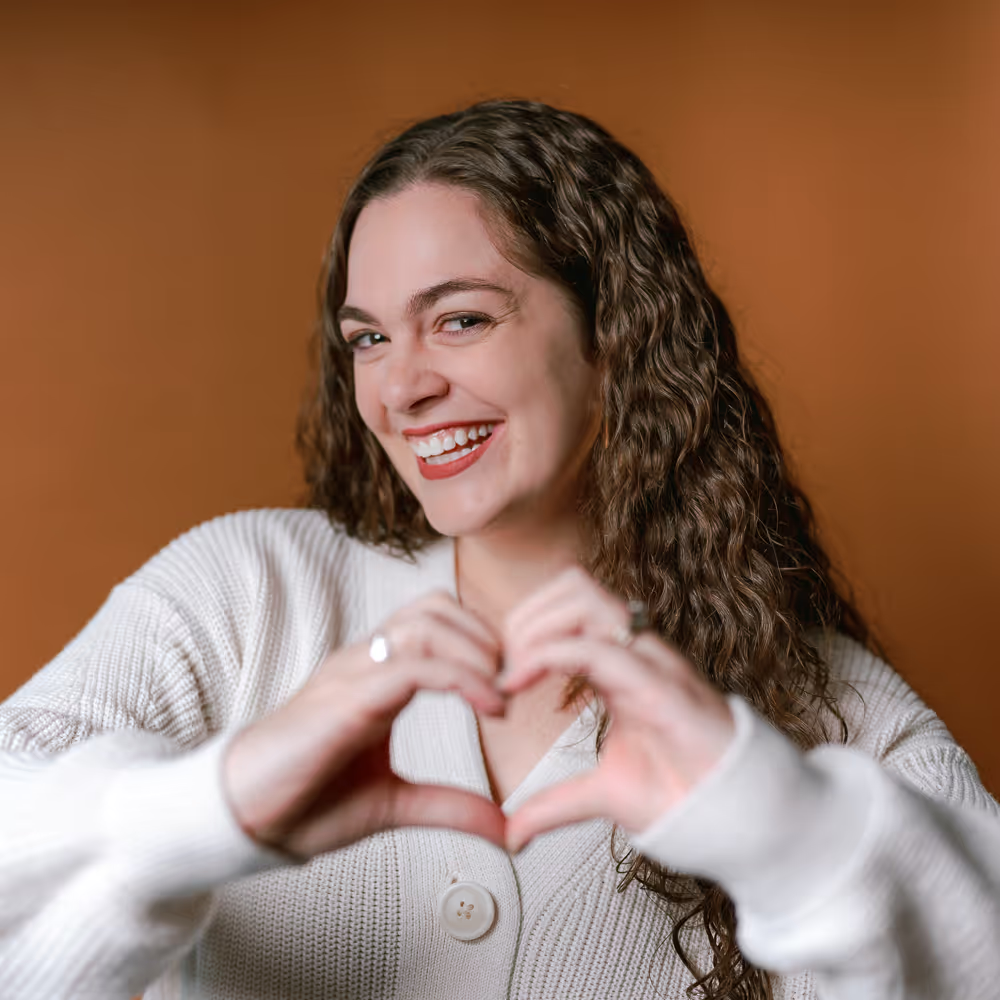
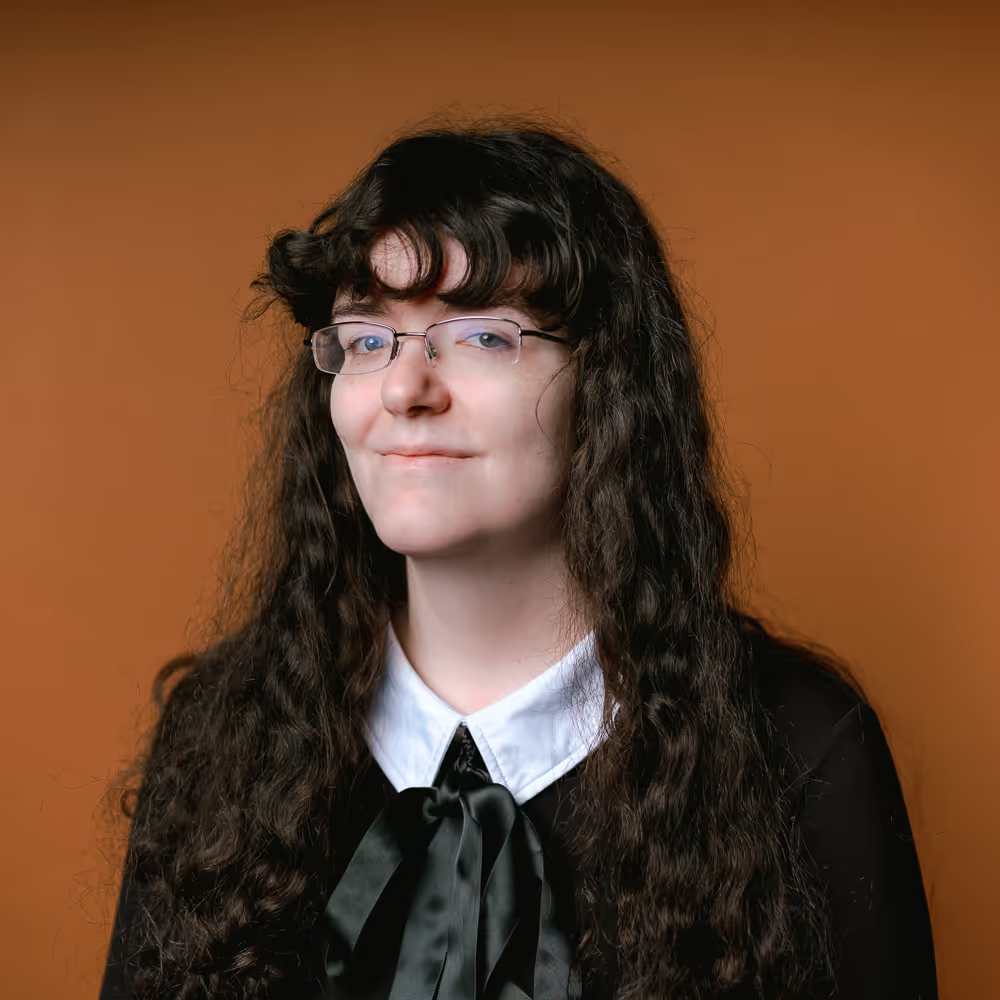
In this episode of Inside Scoop, we sit down with Lauren Marquess, Director of Digital Marketing at Foundry Commercial, to talk about what it looks like to wear every creative hat inside a growing commercial real estate company, and why the best marketing inspiration often comes from outside your own industry.

.svg)


→ Why Foundry Commercial treats marketing as its own service line
→ How to stay on top of trends when you're managing video, social, web, and email
→ Real ways AI is showing up in day-to-day creative workflows
→ Why authenticity and simplicity are winning over polished, high-production content
→ What's changing with search, AEO, and how users find commercial real estate online
Lauren has been with Foundry Commercial for 11 years, growing from a marketing coordinator into a corporate digital marketing role that spans videography, social media, website management, and everything in between. She also runs a wedding videography business on the side because one creative outlet is never quite enough.
Ben (00:02)
All right, welcome to Inside Scoop, volume three. I'm here with Lauren Marquess. She is the Director of Digital Marketing at Foundry Commercial, a commercial real estate company headquartered out of Orlando. I'm excited to talk to her today about kind of her role within commercial real estate as a digital marketing coordinator, a director of, you know, wearing a ton of different hats within the organization. And to hear, you know, we did a project recently where we did a website revamp and we have an ongoing retainer where we help with SEO, AEO.
and all those fun supporting services, but working with Lauren's been great in understanding her role. I'm excited to chat with her today about that. So Lauren, if you want, I did my intro. If you want to do yours, I'd love to kind of maybe take us back, of set the stage for your role, what you do, and then maybe how you got there.
Lauren Marquess (00:48)
Definitely. Well, I'm excited to be on here. You guys have been kind of my right-hand man for, what, is it the past four years now?
Ben (00:56)
I do
think so. Yeah, it's been a long-term relationship, which is awesome. We've enjoyed seeing the company grow.
Lauren Marquess (00:59)
You guys have been my
little tool belt for anything I need on the side, so excited to be on here. Yeah, so I've actually been with ⁓ Foundry Commercial for quite a while. I joke that I'm one of the rare millennials that stayed at a company. And so I have been there for 11 years now, which is just crazy to think. I started back before we were actually Foundry. We were part of another organization and under that brand.
Ben (01:04)
haha
Lauren Marquess (01:26)
And I think I was there probably two years of working under that brand and then we broke off and became Foundry Commercial, I believe in 2016. So I've gotten to kind of be there from the start. I started in a marketing coordinator role. So I wore a ton of hats kind of supporting brokerage teams who focus on leasing and sales and commercial real estate. Prior to going into the role.
I didn't know much about commercial real estate. I had worked in the residential real estate world, which now that I've been in this side of the business is very different ⁓ and in really cool ways. I think there's actually a lot more opportunities in commercial real estate, but I got to support those teams for a while. And then I moved in to my role now, which is more of a corporate digital marketing role versus supporting just one specific team. So I've gotten to have a lot of growth and
Ben (02:01)
Yeah.
Lauren Marquess (02:21)
and kind of gotten to have fun along the way. think one of the things that I love about Foundry is that we always joke, we make the rules, we figure out what we wanna do, we make what we wanna make. And as a creative, that is so freeing because sometimes when you're in like a really big corporate structure and you have exactly how things are done, X, Y, Z and you don't get a lot of wiggle room, in my role, I get to really just like play. Like I get to have so much fun with our brand and-
and kind of bring in new ideas. And so I think that's really what's led me to a long-term career with this company, because I would say coming into the role, that wasn't my plan. I was looking for a job out of grad school and was like, this one looks good. But as I spent more time there, I just felt really empowered ⁓ as a creative to kind of carve my own path within the company.
Ben (03:09)
Yeah, that's one thing I respect about Foundry is the ability for y'all to create high-end design, have unique ⁓ marketing opportunities. The video work you do isn't boilerplate. It's not run-of-the-mill type stuff. You're allowed, and I think that comes from the top down, you have a really, really great leadership team that allows you to be free and explore, and they've hired great talent.
Lauren Marquess (03:21)
So.
Yes.
Ben (03:35)
And sometimes, like they say, you just got to let them cook. And I think they let you all cook and it shows through what you do. yeah, kudos to everybody.
Lauren Marquess (03:46)
I would say with Foundry, marketing is really at the forefront of what we do. So I think for a lot of other companies in our same industry, it's not always the same level of priority. And for us, we've always seen this opportunity that what we do is creating spaces that people want to live in.
work in, be a part of. so having the right marketing plan and thinking through what that story is, is way more crucial than I think what a lot of people would think. And so we've kind of found this niche where we're able to brand projects the way we want to do with activations at properties, all levels of storytelling our teams are a part of in this process. And I think that we're kind of at the forefront of that. And I think that's why we've attracted such
mega talent when it comes to our team is you wouldn't expect the type of creatives at a commercial real estate that we have. And some of them have been with agencies, other types of groups, and we've been able to pull them in because we have such a high focus on what marketing can be in commercial real estate.
Ben (04:46)
Yeah, you bring in great projects and so those designers get the opportunity to brand a space, a location, tell a story over and over again. knowing that level of work and that you're going to be able to ramp it up is really, really exciting. So let's get a little more history on what Foundry Commercial does. Can you give us kind of an overview, the company elevator pitch, if you would, as far as who you are, kind of what your values and differentiators are as a company?
Lauren Marquess (04:59)
Yeah.
Ben (05:14)
Because I do think you set yourself apart and from a cultural perspective So I'd love to hear a little more more about that
Lauren Marquess (05:20)
Yeah. So I'd say the heart of Foundry Commercial is entrepreneurial. So we.
were started by a group of founders who really loved working with each other, loved the industry. They all had a ton of experience within the industry with some of the bigger firms out there. And they're like, let's keep this thing going. Let's create this next level of what our careers and life could look like. They saw this opportunity to do this. So the heart of what we are is extremely entrepreneurial, which I think, once again, as a creative is very inspiring to me.
from that original kind of humble beginning, it's exploded. We have kind of two sides to the business that I would say high level. First is the services side. So the services is kind of those standard things that you may have heard in the industry, but property management, leasing, project management, accounting, those type of things that we offer to clients who own commercial real estate. The other side,
of the business that we've grown pretty significantly is our development and investment side. So as a company, we are also building these buildings, investing in the commercial real estate itself. These two sides of our business are married pretty closely and work together in a lot of ways, but that's kind of the two pillars that we stand on today as a company.
Ben (06:36)
And within your role as it relates to those different service lines, one thing I found interesting is you do a really good job as a company showcasing the marketing department
talk about how Foundry treats the marketing as its own service line, just like leasing, just like, you know, anything else. I think it goes back to that respect for, you know, the design culture and all that. But, you know,
Lauren Marquess (06:51)
Okay.
Ben (07:01)
Because you don't see that all the time. A lot of times folks focus on, you know, the meat and potatoes, but the marketing gets is just something that happens in the background. But you all offer that as a core service, which I found like a business within the business, which I found very interesting.
Lauren Marquess (07:09)
Yes. Yeah, that's, I think that's one of the really unique things in our business is
Marketing is a service line in a lot of ways for us. So if you go to our website right now, which Ben is very familiar with, and go to services, you're gonna see marketing listed there. And our marketing can be tailored onto really any parts of our service lines, whether it comes to leasing, project management, property management, any of those. But we also offer marketing as its own standalone service for our clients. And that's because we see our clients needs ebb and flow.
⁓ So, you know, they may need one thing today and need another thing tomorrow. And so at the end of the day, we're a full stop shop and they can come to us for any marketing needs. And I think part of that, again, is just showing the level of an investment and focus from our leadership when it comes to marketing, because marketing in our industry historically has always been kind of secondary. ⁓ It was kind of just like, we got to make the brochure, put the little thing online and do the thing. Whereas our team is like,
you guys are the storytellers, you guys are the ones creating what we want this space to be and what we want this story to be to people who are looking to invest or interact with these properties, whatever way it may be. And so they've really seen that as a priority. And I think for us, it's really empowering because we know the power of what marketing can be. And they aren't holding us back. They aren't saying, you know, only do it this one way. It's like,
Hey, you guys go run, service our clients in whatever way they may need when it comes to marketing.
Ben (08:44)
Yeah, it definitely shows that focus is important. Speaking of that, you wear a ton of
different hats. Like you said, you kind of started when Foundry had just jumped off, was kind of getting its rhythm ⁓ and growing. And I'm sure, I know you have a traditional video background and have grown into this digital marketing role. Can you touch on what it's like to wear those different hats? And I guess the bigger question is, how do you stay up on?
Lauren Marquess (09:04)
Yeah.
Ben (09:09)
Trends in all these different markets and arenas just because you have to have a high level understanding of everything
Lauren Marquess (09:14)
Totally. You know, that's one of the things that I love the most about my Rollup Foundry is that I wear a bunch of hats. I'm someone that could get bored really easily if I had just one lane all the time that I would focus on. And I think my team knows that. And so they will kind of throw me into all kinds of different projects, which I just find really inspiring. So I have.
Ben (09:21)
Mm, fair.
Lauren Marquess (09:34)
a lot of videography experience and a lot of that I put into my day to day at Foundry. And a lot of that was grown at Foundry. So, you I came to the team, I kind of saw an opportunity at the time, I mean, it probably 2014, so don't mean to age myself there. But when it came to our industry at that time, video was not as common of a marketing tool. Really, it was just kind of put a listing online, create a brochure, maybe send a postcard or have an event.
And I was like, well, can we do a little more in the digital space to show off these properties? And my team at the time was like, go for it. Sure. Like, yeah, create it, try it out. I would say my first few videos are a little embarrassing and I would hate for the world to see my single pan shot over and over again. Little pain.
Ben (10:18)
Hey, we're gonna need
some cuts. gonna have to, we need to edit those in. We need some before and afters.
Lauren Marquess (10:23)
⁓
But you know, they let me play, you know, they really were like, give it a shot, try it out. And I found a huge passion in videography. That's something that I just truly love in my own creative space. And so even on the side, I've had a wedding business that I've run for a while where I do wedding videography and all types of things where it just kind of gives me a little bit of that extra outlet for creating in that way. But
Then it kind of moved on to brand products. So wasn't just properties. I got to create kind of brand videos. And once again, within that, there was no perfect storyboard I had to follow. There was no one sitting over my shoulder as I did a rough cut on anything. It was just like, yeah, what do you think it should be? And as much as that was intimidating, I found that really motivating and inspiring. So I was just like, all right, I'll make something cool. And so I kind of looked to other brands that
I recognized as kind of leaders in the videography space and tried to replicate things that I felt were kind of true to who we are and what our story is and the team really liked it. So I feel like I got to keep creating upon itself. On top of the video element though, I'm also running our social media. I help with the management of our website in partnership with Social Design House. I help with some of our email marketing.
⁓ all kinds of avenues when it comes to, you know, kind of the digital space. And then, you know, day to day, part of my job is to support our other marketing folks. We have tons of marketing team members across the country. And so part of my role is, you know, to be there for what they may need, especially when it comes to digital needs and kind of helping them as they go through their processes for their teams. So when it comes to staying on top of trends,
Ben (12:06)
Mmm.
Lauren Marquess (12:07)
You know, it's interesting. I don't really look in the commercial real estate space. I would say historically as industry as a whole not foundry It can be tend to be a little behind when it comes to marketing in particular digital marketing I think that's starting to change I think that owners investors are starting to see more of a priority when it comes to that but I think historically we didn't and so I tend a lot to look into
Ben (12:12)
Okay.
Lauren Marquess (12:32)
I would say residential, but also like retail brands. I'll look into kind of what they're doing and what I see that's working there specifically when it comes to social media as well. Those are kind of what I look to. And then I'm kind of a nerd when it comes to AI stuff. I found it fascinating. I joke with one of my team members, but I was like secretly using chat GPT for like a couple months because I was like, is it cheating to like work through this with this thing? ⁓
Ben (12:37)
Mm-hmm.
Right. Do they know?
Lauren Marquess (13:00)
Yeah,
like is this, you know, it was just me like brainstorming, but I'm like, am I giving up? You know, anyways, but the point being is that I was still like figuring out like, how does this play a role in my career and what I can do for the company and kind of learning in that way. I follow a ton of accounts on social media that I find to be kind of on top of the trends when it comes to AI. think anybody who says that they know what's going on with AI, I don't believe them because
Nobody knows what's going on. It's constantly changing. What you know, one minute ago is going to be different the next minute. And so I think so much of it is just investing what you think is the most important for your company, for your career, for your role and seeing how that can play into it versus trying to be the know it all of everything when it comes to AI, because no one can be on top of it. ⁓ but I think what's really fun about it is I think for me, when it comes to
Ben (13:48)
100%.
Lauren Marquess (13:55)
how I interact with AI and some of these kind of newer technologies is it's really freed me up when it comes to some of my creative thinking. I think I get in creative blocks quite a bit where I'll have a couple ideas and then I just stop and I freeze and I'm like, what do I do with this? How do I take this to the next level? And so I've really used it often as a brainstorming tool or to even point me to other resources of like, show me a brand that's doing this type of thing and
Ben (14:04)
Hmm. Yeah.
Lauren Marquess (14:22)
and let me find ways to get inspired in that way. And I've found that really helpful.
Ben (14:26)
Yeah, I think that's an incredible topic to touch on because I think a lot of people are in that space where we've for the last year, we've listened to people say it's coming and it's a thing. But I think what I found is we're now in this space where that we've got this hackathon energy where everybody, the barrier to create the barrier to find answers, the barrier to get to that next level and just make something is so low that, you know, it's now's the time to jump in and the most value.
Lauren Marquess (14:36)
Yeah.
Ben (14:54)
I've had and I think it's funny that we've gone from this energy of like I'm not gonna tell anybody I'm tinkering with this thing behind the scenes because it does as a creative like there's a What am I looking for there? There's a battle with is yeah There's a battle with like is this real is this you know something that's valid that as a creative You know I can I can latch on to and feel good about the work I'm doing so I think that's there's that conversation, but there's also a bigger conversation of you know
Lauren Marquess (15:03)
Thank you.
Ben (15:22)
there are no barriers anymore. If you want to build it, you now have the opportunity to do that. So I love the idea that, you you've got to find a way to implement it into your daily workflow and tinker. And that's what I've been challenging with our team. We're now doing a bi-weekly lunch and learns because we're in a kind of a tipping point. We're in an inflection point where if we're not all teaching each other, every single one us is going to fall behind. So I've challenged the team to, what tools are you building?
Lauren Marquess (15:37)
You You
Ben (15:49)
Could we build that with that? Let's build it together. Let's get on screen shares. So yeah, I love that you touch on that because it is, you it can, you my, my opinion is it's like a pendulum.
It swings in the excitement. You know, I'm super pumped about all these new ideas and opportunities, but then it swings back the other way as, know, is this good for creativity? Is it good for ideation? And is it, you know, is it, is it truly what we think it is? So, definitely some, some super interesting conversation. We could have a whole other podcast on just that. I'm sure.
Lauren Marquess (15:59)
Yeah. Yeah.
Totally.
you
Ben (16:18)
on wearing multiple hats.
So when everything's a priority, right? So you're involved in print, digital, web, social. How do you find a way to prioritize what's most important? Because I think a lot of folks, once again, with technology, we have this unlimited opportunity, but how do you kind of silo what's next or what you work on or what you focus on?
Lauren Marquess (16:41)
Yeah, I think, you know, I'm gonna sound like a therapist here, but so much of it comes down to communication. ⁓ I know early in my roles, you know, when I was maybe a little more intimidated or didn't know whether I could ask more questions or push back on things, you know, the more I've grown in my career is like just having open, honest conversations with your teams and talking through like, hey, this is where I'm at.
Ben (16:48)
Please.
Lauren Marquess (17:04)
I've got this on my plate this week. What is your final deadline? What do you really need out of this? Because I have, call it 100 teams of people that I'm working with. ⁓ That's not a true number, but if you put it in that way and just being honest about where you are, think, like I said early in my career, I would just be like, my gosh, I gotta get all this stuff done and wouldn't share what I needed out of them or where I was in my process of working on projects.
I would find often as I started getting a little more confident in that space is people be like, actually, I don't need that till next week. actually, it's fine if we work on that. So I think my first step would be ⁓ communication. My other step, I would say, is really knowing how my creative brain works and finding my ideal times of day. I don't truly time block to a strict schedule. I am more creative at night.
I always have been, my whole family is night owls. I am a true night owl. If you send me an email at night, I'm probably going to respond to you because I just happen to be in more of an open place. So when I'm thinking about a project that I really need to work on in a creative way, I'm probably not going to do it at seven in the morning. That's probably going to be where I'm going to be doing my administrative tasks, answering my quick emails, updating whatever it is that needs to be updated. That's kind of a simple thing.
and then pushing off some of those more creative things to either later afternoon or evening, depending on what my schedule looks like. And I found that that really helps me be less stressed as well, because when I'm trying to put myself in a space that my brain doesn't naturally go into, that's usually where I'm gonna be like, ⁓ like it's harder to work on a project. And so it'll likely take me longer to work on it than if I did it in a more ideal time for my brain. I don't know that everybody's like that. I think everybody works differently, but.
for me kind of learning where I was the most efficient based on kind of just how I naturally am has helped me a lot with that kind of prioritization. But at the end of the day, I think prioritizing projects is an ongoing skillset. Like I still have so much to learn. I still often fail in that space where maybe I should have prioritized this over that and it's a lesson learned. But I think
Ben (19:10)
Mm-hmm.
Lauren Marquess (19:20)
you know, for me, those are kind of my two keys is just learning to communicate really strongly with my teams and coworkers. And then, you know, kind of trying to work with my brain in the way that, you know, I can optimize the best.
Ben (19:32)
I like that. Yeah, I'm the same. I'm very much, you know, organizational tasks in the morning and then let me wander in the evenings and just tinker, get the, you know, get the details out of the way, out of the way early and then go from there. But yeah, I think, you know, I always tell my team, hey, clarity is a gift, right? It's clarity and communication are a gift. It's one of our core values. It's something we lean on because if the client doesn't know what's happening, then there's, you know, just everybody's on edge.
Lauren Marquess (19:39)
Yes.
Yes.
Ben (19:57)
That's amazing. And also self-awareness, know, understanding yourself as a creative and being a creative is different than being a salesperson or, you know, in a leadership role, you might have to be on in a different way, but as a creative, and we've talked about this before, it's like, I need to lock myself in a room and it's just time for me to, you know, really dig in, the headphones on and I'll come out in a few hours after I get these thoughts out. So being self-aware, yeah, when that happens the best. Right. Yeah.
Lauren Marquess (20:12)
Yeah. Yes. I didn't even cave inside of the bullet. I'm to the
little cave.
Ben (20:26)
Yeah, but I think a lot of young creatives don't take the time to understand that this is when I'm most productive and that that's okay. And I think something you've mentioned is you can tell your team, you can be honest with your team that,
I'm locking myself in my room. This is creator time. But being honest with that, I think it's super important, especially as young creatives where you think you got to be producing and on constantly. And that's just an impossibility. You got to find ways to, not strictly time block, because I'm the same way. I can't do that. But be self-aware of where you want to be. So let's.
Lauren Marquess (20:42)
Okay.
Yeah. Yeah. Yeah.
Working with, you know, Social Design House for the past four years, it's been very helpful to me because that clarity piece that you mentioned really is true to our relationship. I'm never unaware of where you guys are at. And, you know, if there's something that's like
hey, can we push this to next week? Because we really want to carve out some time to focus on that. And I'm like, yeah, of course, that works great. Or if it's something that they're like, actually, we can get this, this out today, like earlier than I anticipated, whatever it may be. It's really nice because I'm not sitting there, like you said, wondering, do they remember that project? It's a flow of where I understand where you guys are at, you understand where I'm at. And also, if I need to get you more info.
Ben (21:36)
Right.
Lauren Marquess (21:44)
or if there's something you're waiting on me for, you're good about pinging me or coming back to me and saying, like, just want to check in on this, ⁓ which I think is very much the nature of how my team internally works. And so it's very nice to have a partnership with you guys that already works in the same way that my team works day to day.
Ben (21:50)
Yeah.
Yeah. And that's an intentional, you know, that's not something, you know, when I first started this studio looking back, you know, we did our best, but you know, having Chelsea, having Adam, having folks specifically in roles that are all about client communication, that are all about budgeting, um, you know, it makes a difference. And I think, especially when you're operating, you know, with Foundry, who's on a high level, you know, expanding into national markets, like you got to be available, you got to be aligned. Uh, and that's, that's incredibly important. So, you know, that's definitely a testament to the team.
and kind of the system and process we've built around that. Creativity needs to be, yeah.
Lauren Marquess (22:33)
I was with you this
past weekend and your team was responding and helping me out.
Ben (22:38)
Yeah.
Lauren Marquess (22:39)
website stuff. as much as
I try not to do that, you know, I just I know I have you guys as a true extended, you know, partner in that way, which is so helpful.
Ben (22:49)
Yeah, we want to see all exceed, especially when there's when it's code red. We understand it. You know, everybody has those times. Nobody ever wants to have a code red. But, know, like sometimes sometimes things happen and you got to, know, you got to handle handle business. So we're around for it. wouldn't mind talking a little bit more about how you've kind of integrated some of your A.I. Something I've been trying to do is is real use cases.
Right. think what I'm tired of hearing from folks is, you know, these ideas about AI, but I want to hear how it's affecting your day to day and how, what the use cases are within your role and within your industry. And maybe just some high level, what are, what are a couple of things that were just absolute game changers, you know, that you've been, you've been figuring out in the last year, six months, three months, one month, cause it's all changing super fast.
Lauren Marquess (23:38)
Yeah, I think, so to start, think I started probably like the majority of people did and it was kind of my copywriting buddy. So was like, help me write it this way or help me come up with this or that or give me suggestions. But quickly for me, it grew truly into a brainstorming piece ⁓ for a lot of my creative work and kind of figuring out, you know, ways to think about things differently because...
Once again, as a creative, we often are inspired by others, but we don't always get to sit in a room with 20 other videographers or social media experts to talk about ideas. Sometimes something falls maybe primarily on us. And so my goal is that I don't want to create the same thing over and over again. And so it's finding ways to kind of brainstorm and talk through different ways to do that. The other piece that I feel like has been quite a bit of a game changer for us is
and how we analyze a lot of our metrics when it comes to social media. And we're getting data and info on what our competitors are doing. But like I said, often I'm not looking at people within our industry for kind of inspiration. I'm often looking outside of our industry. And so using that to kind of say, okay, here's where our stats are. I'll pull some reports from some of the programs that we use. Tell me what this looks like in comparison.
Ben (24:32)
Mm. Yes.
Lauren Marquess (24:54)
to Panera, to Starbucks, to XYZ, and kind of using that as a tool to understand kind of what's going on there. I think that's one of the things that's probably helped me the most because the amount of research I would have to do on my own to dig for some of those things would be so difficult that I would probably just not do it, right? Like I would just do, hey, what are the easy stats that I can pull from this one trusted resource that I go to?
But I find myself kind of going down these different avenues, kind of learning things in different ways when it comes to kind of data because data analysis in itself, I think is an incredible skill set. And so it's very easy for me to hyper focus on one data piece or another. And I've found that often it'll be like, hey, look at this, this stat or when you post about this type of thing, it has this kind of outcome. It's like, oh, I didn't even.
think to look at that. So I think for me, the data analysis piece has been incredibly helpful when kind of working through some of that.
I play around with it when it comes to kind of the image generation, video content creation, all of those type of things. With the kind of software that I have access to at the level that I'm at and the amount we're willing to invest today. We're not getting that masterpiece looking cinematic thing. So for me, it's more a playground piece for our recent conference I created.
Ben (26:06)
Mm-hmm.
Great.
Lauren Marquess (26:17)
and it was all AI created a piece for, ⁓ that opened up one of our speakers and it was fun. mean, it had like a car going through a city and robots and all these things. It was a very playful, piece. And so I got to work with a couple of different programs, ⁓ in creating that. So I think that for me is still a little new and quite a bit nuanced. think it's, I have mixed feelings on some of it and kind of what the guardrails are for what we create within that.
Ben (26:22)
Nice.
Yes.
Lauren Marquess (26:45)
But, you know, in that place, I would say I'm more just playing right now and not in a place where it's replacing any of my day-to-day pieces, but I could see it truly doing that in the future as well and finding ways where it integrates with work that I already have and kind of expanding on that in some meaningful ways.
Ben (27:02)
Yeah. So one of the things I think with all these new tools with AI video, they're great supplements and they're great additions to the workflow and they're great creative collaborators. But like you said, I think there's something about the human touch, the ability to see the light, see the reflection. And it's hard to replace that.
Lauren Marquess (27:19)
Yeah.
Ben (27:22)
But we got to be tinkering, right? We got to be exploring. I think to ignore it is not where we need to be. We have to understand that this is here to stay. It's going to be a tool that we can use, just like Photoshop when it came out, like CAD and drafting and all that stuff. So yeah, definitely got to tinker. We got to keep exploring.
let's talk about trends. I know you said you kind of look to social media, you look outside your industry. What kind of marketing trends are you most excited about right now? Like what are you seeing that is kind
of interesting to you that you want to kind of bring into your workflow or bring into your creative, whether that's a specific medium, a visual trend, what kind of stuff's getting excited right now?
Lauren Marquess (28:01)
Yeah, man, I think there's kind of three places that I think too, and I don't know that I would even call it a trend of like more just maybe just a shift and kind of preferences and kind of what, you know, consumers are wanting. First is that I would say in social media, and this has been happening for the past couple years, people are just craving authenticity. And within that, they are craving less polished work. So I think, you know,
Five, six years ago, we were trying to pull out 4K camera with a perfect background and the perfect lighting and all of these things. And now we're seeing that people are scrolling past that because it feels manufactured. It feels like, you're about to try to sell me something. And so I kind of love that we've shifted away from that and that we're wanting to just see people in their real element. Obviously influencer marketing has been a big piece for 10 plus years, if not more.
⁓ But even that shifted where people are even kind of hesitant of some of those type of things. And so we're seeing that people with smaller followings, kind of these micro influencers are having more of an impact because their authenticity, their smaller group, their smaller focus. So when it comes to social media in general, I love kind of that we're moving back into what I feel like it was supposed to be in the first place.
and less of a true advertisement site where every single post you see is an advertisement and more where we are connecting with people and still sharing. And I put that in context of commercial real estate because so much of what we do ⁓ in particular asset types, whether it's retail or multifamily or senior housing is one that we're in, but we're wanting to see people use and love these spaces in the ways that
are really impactful to the community. And so when we're able to see authentic accounts going out to these places, sharing what they're doing and being kind of part of that story, I just think it's so much more impactful than just paying one random influencer. They do a really polished, incredible thing. It's fun to just see kind of the impact of community coming into space and kind of the effect that it can have there. I'd say one of the...
Other things that I really am enjoying when it comes to kind of marketing shifts. And once again, this is nothing new, but it is becoming pivotal for any type of website or any type of platform app for it to be very easy for people to use. People do not wanna have to dig and scroll and click five times and figure it out. At the end of the day, if we're looking for something,
Most of us have a short attention span, and so we want to find it quick. And so I love that, you know, especially even as I create with you guys for our website or even some of our clients on the side, whether we're doing websites or social media or whatever it may be, is that we're prioritizing that that user experience is very simple and straightforward because we're not trying to get fluffy and make them scroll through.
Ben (30:36)
True.
Lauren Marquess (30:56)
20 things and watch a video and click this and enter their email and all this stuff. It's like, you want to know how to get to this place or you want to know what's going on here, here's the info. And I think I personally just love that because I'm a keep it short and simple and get to the point ⁓ with some of that. the one other piece that I would say that's
probably kind of sounds ⁓ counterintuitive to my role in the digital space, but it's physical activations. know, commercial real estate itself is physical. It is inherently just part of our communities, these physical structures, and really they mean nothing until people come to them. And so at the end of the day, we are seeing that more and more of our clients are wanting to see more activations at these properties, whether it's events, art installations,
Ben (31:21)
Mmm.
Lauren Marquess (31:40)
kind of community-led or charity-led organizations coming and planning different things. But they are craving kind of building something beyond just the physical structures. They are wanting to have programming and things that are meaningful and impactful to the communities. And we're finding that so many of them are also wanting to keep it local feeling. They are wanting a local artist. They are wanting a local group to come and set up something there. And it
Ben (32:03)
Love that.
Lauren Marquess (32:07)
once again, kind of goes back to the authenticity piece is that we are trying to curate and create spaces that people in our community wanna go to. It's not just a polished shiny building with a perfect storefront. It's a place that you wanna go to with your family ⁓ or significant other, whatever it may be and enjoy that space, which I think once again, it's kind of moving away from the digital piece, but I do think that there's a lot of digital fatigue.
Ben (32:32)
Yeah.
Lauren Marquess (32:33)
And so I think people are looking for those opportunities to go and meet in person or do things in person, which I think is kind of a shift from, you know, maybe call it the 2020 era where we didn't have that as much. And so now people are even more so six years out from that kind of craving those spaces to connect in person.
Ben (32:52)
100 % agree. I honestly find it kind of calming when I see a spelling error on a post or some grammar that might not be 100 % correct. There's something real about it. And you're like, okay, this is a human voice. This is that person. So in my own writing, I've tried to almost dial back the formality of anything I do because almost done a role reversal where
Lauren Marquess (33:02)
Yeah.
Ben (33:16)
You you want to use a grammar program or you want to, you know, but now that feels fake. It feels disingenuous
Lauren Marquess (33:20)
Yeah.
Ben (33:23)
or non-authentic. So honestly, that's good for me because I'm very casual when it comes to my writing. So I think that works out well. I can, I can come across pretty, pretty me all the time. So I think that works out well, but yeah, I mean, I love it when it's like, they didn't quite spell that right. Honestly. Thank you. Thank you for letting that happen and being real.
Lauren Marquess (33:28)
Totally. We want to interact
with other humans. mean, that's just the psychology, right? much of the digital space has been overridden with whether it's bots or
Ben (33:43)
100%.
Lauren Marquess (33:48)
know, commercial brands trying to sell us something or whatever it may be. And so when we feel that kind of break in the feed of like a real person we know speaking in the way that they speak about something that they know or love or care about is refreshing. Like it's like, ⁓ it's so good. Yeah, that's, that's a Ben thing. Like, yeah, he loves that stuff and whatever it may be and kind of finding that re-engagement. People have been craving that for a while. I think Gen Z has really pushed that.
Ben (34:09)
Yeah.
Lauren Marquess (34:17)
you know, from it being a trend to really just a shift in that way, because, you know, I've even seen how we posted on social, how we've, you know, for client work, things we've done, what we did five years ago does not work today. And so, you know, if you aren't looking to that and you're trying to create this polished, perfect storyboarded thing, sometimes it can work, but in general, people can usually feel it and see it and even the algorithm itself.
will, you know, the second they see that people aren't engaging in the same way, it's not going to show up in their feeds anymore. So it's just a different landscape. And I just kind of love that shift in it because it just feels more real. It's like what we want to see.
Ben (34:43)
Mm-hmm.
I would agree.
I heard something today, I was listening to my tech podcast that I listened to and on that podcast they said, we don't want to be optimized, we want to be understood. And I thought that was really interesting because what everything is so focused on right now is efficiency and optimization and analytics and data. But in reality as humans, we want to be understood and we want to create and we have unique ideas and relationships.
Lauren Marquess (35:05)
Yes.
Ben (35:20)
That was pretty profound to me. feel like I need to sit on that one for a little longer because it kind of triggered, you know, a thought process. And I was like, okay, I need to go down this rabbit hole because that's what's intriguing. It's not what we're being where we're being led, but it's what we might want. And those two don't always play together. So super interesting.
Lauren Marquess (35:22)
Yeah.
Yeah. The social,
social aspect of, kind of digital marketing and, and playing into that. really is. I think that's a great way to put it is, is we want to optimize it because we can optimize so many other things, but really you have to, it's just psychology. You have to think of how other people think.
Ben (35:49)
He
Lauren Marquess (35:54)
when they see those things, when they engage with those things. And so if you only have the lens of your own agenda and like, this is what I want to say, you're often going to be misunderstood. You're often not going to see, you know, the other side of the coin. You know, I always say to people when it comes to, you know, I often will do training on people who are wanting to utilize LinkedIn more from a professional standpoint. And, you know, I say that what I've seen, you know, throughout my career with, with different industries and different folks is
One of the biggest mistakes they make is to post and then just ghost. So they put their agenda out there. Here's my perfect thing that I want to say, whatever it is. And it may be really well intentioned, right? Like there's nothing wrong with what you posted. But then suddenly people are interacting with it and you're not interacting back or you're not seeing that feedback. You're not taking that feedback loop in of like, actually this isn't resonating or this type of content. Actually, it seems like people are really interested in it. I'll keep going in that forefront. And I think that's one of the
Ben (36:30)
Right.
Lauren Marquess (36:50)
biggest missed opportunities is people will kind of put it out there and like, here's the thing I wanted to say and like, see you guys later. And it's like, this is meant to be social. This is meant for you to interact with people in authentic ways. And even if that conversation comes offline, you see the XYZ commented and you shoot them a text or give them a call or catch up, whatever it may be. That's where you're gonna be the most successful is when you're kind of taking in that feedback loop and not just posting ghost as I say.
Ben (36:56)
See you.
Post and ghost can't do it. I love that. No, it's so true. It's community, you know, whether it's intentional business oriented community or not, it's community. And if you're not available and engaging and, you know, providing context or, you know, additional info to a conversation, then yeah, people are going to disappear. They're not going to trust you on the next one you say.
Lauren Marquess (37:34)
Yes.
Ben (37:36)
One thing I did want to ask is as these new technologies are spinning up, you got your Nano Banana, you got your ImageGen stuff, you got all these wild, you can spit out custom songs based on a phrase or you can just type out some random lyrics and it'll make a whole song out of it. How do you pitch your leadership to allow you to play with these?
Lauren Marquess (37:53)
No?
Ben (37:58)
you know, kind of we'll call them toys because that's why I look at it, you know, oh, I a new toy. Let's see what it can do. See what's enjoyable and exciting about it. Because I know there's probably a lot of folks in, you know, working in internal companies where there's a barrier of, you know, oh, I won't let us do this or, I need to explore like how do you how do you convince leadership or how do you on your own, you know, find find the time to tinker?
Lauren Marquess (38:24)
I once again, this is where I'm probably a tough one for that question because I have leadership that's like
go for it, check it out. Now, that's within the bounds of making sure we aren't putting any proprietary information on client data. But in my role, it's very creative. And so, I don't have the same bounds as long as I'm not putting anything out there that I shouldn't. I would say for people that are maybe wanting to find more use cases for it, part of me says, once again, as long as you're not putting proprietary information or something that is meant to be just internal only.
Ben (38:35)
There.
Lauren Marquess (38:59)
If there's a side project you want to do that's fun, go ahead and create and share the piece. Because often people need, when it comes to the creative world, which I know for us is very difficult, most people need to see it before they can react, right? Like you can't say like, what if I create this thing? They're like, just make it and I'll tell you what I think later. And so I find ways that are, whether it's just in your own creative scopes of passion project you want to do, whatever that may be.
Ben (39:13)
100%.
Lauren Marquess (39:25)
create in that realm and then maybe share with your leadership or management what you think that could be if you use that same technology for something based on the brand. Once again, like I said, I get so much wiggle room to play here. And then at the same time, a lot of what I'm seeing with some of these technologies is it's just not quite there. And I think a lot of people will say that as almost a defensive mechanism. It will be there. It's going to be there, whether it's six months a year, whatever that may be.
Ben (39:49)
100%.
Lauren Marquess (39:52)
you know, maybe I don't find the best use for it today, but I'm going to stay on top of it and understand what I can get out of it now in hopes that I can use it even more and kind of stronger ways for our brand in the future. you know, maybe that's not the best advice in that way, but if you can find it just for yourself to utilize it and have fun, and then you can share that with your team and say, I think it could be this for our brand if we utilize this or that technology.
Ben (40:08)
I think it's great.
Lauren Marquess (40:18)
I think there could be ways that maybe you can convince them. I think it's common for people to be wary of it. They want to be thoughtful in where we're putting our information, what we're utilizing. And I think that should be at the forefront of creatives. I think it's not always, right? Like we're like, here's a new toy. Let me plug in a bunch of stuff into it. So I think having that mindset of being thoughtful about what you utilize, how you utilize, and talking with your teams about that is important.
Yeah, don't be afraid to play and don't be afraid for it to look bad. Like, it's okay. Like, you don't need to do things, you know.
Ben (40:52)
I think that's the one.
Yeah, I like that idea of maybe sometimes we can be too thoughtful as creatives wanting to, but we're at a point now where it's more beneficial to experiment and come out the other side with something that maybe wouldn't be up to our standard, but see how fast we can get there. And that's what I've been doing is trying to push boundaries, see where that wall is, right? Because you're to run into a wall with these tools. You're going to hit a point.
where this can't do what I can do as somebody who's been in this industry for 20 plus years. But I wanna know where that wall is. I wanna know how far I can take it before I hit it. And that it's gonna continue to change and shift and push back. But if we don't know where that boundary is, then how do we know what we can do and what we can't? So I think that's incredibly good advice to play tinker show and share my gosh, share everything you're messing with. ⁓
Lauren Marquess (41:40)
Yeah, not everything has
to be serious. that's as creatives lose that right? Like most of our creative skill sets start when we're like two years old and coloring on something, right? Like, and so then when we get into these professional settings where we have, you know, brand standards and things we're following, you know, it can get to a place where we're maybe not being as playful or silly as we should be. And so these are like the perfect ways to do that. Just make your team laugh with like a silly video you make on
Ben (41:44)
thousand percent.
Lauren Marquess (42:08)
runway or you know one of these programs that you you find useful and you know I think a lot of creatives that I know have had either anxiety or fear when it comes to these tools and I think rightfully so right none of us know we are all trying to figure it out in real time which means we're behind regardless but I think you know with all things in life to eliminate fear and eliminate anxiety is to open your understanding
Ben (42:19)
percent.
Lauren Marquess (42:34)
And so the more that we can utilize these things and understand it, understand how it impacts me, how it can benefit me, or even how it's a detriment to me. That is a real part of these technologies is how it's changing what our personal skill sets are compared to that barrier of entry when it comes to creating. And I think that can eliminate a lot of fear and anxiety for people because I think, luckily my team is like very open-minded and wants to play and try things.
Ben (42:34)
Mmm.
Lauren Marquess (43:03)
⁓ But I know quite a few people as well outside of my company and industry that are like, I'm not touching that. I don't know what that's gonna do. And I think it instills more fear and makes them not truly understand what the capabilities are today and what they could be.
Ben (43:07)
same.
I think that's a very accurate perspective. Yeah, I love that. You know, I've been thinking a lot, you know, having kids and understanding how this [AI] is going to play into their world. I'm curious how now that we've, you know, we have the opportunity to take out some of these more technical or tactical roles, this idea of creativity and ideation and art and culture and unique thought are going to elevate.
Lauren Marquess (43:45)
No.
Ben (43:45)
and be more important than a traditional skill set of being able to code and do traditional mathematics. And not that you don't want to understand that, but is this
Lauren Marquess (43:52)
Yeah.
Ben (43:54)
idea mindset or this creative mindset going to have more value in the future? Once again, probably have a whole other podcast about this, but as I look to my kids and how they're going to engage, because they don't have 20 years of foundational knowledge to layer on top of this AI stuff. They're going to use it just out of the gate. And I'm very, very interested.
and how that goes. So to me, more art classes, more creativity, more open thinking opportunities for them. And I'm just very curious to see how that transitions over time, where the value is, you know, those idea people, what a time to be an idea person, you know what I mean? Like to, you can build anything you want right now and just get going.
Lauren Marquess (44:33)
No, it's
in some ways it's so overwhelming and I, you know, I it's, you know, I also just find it very exciting because, you know, I think often we use these barriers of entry as our expertise and really our expertise was that we can create and that we can think in that way. And we just happened to know these really cool tools that enabled us to do it that way. And so
Ben (44:37)
super overwhelming.
Lauren Marquess (44:57)
reformatting how we think and how we see those things is I think one of the biggest pieces because I truly think of everyone, regardless of what kind of role you're in, we all want to create something, whether it's creating a home for our family, whether it's creating art pieces or digital pieces, whatever it may be, we want to do that. So regardless of what the technology is going to be and how we utilize it, we just are inherently going to have that in us.
Like I said, learning to work with it and learn about it and make it part of how we can grow in that way, I think is kind of crucial to not making people just kind of cave in and just worry about it changing.
Ben (45:38)
Yeah, yeah, that ⁓
I love. I love everything you just said. Those are, some good, nuggets in there. It'll go on my nuggets list. I started a list of, of nuggets where I take like little phrases I hear, you know, throughout the day, week, month, and I've got a laundry list of them. Let's talk a little, ⁓ you know, a little about, about web and digital and how that's kind of, you know, shifting. ⁓ I know within what we do, there's kind of a fundamental shift of both, you know,
Lauren Marquess (45:46)
Yeah.
Ben (46:02)
creation when it comes to building marketing
sites, how these are developed, how some of our clients are looking at building sites now versus four years ago when we would do custom WordPress setup, Webflow setup. Now we're getting clients come and saying, hey, should we utilize some of these AI tools and build it on these frameworks? And then obviously you've got the search perspective, which is the AEO, the GEO conversation that's happening.
Lauren Marquess (46:11)
Yep. Yep.
Ben (46:29)
and reformatting. What are you seeing? You know, and maybe we talk about how your clients use both, you know, how your brokers and leasing agents use the website and, you know, how you see it as a tool and then maybe what it looks like in the future. You know, we can do a little, little concepting.
Lauren Marquess (46:46)
Totally. Yeah, so we, like I said, I'm.
I may be getting my numbers wrong, but I believe we redid our website with you guys about four years ago, three or four years ago. And we had just found that we needed our website just to have kind of a better user experience and be able to navigate a little easier. And so we were ready to kind of migrate to a different platform, which we did with you guys with WordPress. And so I think our website kind of serves two pieces, primarily. One is kind of a validator of who we are.
and kind of telling our story because while we're not a small brand, we're not one of the bigs per se in our industry. And so often we are meeting with clients who may not know the breadth and depth of what we do and the level of experience our teams have, whether that's on development investment side or on the services side. So I think kind of growing that part of our brand and being able to have that as kind of a validating piece, I think was really important to us.
It also is used just as a common communication tool where people are trying to get in touch with us for X, Z reason, whether we're a property manager or a leasing agent or someone's looking into a career with us, kind of those basic reasons that you'd have a website. And then the other piece, ⁓ very true to commercial real estate, is it houses all of our property listings. So any user that's coming to our site looking for some type of listing, whether it's retail, industrial, office,
⁓ anything beyond that, they're able to come in and search. And that was one piece that we've really worked with your team and we continue to work on, ⁓ with you guys, because we don't really believe in kind of a set it and forget it model. Like we want to continue to be innovating, making our user experience easier and easier. Because like I mentioned, ⁓ earlier when we were talking is people don't have a lot of patients for a website. if they're looking for a retail listing.
They want to get there in like two clicks. They do not want to have to dig through all of these avenues and zoom in on a map and do all these things, right? Like they want to get to it quick. And so, you know, that's one piece that we put a lot of focus on when we were rebuilding our site. And even today we're continuing to kind of optimize that as standards, even from four years ago have changed. And so we're, you know, kind of continuing to create in that way.
Ben (48:56)
Yeah.
Yeah, I think there's opportunity that, you know, it's not a set it and forget it mentality when it comes to these tools. And one thing we did, what we tried to do was set a solid foundation that we can build on no matter what changes. And I know some of the things we're working on now behind the scenes, know, for clients like you all who have on a retainer, we try to be proactive. All the new AEO and GEO schema, you making sure you have your schema set up for your locations, for your listings, for your item lists.
There's opportunities to go in and structure data in a different way that just wasn't in the conversation when we built the site initially and has elevated and become more important. it's been an interesting shift in the dynamic because how people search and where they come in in the funnel is much different than it used to be. You used to do a high level question, top 10 blue links, you pick one of them, and then you're engaging. now the amount of knowledge.
Lauren Marquess (49:31)
Yes. Yes.
Ben (49:51)
that a client might have when they get to your site is going to be very different. So they might be a little more middle and have some more
Lauren Marquess (49:56)
Yeah.
the AEO piece has been very interesting. I know for the past year we've been working with you guys on starting some of those pieces for our site and continuing to build it out.
had a conversation today with one of the teammates from you guys about another opportunity for that. that's been a whole new piece for us as well, right? Because often you were kind of looking to the leader of search, which is Google. Obviously there's other platforms that people could search on, but always kind of optimizing for that. And now we have people typing into Chat GPT or Claude or any of these saying, you know, who's the best commercial real estate agent and, you know, XYZ city, or where can I find this type of listing or where can we do this?
And, you know, we're coming in, you know, starting with some of like the basics, but I know it's going to get deeper and deeper and deeper as we go into this, because people are just interacting with that more like they did with Google in the past. And one of the things that I don't love as much with how the results show versus a Google is it often kind of shows it in this authoritative single form way, right? Like you say, who's the best agent? It lists three things and you're like, those are the three best, right? Whereas
Ben (50:59)
Yeah, I agree.
Lauren Marquess (51:04)
Google kind of requires someone, although it does have AI search at the top, but requires someone to dig a little on their own and kind of go through and find things. And so I think finding ways where we plug into that naturally and kind of optimize things for our team. So we get the end users and clients that we want on our end. It's kind of a new, a new element. And it's very interesting kind of figuring out as much as there's a lot of crossover with SEO, it also is a little bit different and kind of how
Ben (51:30)
It is.
Lauren Marquess (51:31)
know, we optimize our site for that. So it's been nice to lean on you guys for that because it is something that I'm learning as we go, but it's still, you know, feels kind of foreign as we're trying to, you know, optimize our site.
Ben (51:44)
Yeah, and once again, I read articles all the time on this stuff. I read two articles from a trust a huge SEO company. Within two days, they posted two articles that said two very different things. You know, one was the founder and CEO interviewing somebody on a podcast saying, you know, 5 % decrease in clicks from these AI overviews. And they posted an article from their marketing team that said 48 % or 36 to 48%. I'm like,
This is the same company within two days of themselves speaking out of two sides of their mouth. So the reality is, no matter how much data we have, it's really hard to understand what that landscape looks like and what it's going to look like next week or the week after. So I think there's some foundational structural elements we can put in place. And I think just doing research individually within your own industry is probably the most important because there's some big picture, you know, ⁓ data sets that are out there, but they might not speak exactly to, you know, your industry or your specific company.
Lauren Marquess (52:17)
Yep.
Ben (52:40)
So the weight they put on some of these like clutch reviews and some of these, MapQuest is a dominating leader in data. So where they're pulling, sometimes as people have looked at SEO and looked at the value and kind of how Google works, you kind of question the validity of it or might hallucinate and the top seven of the top 10 might not even be real because there's not enough data for it, but it'll still make something up.
Lauren Marquess (52:48)
Buddha.
100%.
Ben (53:06)
understanding that this is a bit of a, I mean, I'll honestly call it a volatile state of what is happening right now. ⁓
Lauren Marquess (53:13)
100%.
Ben (53:15)
But you got to keep, like we said earlier, you got to find where that edge is, where it's good, where it's bad, where they're finding their information, and then just play the game. Like the early days of Google when it's like everybody's trying to understand the algorithm, but nobody has access to
Lauren Marquess (53:30)
so much being open to trial and error and ⁓ not getting too locked in on one method. know, so almost none of the things that we've been working with you on when it comes to AEO specifically has been like, okay, globally, we're doing this for our whole website.
Ben (53:33)
Mm-hmm.
Lauren Marquess (53:45)
We're kind of like trying it in different places and seeing kind of how it performs because it might work this week and not work next week. And so being kind of agile in that way and being open to trying things. You know, sometimes I'll get messages from people saying like, well, I'm not showing up in the Chat GPT, you know, set for XYZ, you know, kind of search. it's like, I would give anything to know exactly how to get you the perfect, you know, first result.
but we just don't. so there's just having to be open to trying things is like one of the biggest pieces I think in the digital landscape right now is like, if you have one method that you're stuck to or you think is the right way, I think you're probably wrong because at the end of the day, it's just fluctuating so much that we can't be so locked into one way or the other, which I think I also love about how our site was built.
is that we have room to switch things without it breaking the whole site, right? Like we can try things out here and there. And yeah, this one worked and this one didn't. And we move on to the next method because that's just what you have to do, I think, in this landscape.
Ben (54:40)
Yeah.
I agree. Say somebody were to step into your role tomorrow. What would the first thing you'd tell them to focus on now? Not Lauren, once you first started, but like how would you, how would you tee them up for success if somebody came on to take over?
Lauren Marquess (54:53)
Yep.
Yeah.
Man, that's a hard one. I think my first one would be just being open-minded. I think, you know, kind of to the same vein of what I was saying with things are just changing so fast that, like, don't get too locked into one program, don't get too locked into one method, like...
Let yourself work in different ways And I think it makes it a lot less intimidating like if you're not creating everything in one way and this program and this whatever It gives you the space and the ability to create newer and better things depending on what's what's out there I think it's important to have systems and processes But I think in the creative world not getting you know too sold on on one method because you know, that's
limiting in our creative space, but it also is kind of limiting in where the growth in digital is right now overall. The other piece I would say, and I think it kind of tails onto that as well, is just don't forget to play. And that's just so, so crucial to someone in the creative space is just don't forget that what you're doing is inherently playing in different ways. And so
whether you have to do a passion project on the side or push a project a little bit, a little edgy, whether or not the client will use it or not. Just don't forget that you want to make room and time for that when you can to just kind of fuel that side because often that's when you will inspire, whether it's that piece itself or you'll inspire something bigger from just going outside of the box just a little bit.
Ben (56:36)
100%. Love that. Now would that have been your answer a year ago?
Similar.
Lauren Marquess (56:40)
Maybe similar. Yeah, I think I think probably the same realm. think probably 10 years ago, though, when I'm starting, I would have much different advice and it was all about how to project manage the best and how to figure out your task list and stuff. And I think, you know, now that I have that, feel a little more locked in still working on it. But yeah, it's basics.
Ben (56:41)
Yep.
Yeah, there.
Well, leads us
to last closing question. What's something you've learned the hard way that you wish someone had just told you earlier in your career?
Lauren Marquess (57:09)
Speed doesn't equal success. Yeah, I think early in my career and even to this day I have to slow myself down sometimes. You know, I'm fortunate because my team is all often like give yourself a few more days on that. you don't... I think I equated the faster I could get something done the better I looked. Whatever that may be. Whether it's an email campaign, whether it's a video, whether it was...
Ben (57:11)
Ooh, I like that one, especially right now.
That's nice.
Mm-hmm.
Lauren Marquess (57:36)
a brochure or whatever it was. And guess when I made the biggest errors? Guess when I put the wrong property address or the wrong whatever and linked the wrong thing? I just really had to break out of that mindset of like, okay, I want to be efficient. I want to do things within my deadlines and timelines, but me turning it into hours early doesn't equal it's better. And so I think that was maybe part of my...
Ben (57:58)
Mm-hmm.
Lauren Marquess (58:01)
I don't know if it's my collegiate part of me that was like, I just gotta get things done fast. But yeah, speed doesn't equal success.
Ben (58:09)
think the reality is
if you take that extra, you take that two hours at the end and you double check and you review, you're going to save yourself three emails, a chat with some random person. You know what I mean? You can cut off a lot of feedback and a lot of back and forth by just taking that extra hour, taking that extra five minutes. We talk about that a lot as a team as, hey, second set eyes, take that extra five minutes. Let's avoid a back and forth and just get them exactly what they want.
Lauren Marquess (58:14)
Yes.
Yeah.
Yeah, there's no trophy for
turning it in early, so just, you know, take your time and yeah. So I still need that advice today. I think I naturally just want to do things fast. That's just my personality naturally, but. ⁓
Ben (58:38)
This is true.
That's fair.
Well, Lauren, this was wonderful. I enjoyed talking to you both about your job at Foundry with commercial real estate, thoughts on AI. Really, I want to continue that conversation. I just think it's such an interesting one right now. yeah, we'll talk soon. Excited to continue to help you out on the site and future projects. Maybe we'll expand into something else.
Lauren Marquess (59:02)
Yeah.
Mm.
Definitely. I
always got something new for you guys. So,
Ben (59:12)
Love it. Love it. All right. Well, thank you, Lauren.