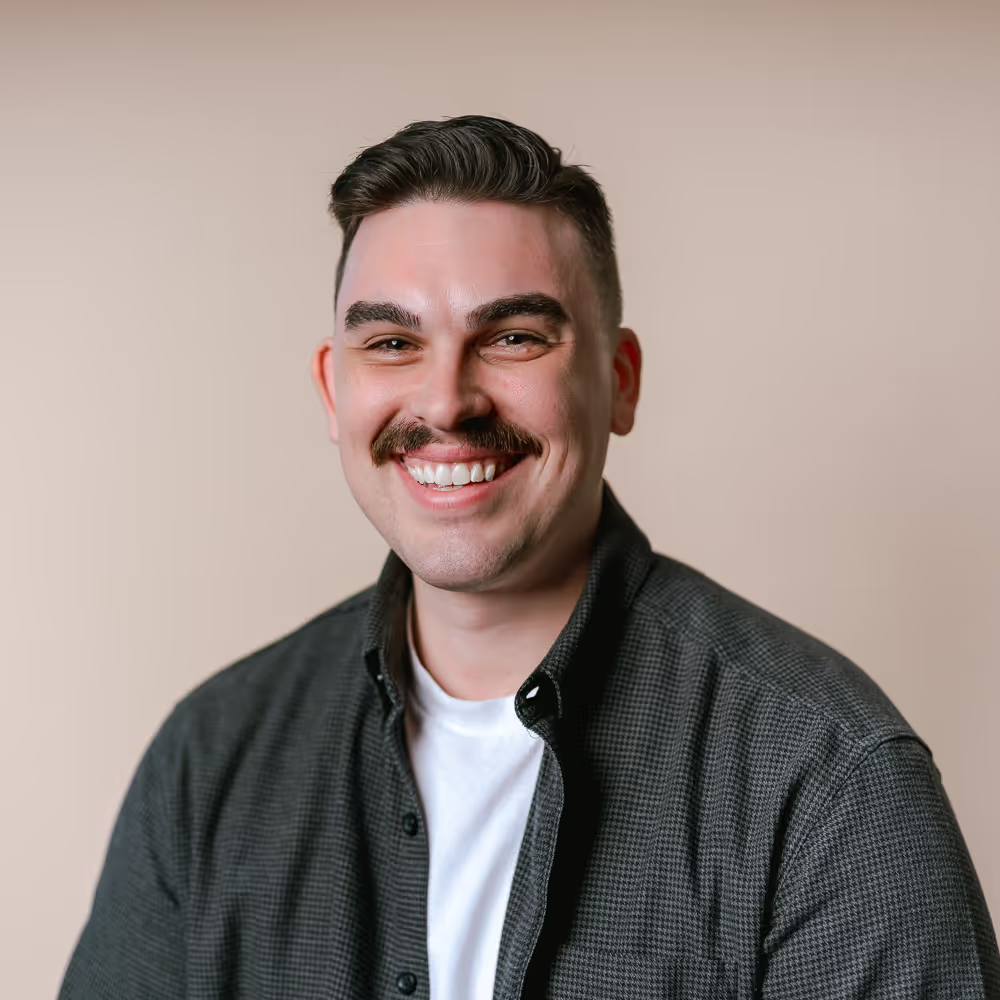
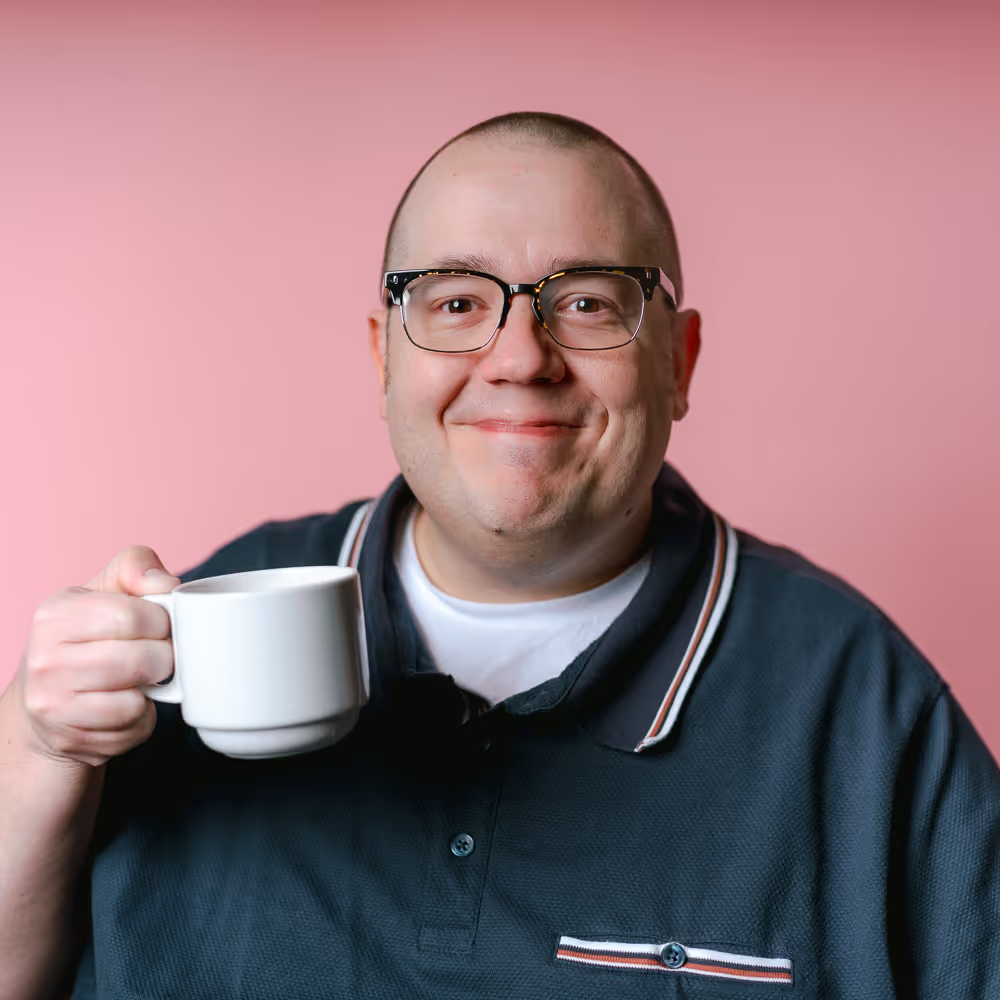
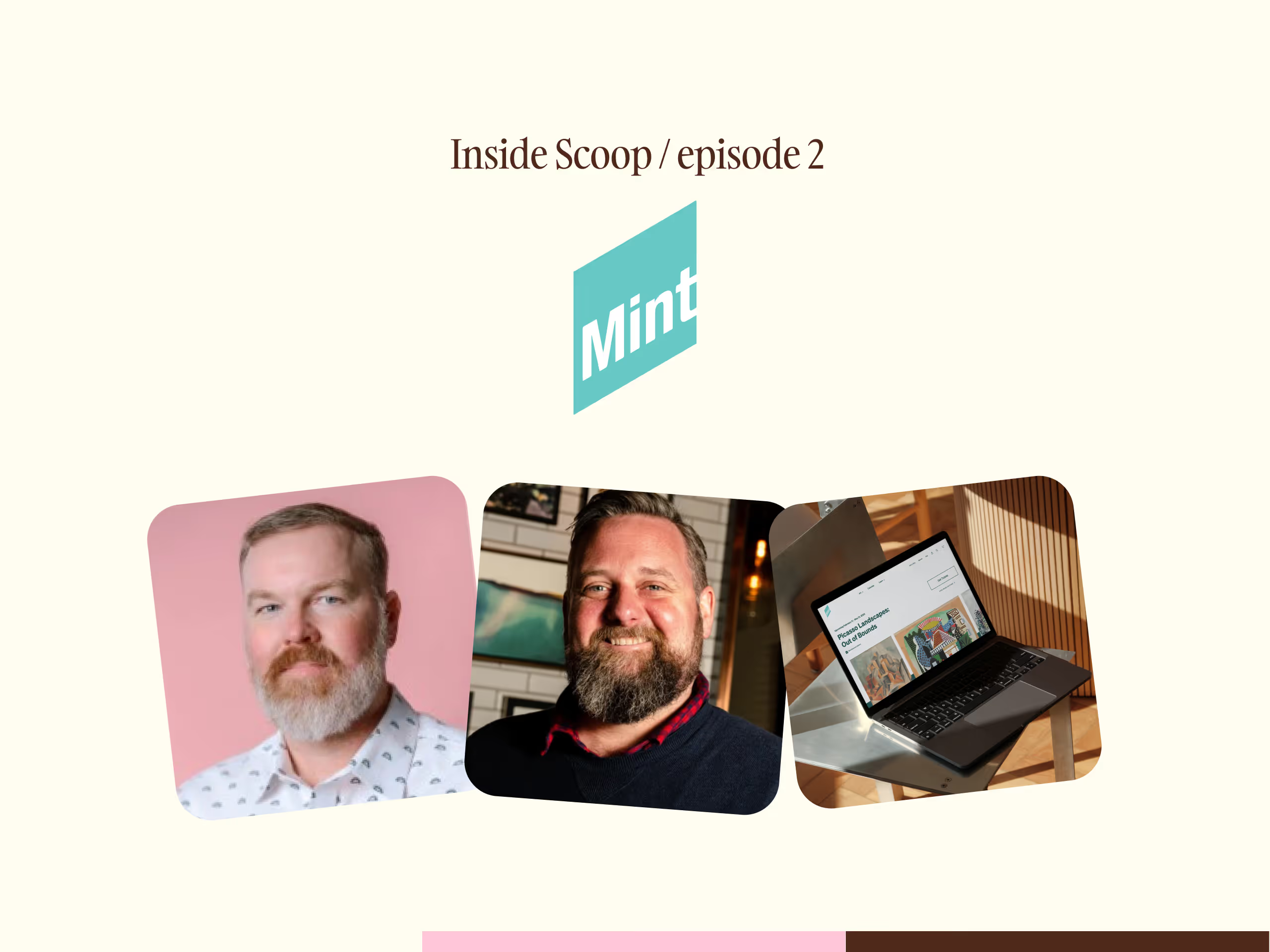
In episode 2 of Inside Scoop, we chat with Ben’s brother from a different mother, Clayton Sealey, Sr. Director of Marketing and Communications at The Mint Museum.

.svg)


Charlotte’s oldest art museum needed a website that matched the cultural impact and artistic spirit it brings to its two locations.
We worked with Clayton and the team to take their website from sluggish and frustrating to energetic and inspiring.
What you’ll learn in this episode:
→ Why good chemistry matters
→ Always have a game plan
→ How to get everyone aligned on a project
→ How to go beyond the brand style guide
→ What to consider when building your CMS
Clayton Sealey is a Charlotte native with a background in advertising and art history. Clayton blends creative strategy with civic engagement. He’s worked across industries from media to real estate and now serves on local boards and commissions dedicated to shaping the city’s cultural landscape.
Ben (00:02)
Hey, hey, welcome to Inside Scoop, volume two. Today I've got Clayton Seeley. He is the senior director of marketing and communications from the Mint Museum in uptown Charlotte, has a couple of locations. We did a website project recently within the last two years where we worked with Clayton, came in, had a big vision for a new website and we worked really closely with him to execute start, finish, tear down, rebuild from the ground up. Today we're gonna talk to him about.
process of building the site, some of the challenges and gotcha moments from him. But first I want to start out with some introductions. Clayton, give us a little background about how you got into the creative space, because that's a great story, as well as how you arrived at the Mint Museum in your current role.
Clayton Sealey (00:47)
Yeah, hi. So I'm Clayton, as Ben mentioned. So I am a native Charlottian, a unicorn, as people say. You know, there's only so much of us. When I was born, there was a fourth the amount of people in Charlotte. So people are always surprised to learn that I'm from here. I got into the design space originally with the Savannah College of Art and Design with a major in advertising design. then
Found my way back in Charlotte for a year and then off in New York for 12 years doing everything from fashion design to experiential advertising publishing. I helped on the first volume of Diary of a Wimpy Kid. So I've done a ton of different interesting things in the design field. Charlotte's always been a huge passion of mine. So I spent a lot of
time building a network here in Charlotte while I was in Brooklyn so that I could hit the ground running and get a great job when I moved back to Charlotte. I was working with Southwood Corporation for a little bit before the Mint, another Rockhill company, just like ⁓ Social Design House, and worked with them and marketing and then landed at the museum, which is really where I wanted to be.
Because my ultimate goal is to make Charlotte and its creative economy better and better way than through North Carolina's oldest art museum? Which is what brought us into this project when I when I started at the mint we had a slow cumbersome website Where people had basically just been making you know?
websites with web pages with no links to them just out there in the ether and had really created a bloated site that was nearly impossible to run. We had Band-Aids holding it together. We were paying a firm that does SEO to ⁓ actually optimize the website so that it could be opened in less than eight seconds. So as soon as I started, I talked to my senior leadership team and I said, hey, we're
We're fixing this, we're starting from scratch. We're going to a competitive RFP process and next thing I know it, ⁓ I'm sitting across from Ben on Zoom in New Jersey and he's in Rock Hill and we instantly click and start working together. So,
Ben (03:06)
Yeah, think the original, like we got synced up through a referral. So a lot of times you might go to, and this is probably pretty common in the nonprofit or museum gallery space, right? There's a fixed budget. You have a board. You don't have unlimited cashflow. You're not some massive corporation who can just pump out money and say, hey, we've got a quarter of a million, go knock out some digital product, right? You have a fixed budget that you have to work within. So sometimes I think where you went first with some of these bigger agencies in Charlotte.
and the budget didn't quite make sense for them to execute, which is fine.
Clayton Sealey (03:39)
And that was the budget that a quarter million dollars was like, Hey, that's what we're taking right now. Can you do that?
Ben (03:42)
Exactly. Yeah. And that's
not unheard of for some of these larger studios who have maybe 60 people on staff. They have a massive overhead. They got lights to keep on and bills to pay and high salaries for them. So a lot of times if a bigger agency doesn't work out, we're 10 strong. We have the skill sets of some of those bigger agencies. So Clint came to us as a referral and we were like, the budget, the timeline. Timeline was aggressive. We wanted to get it done. It was a big pain point.
and a big initiative for when you came in. I think the benefit to us working together was we were nimble. We could plug into your system, kind of understand what you needed to do and execute in timeline that made sense at a budget that was comfortable with the board. So yeah, I remember that first conversation. It was instant like, all right, we're aligned with this dude. He's got a good solid beard. We're good looking dudes and we can knock this thing out.
Clayton Sealey (04:39)
Facts.
Ben (04:39)
together.
I think the, you know, after we did that, there was, like you said, an RFP process, we bid the job out, we shared some work samples. Tell me what you were looking for. I think one of the one of the questions a lot of a lot of folks wonder is, you know, what do you look for in a partner to come in for a project like this? This is a big initiative for you, right? This is, you know, this represents you as employee, as a new employee, you know, you're kind of putting your neck out there.
making a decision and hoping it'll pan out because this is one of your first biggest decisions. So what were you looking for when trying to find a partner?
Clayton Sealey (05:13)
I mean honestly I was looking for someone that obviously I had chemistry with. I feel like step one of having a good partnership is to have good chemistry with the person that you're partnering with. ⁓ Second, I was looking for someone that offered something that was outside the box. know, websites generally fall into a couple different categories. Boring, super boring, and exciting.
And I was looking for someone that brought product to the table that was exciting, engaging, because, you know, ultimately we are a visual arts museum. So, you know, what we came to the table with from, you know, the previous website perspective was it fell into the very boring category of website. We wanted something that when people opened up, they were like, wow, okay, this is somewhere dynamic and exciting.
Ben (05:54)
It did, yeah.
Clayton Sealey (06:02)
We wanted to take the, you know, we have had, and I'm gonna say had, had a reputation of being a boring, you know, place where you put on your slacks, your jacket, and came in and looked at some art. But what we are in reality is a place where dynamic things happen, where we have performances, where we have spoken word poetry, where we have theater, where we have all sorts of different things that are artistic
that happened and we wanted a website that actually could speak to that, that could convey that something exciting was happening there. as we looked at examples from different agencies, different studios, work that you guys did particularly, I believe it was with Princeton, ⁓ really.
really stuck out and things that you had in the works with South Carolina Arts Council and things like that. saw something that like, number one, we wanted something that we could do ourselves. I've been burned in the past working with agencies where pretty much you had to call them if you needed to go get water. If you just had to go to the water fountain, you had to call this agency just for them to walk you through how to get to the water fountain.
But we wanted something that we could hire somebody that had basic skills, intermediate skills, to be able to function this website and allow it to have longevity in the future. And you guys offered that more than others. And then, of course, just the dynamic nature of the design, it really is what sold it.
Ben (07:41)
Yeah, I think we touched on a couple really interesting points. One is finding the energy of a creative organization and being able to reflect that digitally. It's easy to put some three-column grids and do the industry defaults, but how do you look at architecture? How do you look at the spirit of the collection? How do you look at the multiple locations and breathe a little life into it and not just do...
an image with a background. One of the things I think McKenna, our senior designer, did really well was find ways to integrate unique elements and give them purpose and meaning. So we looked a lot at the architecture of the Uptown building. Like you said, this is Charlotte's oldest art museum. How can we tie some design elements into architecture? How can we pull inspiration from the collection and really feature it? How can we create a more dynamic color palette, expand on what you have, introduce new typefaces and things like that? So that was
The freedom you all gave us to do that was, think, what made it special, right? Having a back and forth, having a trust in what we can do, but also giving us permission to explore, permission to try some crazy stuff. whenever we do something in the design process, sometimes we want to push beyond what's comfortable. And sometimes you get some really, really neat outcomes from it. So yeah, that's awesome. think there's some really good things to look for.
in that list you just mentioned. talk creativity here, right? So sometimes we work with commercial real estate companies, we work with software products. One of my favorite things to do is work with arts institutions. With that comes a boardroom and a room full of creative folks, people who have a high level of understanding of visuals.
of space, of typography, and like an innate ability to see great design, great art. lot of times when I'm working with other industries, there might be one or two of those people, but not a roomful, not a board full of them. Can you speak to a little how you pitching concepts, navigated opinions and ideas with a large boardroom? Because I think somebody else in your position is going to have to do the same, right? You've got opinions and probably 50 % of our job building a site is making sure everybody's aligned.
and feels good about it. Can you speak to putting everybody on the same page creatively?
Clayton Sealey (09:56)
I mean, honestly,
a lot of it was, it happened on the front end before we even went to the RFP process. You know, a lot of it is about, you know, showing that you are capable and that you have a plan and that you recognize like what needs to get done. we, would, it started by me presenting a site plan or a site map to everyone of what we would like to accomplish, the goals of that, and then who we would be actually talking to. So we did that.
you know, initial RFP process. think we went to five or six different agencies. And then as the process started, what was important and honestly, one of the great things that you guys offered was the ability to come on site and actually speak to those stakeholders. So, I mean, I think that we have an incredibly agreeable board and there are tons of voices in that room that, as you said, came from the marketing and even the creative space. So being able to
bring in two or three different options and directions for us to go, I think really ease to the transition. I would say we had an unexpectedly easy time with the board. And I know it's not always like that. But as long as you come in prepared and bring in a great partner, think that boards will listen. like you said, this was shoot.
I think I'd really only been at the organization for four months when we started this process. It was quick. And we had a deadline in mind, which we launched one of our most successful, actually most successful exhibitions since the late eighties, which was Picasso Landscapes Out of Bounds. So we expected a large influx of people. And the goal was to get a usable
Ben (11:20)
It was quick, yeah.
Clayton Sealey (11:40)
website and time for people to buy tickets. And we definitely accomplished that and continued to build upon it. And we're building on it even today because it's important to create something that is super malleable because your needs change at all times. And one of the biggest difficulties we had was making sure all that information was available. But I think we'll touch on that a little bit later as well.
Ben (12:05)
I think navigating personalities, navigating opinions. I love how you mentioned it's if you come in with a game plan, you come in with confidence and you have somebody who knows what they're doing. Like you can you can kind of sidestep a lot of the fear and concern and potential, you know, roadblocks, which allows you more time to do the build, more time to spend on the design, more time to do a cool animation with a neat hover effect and all that stuff rather than navigating personalities at the beginning.
So really, really valuable stuff So when you came in, we talked a little bit about the site was slow. think it was in the red rings on the Google page speed score. I mean, you were pushing 14, 15 second load times. There was some basic stuff that we had to fix. What were the goals beyond design that your team had when you launched this thing? It had to have X, Y, Maybe speak a little to that RFP.
building that RFP. if somebody else were to watch this, they'd say, okay, yeah, I need, it's my turn. I'm about to do this RFP. What do I have to have in there so the studio knows what to expect?
Clayton Sealey (13:08)
we'll say that, you know, when, when it comes to websites, have way different, like every single business has a very, set of needs. So if you're thinking e-commerce, you're just going to be, you know, building out a site where you're selling products. If you're, if you're a design or a construction business, you're showing off your portfolio. You're showing off like how you raise money to build things. You're showing off stuff like that. But when you're a museum,
and a museum with two different locations at that, you're really having to convey all of the different programs that you do, all the different exhibitions. We have a robust event calendar that you want people to be able to enter. One, find, and have them be able to convey that information to calendar invites, stuff like that. You have your fundraising, you have your
donations, you have your membership, you part of the reason why our website was so slow is because we had so many different things that we were doing before. And they weren't ever really packaged in a way that like made sense and it made the website easy to actually navigate. So we needed a website that we could easily or the visitor could easily navigate and figure out exactly what they were gonna do and how.
Because not only do we have the museum, we have a store, which you guys helped us with that new store website launch last year as well. We have a library that the public can come to and check out. We have one of the largest art resource libraries in the country. We have the archives. So we have a multifaceted nonprofit, and we needed to be able to convey as much information as possible in the most simplistic manner.
while, you know, one, making sure that the visitors to our website weren't confused, and two, could just find what, you know, they could complete the task that they were there to do. So, and that comes with creating an easy to navigation. I mean, if you pop our nav up, I mean, there's a lot of stuff on there, I'm not gonna lie, but we were able to actually, you know, organize it in a manner that made sense to the end user.
Ben (15:17)
Yeah.
Clayton Sealey (15:18)
we
have continued to build that out as we've gone and and you know one of the wonderful things about working with you guys is that you guys laid the foundation for us You build a lot of the walls you did a lot of the decorating but just like you do in your own house You know sometimes you know you put a painting here move it over there you put this over there and You move that furniture a little bit over in this way, and then sometimes you add on some space. You know you guys gave us
an incredible piece of architecture that we were able to continue to transform over time. And now our website is in an incredible place. It's award winning, thanks to you guys. ⁓ And we actually just won an award for the store website, got a silver award at the Southeastern Museum Conference the store we're just now finding out. But.
Ben (16:06)
Look at us. Yeah.
Clayton Sealey (16:10)
So, I mean, it's definitely, and I think we'll talk about successes later, but it has allowed people to engage in the museum and understand the ethos of the museum a lot better than before. Because to me, the number one priority was to have a hero or a heroine image that just spoke to how dynamic we were and to have a user interface that was
Ben (16:11)
Pats on the back.
Clayton Sealey (16:37)
high design and conveyed exactly what we are, which is a fine art museum, but also a museum of craft and design and even fashion.
Ben (16:48)
a lot of good stuff there. I was reading a book recently and there was three words that kind of stuck out to me. The author said simple, not easy. So this concept that something can feel simple, but it's not easy to get there, right? There's this in life, in art, in design, we always strive for minimalism, the most simple solution, the quickest from point A to point B.
It can be simple and you can strive for that, but it's not easy to get there. And I think a lot of the foundation, a lot of those conversations we had at the beginning are what set that, you know, success not easy. I love that. I continue to say it to myself all the time, right? Like when we strive for something, something basic for the most simple form of it, it's not going to be easy to get there. Welcome to design, right?
Clayton Sealey (17:33)
And it's really interesting because like the vernacular that was created through the process, I mean, we were able to adapt and move and, you know, we came into a process with, yes, we had an established style guide. Did we listen to it? Not really. Yeah. And, but like from there, we were able to build out different products. our intrigued member newsletter are intrigued.
Ben (17:41)
Mm-hmm.
We challenged a little bit.
Clayton Sealey (17:59)
member mailer, our actual like regular everyday newsletter, like we let the vernacular that was created from the website speak towards in and actually inform a lot of the designs decisions that we were making in the future. Some of the architecture, the angles that that are utilized in the website have been adopted into our campaigns. Like we, we got an incredible value by working with Social Design House because the professionalism
and the high design quality of what we got was way better than what, you know, when we arrived. So we've been able to take that and just continue to evolve our entire design language at the museum around the website, which is really the opposite of how it works usually.
Ben (18:47)
Yeah, it's not crazy though. We have seen it happen so many times. Like when you have permission to explore and say, Hey, you know, we put these brand guides together, 15 years ago, you know, it should be, you know, brand guidelines should be a foundation or a springboard to something, you know, more unique. And, I think I see that a lot when we build something new patterning, updated typefaces, you know, let's bring this thing, into, you know, the, current.
look and feel of what's out there. And a lot of times you'll back your way into some new ideas for campaigns and new shapes and patterns you can utilize, new typefaces. So I love to hear that. That means we did our job. And like you said, it's not the traditional, usually it's like updated standard strategy into identity design, identity design into brand style guide, style guide into website. But when we came in, you had this Picasso exhibition. We didn't have six to 12 months to run through a brand exercise.
we had to just say, ask for permission, not forgiveness when we were doing some of this stuff and what came out was super fun. So I think just kind of taking the handcuffs off a little bit and letting the creatives go to work makes a big difference sometimes. All right, let's get into a little more technical conversation about alignment. So I think you spoke to the idea that there's a lot of different agendas. We'll call them agendas or goals.
or positions within your organization and each person kind of owns those. Within this site, we had the donation side, right? We want to give to the museum, we want to donate our money or family money or whatever that is. You had event rentals, number two. On top of that, you had just the regular patron who was coming in to visit the
Can you speak to how to align all those different people? Because I know we kind of spoke to it, but this is such a big content is one of the biggest challenges on any site. And I think having some insight into how to align and how to know, bucket each person to make sure they're heard and their voice is respected. And because that piece of the website puzzle is very important to them. Can you speak to that a little bit?
Clayton Sealey (20:49)
Yeah, I definitely can. I mean, I'll say that we kind of arranged this in the priority of what drives revenue first and foremost. So we focused on things like membership and donations and ticket sales, like first and foremost, to make sure that those were easy to find and readily available and like omnipresent on the website. So then we focused on the general frameworks of everything and like the places where storytelling about each of these institutions.
each of these, I'll call them verticals in our organization, the storytelling around those verticals so that they had a framework that we could build it over time. The goal was to get something out there and then continue to build as things opened up, as things evolved. So first of all, we sent out kind of like creative briefs to everybody in the organization.
to get them to buy into this, give information. And then we worked on the content. And then we set up individual creative meetings to make sure that we could set up time. And we brought Social Design House into some of the process of there, just on ideating on what all our goals were for those organizations. And honestly, we are still building out things to this date. it's been...
Ben (21:43)
Amazing.
Mm-hmm.
Clayton Sealey (22:04)
two, gosh, three years maybe? Look at this, it's been two years now that since we completed, two and a half years since we completed the website. And you know, we're still looking at how to improve those items and make sure that it's giving all the information and all the storytelling that is needed. So, I mean, really it's about creating a game plan, figuring out what your priorities are, raising money and selling tickets, number one priorities. But.
It's important that people know what they are donating money towards to support our learning and engagement team, to support our family programs. know, we are now, since we kicked this off, we are now permanently free for kids under 18 to come to the museum. And a lot of that is because our website informs people on what exactly they're fundraising towards. then, you know, in last year, I think we had 265 events in 365 days.
So having an event calendar that worked for people, they could tell all the information while also allowing them to add it to their own calendars was super important. mean, honestly, I am kept up to date on what the museum does. So is my wife, just because we're subscribed to the calendar. I mean, it was super important that we did that for our visitors and for the people that work here.
Ben (23:25)
my favorite thing that you said there was that you sent out an internal creative brief to align all these different verticals within the organization. Because each one had their own goals and probably, and I remember being in those calls and saying, hey, what drives you nuts about this site? Like, what do you get a phone call 600 times a month about that we can just put a simple FAQ on and make your life a little easier so you can get back to doing the important work?
to get back to elevating that event you might be doing, to elevating the membership program or writing new member levels or sending an extra note because you didn't have to answer that phone call. So one of my favorite parts is just listening to not only the user themselves who's coming to the museum, but internally, hey, this is what people want to know, site's not conveying it. Can you solve my problem? Can you make my life a little easier by doing something here?
Clayton Sealey (24:16)
Yeah. And so much about that was just like automating the process for the visitor. I mean, one of the first things you come across is what today's hours are. that was like that little simple thing is so important. And then like having the contact form that we put together that, you know, people are able to just say, what's my need, click that need and send out an email and that arrives to the right person.
giving people less conflict on the website and just as much information as is easily digestible.
Ben (24:49)
biggest, that content piece is usually where a lot of the time in a project kind of gets sucked up. Or if there's going to be a delay or a missed deadline, it's usually because of content, because there's so many players within an organization that you need feedback that you need information from. So I love that idea of a creative brief, aligning everybody internally and kind of marching in the same direction. Awesome. Make sure your voices are heard.
I think people are much more comfortable about what's happening when they know, I'm gonna get a chance to say what I need to say and put my two cents in and they're gonna do their best to align it within the bigger picture goals
Clayton Sealey (25:24)
I mean, and it says things, things can be done laterally like that. I mean, it, it, it was difficult because, know, you are having to do individual meetings and people like, when am I going to be heard? And, know, I mean, it's just under having people understand what the priorities are. Like first and foremost, it's gotta be the revenue driving. And then we build out the storytelling and like, you have to make them have people understand that the storytelling aspect is important. So it takes time.
Ben (25:31)
Later.
Right.
Clayton Sealey (25:53)
to establish what that storytelling should be and working with the right stakeholders within the organization to make that happen.
Ben (26:00)
clarity and communication. It's an amazing thing. Something we're always looking to get better always try to, one, be the meeting you want to go to, be enjoyable, have fun, conversations, but also ask the right questions at the right time to the right people. And that makes a big difference. let's talk a little bit about, we're on the other side of this, right? We built this site. I think we did it within, it was like six to nine months, Picasso exhibit.
launched website launched, you know, big hit, whoo, take a nap after that one. It was you, you were working yourself, Clayton, you came in and, executed on a high level for a long amount of time. So as the site goes, you now have somebody managing the site. You have, you know, different opinions. You kind of got to remove yourself a layer, let somebody else own that. Um, you know, what does that look like now from a management standpoint and also like a success, like what would you call success?
After all, it's obviously speed and stuff like that, what do you see as the thumbs up for the project?
Clayton Sealey (27:02)
Well, I mean, honestly, the biggest thumbs up for the projects is definitely just like feedback from visitors, feedback from people that were able to find things easily. When someone named us one of the best museum websites in the country, can't remember who exactly it was, but it someone on LinkedIn and someone not from here. So that's always great. But I mean, just the fact that we've been able to continue to evolve this site.
⁓ And continue, know, while we have lessened the amount of work we need to do through Social Design House, on the website, we have increased the amount of collaboration that we do with you guys in other capacities. So I think the success is that we don't have to bother you that often because, you know, we have a team that understands there's, you know, three people, sometimes four, that generally are
are poking around on the website. We were able to create forms for other departments so that we have so much less work to do because people can submit their own events, people can submit their own requests. And then all we have to do is moderate those requests and then press publish. So, or, you know, lightly edit those requests. I mean, there's so much that has been automated for us. I mean, automation is not really the right word, but it is.
it has created a collaborative space for other portions of the organization that allow our jobs to be a little bit easier. And that has also allowed us to focus on the longevity of certain site, of certain pages, and how that storytelling is told. So I think some of the success is just how much less work we have to do on it, which there's still a crap ton of work. Chelsea on our team.
Ben (28:46)
Always.
Clayton Sealey (28:47)
does a ton and she's juggling both the website and social media and our newsletters. But, ⁓ you know, it's just the ability to convey that information simply just to make sure that all people have some to the entire process.
Ben (29:05)
you could pick one thing that you would tell somebody in your position who was about to embark on a very similar project, what would be the number one thing you would tell them to focus on or to make sure they got it?
Clayton Sealey (29:15)
I mean, I would say have a game plan. You know, you might not have like all of the style guides. You might not have all the brand guides. You might not even have like a full handle on exactly what information is going to be conveyed, but have a plan for how you're going to gather that information, have a plan for how you're going to sell people on what your vision is.
and just push forward with as much steam as you can, full steam ahead. And I mean, that's my advice and I guess also work with Social Design House.
Ben (29:50)
hah
Shameless plug there, I appreciate you buddy. Yeah, this project was one of the feathers in our cap for sure. One we share and show off a lot. This is museum and gallery month in October. So having this conversation was important to me. These are projects I love. Anytime we get to work in the creative space and the art space and the culture space is ⁓ really special. So, and not something that happens every day.
Clayton, appreciate you trusting us with the site, trusting us with an ongoing relationship. We'll continue to have lunch together and keep up. Clayton has alter egos in the commercial real estate, Charlotte development space and the transit space. So he sees big picture. Culture is a big part of that for him. And I was excited to chat with you about this. So yeah, appreciate you, man. Thank you. Onward and upward. All right, we'll talk soon,
Clayton Sealey (30:40)
First... Onward and upward, man.