In our first "Inside Scoop" episode we sit down with Christina Kyriazi and Steve Harnden of PhotoShelter to uncover what it takes to build a SaaS marketing website from the ground up in 180 days (while also building a top notch team and staying within budget).

.svg)


→ Learn 4 things to consider when hiring a digital agency
→ Understand the importance of systems as it relates to speed and scalability
→ Understand how SDH approaches the creative, collaborative process
→ How to create a model that drives data driven decision making
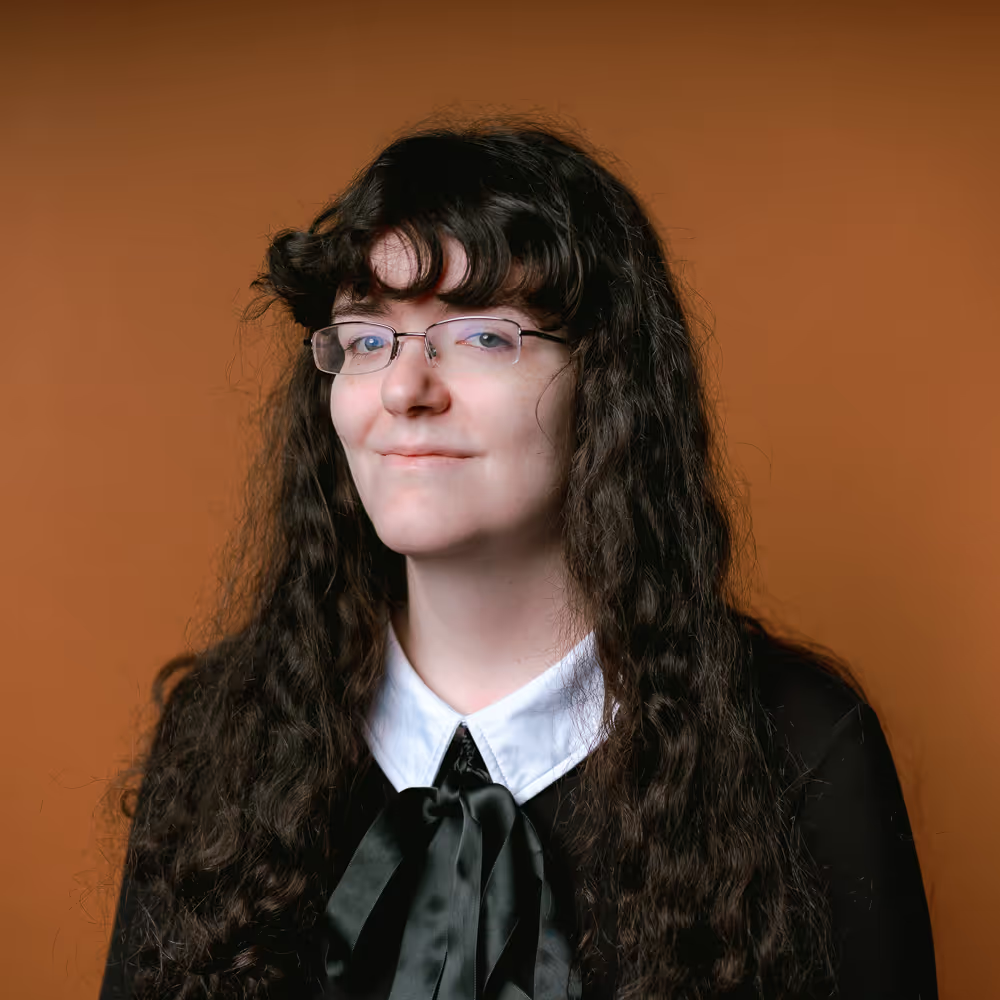
Christina is the VP of Marketing at PhotoShelter and is a self proclaimed data nerd turned marketer. She has a deep passion for data-driven marketing that puts the customer at the front of every decision.
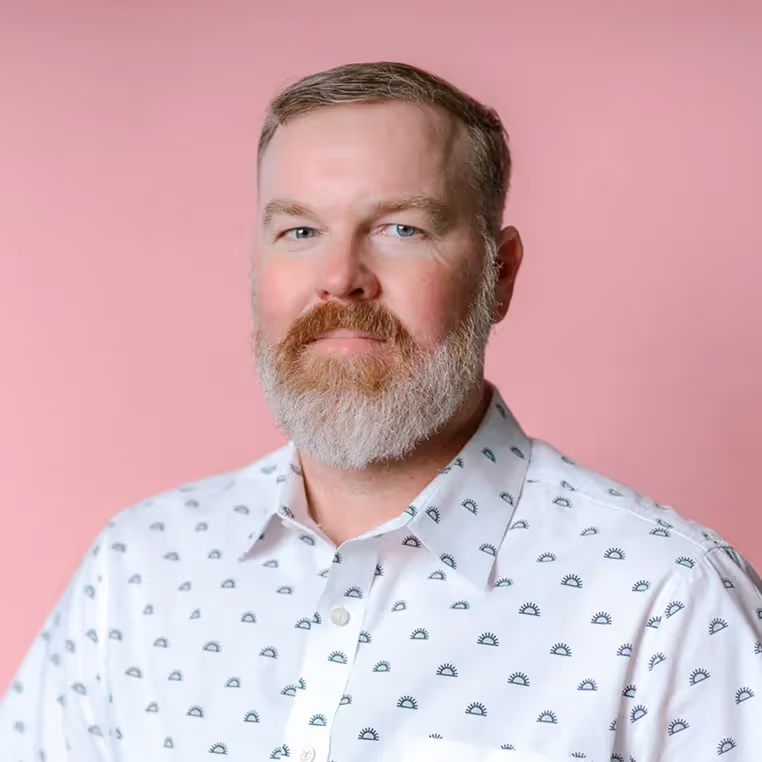
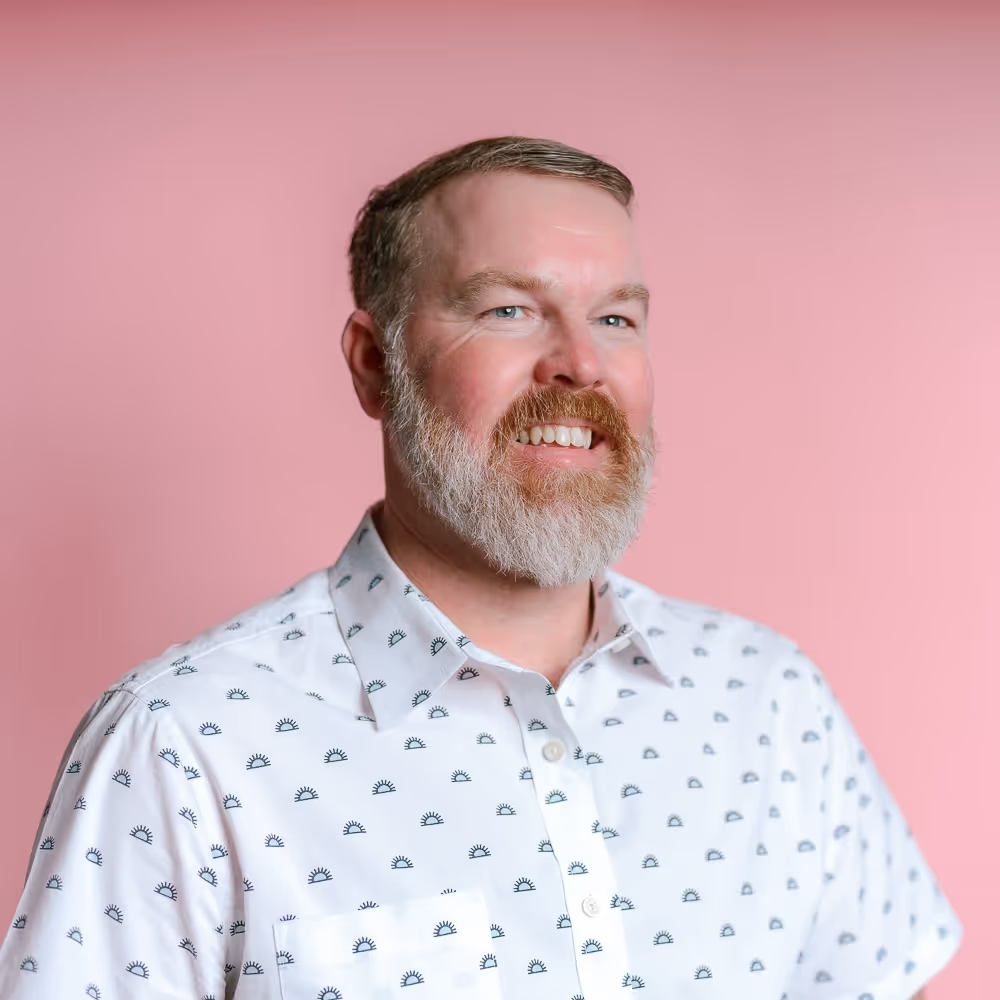
Steve is the Head of Demand Generation at PhotoShelter and helps create and power complex digital campaigns to generate pipeline that fuels sales.
SDH + PhotoShelter (00:02)
Welcome to ⁓ episode one of Social Design House and our client relationships. Today, I'm excited to have with us Christina Kyriazi the Senior Vice President of Marketing at PhotoShelter, as well as Steve Harnden. He is the Director of Demand Generation at PhotoShelter as well. We just wrapped a project a bit ago, building a new marketing site.
for the PhotoShelter team. Today we're going to talk about that. We're going to talk about challenges, finding an agency partner, what collaboration looks like within one of these projects, and a little history about how Christina and I got to know each other, our backstory about how we built a couple sites together, how that relationship helps speed up a process. So in short, we built this new SaaS platform marketing website in six months, which is, if you've done this before, that's a tight timeline. But we hit it.
We got it done and this will be kind of the story of that and kind of how we made it happen.
Christina Kyriazi (00:58)
Sure, absolutely. So I'm Christina Kyriazi. As you said, I lead up the marketing team here at PhotoShelter. I've been here for a little over two years, even though it feels a lot longer in a very good way. We've done a lot in these last two years. Steve joined me a year and a half ago, ⁓ approximately. And we worked with Ben and team about a year ago to launch our new website.
So PhotoShelter is a digital asset management tool that over almost 2,000 organizations and brands use across the world to manage and distribute their content. So think about very heavy visual content like photos, videos, et cetera, that organizations need to safely store, manage, distribute. It is, as you'd imagine, very heavy content. So we help them do that in a very efficient way.
Some of our customers include, big name brands like the NFL, as well as large universities, all the way to, medium and small size businesses that are just looking to organize their content and distribute it in an efficient way.
SDH + PhotoShelter (02:00)
Awesome. Steve, how do you fit into this puzzle? Director of demand generation.
Steve Harnden (02:03)
⁓
Director of demand generation, I wear lot of hats. One of those hats is managing the website on a daily basis, making sure that we have the content out there that we need and that we can actually have a platform where we can make quick edits and on the fly changes. Right now is one of the big reasons that we were looking to make a switch. We had a very convoluted process with the previous website that I'm sure we'll hear all about over the course of this hour.
SDH + PhotoShelter (02:27)
Yeah, and so tell me a little bit about PhotoShelter where they are within, as far as ownership and because I know a lot of these companies, some folks are looking to get their series A, some folks have an investment already and can build a marketing team. I'd to hear kind of where you are currently. So maybe some folks can kind of, place themselves in this project a little closer.
Christina Kyriazi (02:44)
Yeah, absolutely. not an early stage startup. We're a little bit more mature.
PhotoShelter was started about 20 years ago and we're backed by our investors, Clearhaven Partners and you know are looking to grow pretty aggressively. So that's kind of the stage that we're at. We're looking to do it profitable as profitable as possible obviously. So efficiency is a big deal but we do have you know the right backing to make sure that we have the right marketing team structure as well as the right investment to grow the company at the pace that we need to.
SDH + PhotoShelter (03:14)
Awesome. Always good to understand that, kind of where you are, and so you can understand how your team was put together and everything. So yeah, I'd love to, you know, as a great kind of primer for, you know, what we're about to talk a little history between, you know, myself and Christina. We've built, this is our SaaS platform marketing site we've built together. The first one was with a company called Passport. They were primarily a parking.
know, application, you'll still see it, you know, and if you go to Asheville or other, I see it all over the place, but it's, know, you pay to park, you pull up the app. So that was password. They were growing into different verticals. We came in to help with the rebrand, redesign of the interface or the identity itself. And then there was also, now we've got this, you amazing new identity that we worked very closely with the C-suite team on.
And then Christina came in and was like, you also need a new website. So we went through an interview process with them, you know, not knowing that we were going to get that kind of interactive piece. But we were hopeful because we kind of understood the organization. had to, you know, design a development chops to execute So, you we ended up getting that job. And I think that was, know, that was our first relationship working you know, as a partner and agency or company agency.
so that was a really great relationship. And then we also went on to work at a company called Ecos, built a new marketing platform there. And then PhotoShelter is kind of our third, and I would say our best, our swan song to date website. So I think one thing that kind of is similar for each of these projects is when Christina comes into a she gets a lay of the land and Christina, free to correct me if I'm wrong with it, from the outside in, she gets a lay of the land and starts to an amazing team.
Christina Kyriazi (04:34)
Thank
SDH + PhotoShelter (04:50)
And what I've seen is that anytime we come into a project, there might be three people on the team. And Steve, I think you were one of the first ones to pop into the project. But what's great is the project grows and as it kind of gets momentum, team members continue to flow into the New expertise kind of align. does a good job kind of making sure voices are heard, but also progress is still being made.
So we've had a long standing relationship, which always helps. I think it's a testament to how we work together that we've done three. And this last one was six months engagement. hit the deadline on time and rocked it tell this story about our passport launch.
built this site at Passport and it's, you know, it's run and gun. We're, you know, scrambling to get some deadlines. I would usually once a week or twice a week go up towards the end of the project to the offices and I would just find myself a desk in the middle of the office at a really beautiful two story space. And I just kind of find like a coworking spot and I would sit down, start working and on launch day, I made sure I was up there.
because I wanted to be around the team and with the team. think that's a big piece of what we do is collaboration. I want to feel like we're an extension of the PhotoShelter team, not just some outside agencies that's plugged in and just does something in a silo. I want to feel like a part of it. So if there is a local office, if there's an opportunity for lunch, we'd to be part of that. But on launch day, so I go up to the office on launch day, I'm going to sit in just in the middle. I'm kind of the guy who shows up every once in a while. People kind of know who I am.
I'm like, oh, that's been a sub-mobile website kind of thing. then, so it's launch day and we're kind of prepping and me and Christina are like, all right, it's go time. We've been working on this thing for months. That project, I think was more like nine months to a year. I think that one was a little more extended because it had an identity component at the front, but we've been, know, blood, sweat and tears into this thing. Late nights, making sure it's perfect. We did some really great stuff on the CMS admin side, lot of, you know, CRM integration stuff that didn't exist before. And we're like, all right.
Christina Kyriazi (06:32)
Yeah.
SDH + PhotoShelter (06:49)
It's game time, ready to roll. think it was around noon. I think it was like a lunchtime launch, which is odd in itself. But we were like, let's just get this thing up. So Christina left leadership know Hey, we're about to launch it. We're going to, know, it's going to take a little bit. So our process, I would have to like move the files from one server to another, put up a staging site notes and, migrate our database and multiple gigabytes of files. we put that notice out and all of a sudden people start collecting.
in the hallway around me as I'm working. I'm like, and then Christina walks up and she's like, yeah, think, I think there was like a note out to everybody that we're launching the site and they kind of told where you were. and I'm talking 20 to 30 people are standing around me. I'm just on a laptop and like, I have to hit the go button, which is essentially a migrate database button that is probably going to take a minute or two to like migrate all these files. And the cherry on top was.
Christian rolls out a gong right next to my computer because I guess whenever there was success or like a new sale or something like great happened at Passport, they would ring the gong afterwards. So literally I'm trying to launch this site with one button and I just in my head, I'm just like, oh my God, please let this work. That was definitely the most high stress launch. And so we hit the button, it was probably about 60 seconds of me like sweating.
Christina Kyriazi (08:00)
Yeah.
SDH + PhotoShelter (08:07)
you know, and internally being like, yeah, it's going or we're good. around lunchtime, got to hit the Christina got to hit the gong. the site was up and it was a big success. Everybody was super happy. But my Christian really put us on the spot with that one.
Christina Kyriazi (08:19)
Yes, I still have pictures from it. It was very memorable. I actually, from my side, Ben, if it helps at all, it didn't look like you were sweating at all. It looks really flawless. So we pressed the button. There was definitely some silence for a second until, you know, it was over. We refreshed the page and it was like, yay, was, you know, big success story.
SDH + PhotoShelter (08:38)
Oof.
There was bullets. it was, you know, that's high pressure. You hit that button, it's like, all right, it's either happening or not. know, last thing you want is to be troubleshooting something with IT, with 30 people looking at you. But it worked. Yeah, exactly. Well, I'm glad it looked like I was calm and collected. So that's good. it also a testament to, you
Christina Kyriazi (08:42)
Good.
And a gong is behind me.
SDH + PhotoShelter (09:00)
Proven relationship, know, we've been in the trenches together and these projects are, and I'm sure y'all can speak to this, they're hard work. They're, you know, a fixed amount of time and a big initiative upfront. If you do it right, you know, everything works well going forward, but, all let's talk a little bit about the challenges of the PhotoShelter website
be good for everybody to understand kind of what we came into, Christina, what you came into as you took over as SVP of marketing. Because a lot of people, think, will come into similar situations where you're coming in a new job to make an impact. You're not coming in just to replace or to maintain or to, especially not in the SaaS world, private equity backed. Growth is the goal. So maybe if you want to kind of give a lay of the land of some of the challenges we had with the current setup, and then we can talk about,
Steve, I'd love for you to layer on from a management standpoint where your challenges were, maybe a little back and forth and then we can talk solutions beyond this.
Christina Kyriazi (09:54)
Yeah, absolutely. So yeah, I had come into the role at PhotoShelter within the first six months, it became very clear to me that in order for us to hit our goals, we needed to have a scalable the website is part of the scalable system and it was a very painful setup before. PhotoShelter had grown, had multiple brands in the past, actually has multiple products. played in various spaces in the industry.
We
were looking to kind of bring it all together so that we could look to the future and actually achieve our goals. One of the key goals was to expand into new verticals, new parts of the market. And our old website just could not help us achieve that. So.
We were looking to create a new architecture that was much simpler on the website. So previously, just to give you an idea, I think we had eight different domains on the website, all managed separately, three different WordPress instances that you had to log into and kind of guess which part of the website you needed to manage. And we also had an external third party tool that would create some quick landing pages for us that were kind of patched together and thrown on top of the main websites.
SDH + PhotoShelter (10:45)
It was a lot.
Christina Kyriazi (11:02)
So it was a it convoluted way to have a website. And of course, as you would imagine, it was impossible to track anything on it in an efficient matter. The user journey, who's coming in, the forms and where they stand, it was quite messy. So we decided we needed something that was much more uniform. The branding was also a little bit all over the place as well, right? As you would imagine, if you have so many different.
instances of building landing pages and building pages on the website and managing three different WordPresses. You know, it's quite messy. So we wanted it all to look very uniform and to really represent our brand as big as it is in the market and give it the right credit. Finally, we did have a merger that we actually acquired a company at the time. So this was new to PhotoShelter.
So we needed to figure out how do we merge that into the website so that it's not just this thing that's sitting out there. So we were thinking through that and our old website architecture was just not going to do it. So we were looking to really elevate our brand, really match up to what it actually was in the market and is in the market, and also match up to our plans of how we were looking to grow.
SDH + PhotoShelter (12:11)
Yeah, that's a good, you know, and my perspective was very similar, right? We're looking at this from a technical standpoint and there was, you know, skill. We kept finding some skeletons in those closets. Every we'd open one up and be like, ⁓ gosh, what is, what is going on there? Steve, there's, know, there's, there's a lot of opportunity to get crappy and create solutions to make this better. So that was a good, good alignment. Steve, what did you see when you came in from like a demanding specialist? I'm going to have to manage this sucker. You know, how do, how do I do it?
Christina Kyriazi (12:23)
Thanks.
Steve Harnden (12:38)
you
Yeah, I mean, I'll never forget my first day working for PhotoShelter. ⁓ Flew from Chicago to New York City and I was in Uber with a bunch of new teammates, including Christina. we were on a call on the way to the office with your team talking about all this. And I was like, my gosh, how many different subdomains? How do they make this work? Obviously as a demand marketer, you want to have as close to a single experience as humanly possible so that you can analyze in one spot. And having seven different subdomains, having Unbounce be hosting your
pricing page on your website, absolute total disaster. We right away that, all right, we bit this off, we're gonna have to figure this out in six months. And so yeah, was quite the journey and quite the quick onboarding to the website project. the path to consolidating it to a single subdomain was a pretty important
SDH + PhotoShelter (13:24)
Yeah, I think they call that drinking from the fire I think we might've said that a few times as we were digging in together. But it was good when you came into that project, like early enough that you could kind of put your stamp on it, know, have your voice heard as far as what was needed, which is awesome. So I think, you know, these are definitely, you know, partnerships that we create and y'all aren't the only, know, folks we saw three different, you know, projects together, Christina, that have this problem.
Steve Harnden (13:38)
Yeah, that's what it's
SDH + PhotoShelter (13:49)
And, you know, this isn't an uncommon thing. think naturally over time, if you don't keep your eye on the prize and don't have a team that's dedicated to, you know, maintaining a brand dedicated to keeping content and marketing structure and attribution tight over time, it's really easy to have a bunch of cooks in the kitchen. We always, you know, that's a phrase we use a lot, you know, more cooks in the kitchen you got, and that's why you end up having eight sites. So this isn't an uncommon thing. It's something we see a lot and it's something we
Steve Harnden (14:12)
Thank
SDH + PhotoShelter (14:16)
We love to come in and triage, like, OK, what's the overarching problem from a technical standpoint? How do we solve it? And then having great partners on the company side, on the marketing and sales team side to tap into from a talent perspective. So definitely not out of the for that. Yeah.
Christina Kyriazi (14:32)
No, not
an uncommon problem. I've seen this time and time again. As companies grow, it's natural that some messiness is created. So at some point, you reach a point where you need to bring it back all together and make it more scalable for the next phase of
SDH + PhotoShelter (14:45)
Yeah, that's a great point because a of these early stage startups, they're looking to grow and grow fast and they kind of just throw some spaghetti at the wall here and there and see what sticks. And if it doesn't stick, it just kind of gets left over there. Or a new HR person comes in, spins up a corporate company about page and then that kind of stays for a little bit. Yeah, you can see over time, if you don't have somebody who has like an overarching game plan in place, it's going to get messy.
I think that's a big part of what we do beyond just design, just dev. It's more like, hey, let's create an infrastructure and a setup that can grow. That Passport site still lives today. Same admin, same backend. We're actually building another site off the same backend we did seven years ago because we took the time to build it think that's a testament to what we did together there as well. So yeah, I think that's a nice precursor into like, hey, this is what we came into.
And then next step is finding an agency partner that can help you do it. Because I know when you come in, it takes time to hire talent. It takes time to get the right team in place. And even if you want to execute quick, I'd love to talk about how you find an agency partner, the benefits of that are. Because some folks want to keep things people think, hey, I'm just going to build my we have internal dev resources. We have designers. But the reality is those people have
full-time jobs already doing stuff internally. The dev team might be product-focused, not marketing-focused. I'd love to hear your take, Christina, on kind of that choosing an agency partner in which you look for in setting.
Christina Kyriazi (16:16)
Yeah, so for a project like this, I've always obviously outsourced it because it never been, you know, it's such a large organization that may have a dedicated team that can help me build a website from scratch. I also find that, you know, hiring someone external may actually bring some new ideas into the fold that
an internal team may not have as easily. So I knew very quickly at PhotoShelter and previous organizations where we worked together that I needed to find a partner, an external partner to help us achieve that. I also had my sights on a very tight deadline because we needed to get this done. I needed to get my demand gen programs up and going so that we can actually start generating more pipeline. So it was of the utmost important to find that partner that would help us do that. When it comes to finding that partner,
To me it's really important to have an agency that...
not just what I'll call an order taker. Like I don't want you to just rely on me to tell you every single thing that needs to be done or give you all the ideas, right? I want to treat you as someone that's going to come to us and say, OK, great. You kind of gave us a vision. Here's some options. And I love options. And I know that that partner is giving me good options when I get some where I hate them. I'm like, yes, OK, we're pushing ourselves. That means there's different ideas. And eventually we get to the place that we all love. So that's the number one important thing.
SDH + PhotoShelter (17:11)
There.
Christina Kyriazi (17:35)
to me is to find someone that is going to come to the table with ideas that has the experience and has seen a few things and is going to tell me, that's an interesting direction you want to take it in, have you thought about this or here are some options and let's think through it of how it'll actually look like. So
That was the number one thing. Number two is to have someone that takes a very collaborative approach. Rebuilding a website or building a website from scratch is truly going to test your limits in terms of collaboration. There's many different components, everything from the technical component all the way to creative and content and so forth. So there's a lot of...
different people and things that need to come in throughout the process. So you need someone that is going to be there and is going to collaborate with you every step of the way. And I feel like SDH does that really well.
You you guys have brought in project managers that help us stay on track and, you know, keep us updated on what's going on. We set up Slack channels that allowed us to communicate with your team directly. And as you mentioned earlier, I mean, even for our launch, we came down to your office this time and we did, you know, in person and we were collaborating and trying to figure out, you know, if something didn't work, why didn't it work? And if, you know, we needed to change something, how do we do it? So was.
SDH + PhotoShelter (18:38)
Yeah, that was fun.
Christina Kyriazi (18:48)
It was really awesome process that you guys followed all the way along. they kept us on track and helped us launch on time. last two things I'll say are, you know, what I really appreciate about SDH's process is, the creative aspect that you guys bring, which a lot of other agencies may not bring that. you know, we've worked together on branding before, which is kind of different than just a website
And I know that if I kind of throw some ideas at you, you'll come back with some very creative solutions. love that. And, you know, I also love that you all are very reliable. I mean, I can depend on you. I never have to worry about it. I know that once we start the project, we're going to get there. We're going to get to the point, you know, of launching it on time. So those, those were all things that I was looking for in a partner and I knew having worked with you guys before.
You could fulfill all of those. will say, you know, as a, marketing leader that joins a new organization and you know, this has kind of been my career. It's very risky to be that new person that comes in and say, I've worked with this vendor before, watch what we do. And, you know, it's kind of like putting my neck on the line too, you know, behind your name. So it's really important to me to have that reliable partner that I know will deliver and will make me look good too.
SDH + PhotoShelter (19:55)
Absolutely.
and all those things are, you know, each one of those aligns with core values of the company. Like I want to build. obviously you've seen us grow. the team grow from when we launched that passport site to now, you know, we're probably twice the size we have, you know, the process is tighter. We can execute quicker because of, you know, that process we have in place. personally, how about people pleaser, or I want to make sure, you know, if we say we're going to launch.
we're going to launch and if we don't, there's probably a reason because of it, we're going to notify and let people know. So, you know, I love that. I think I tell my kids all the time when it comes to business and getting a job, just show up on time and do what you say you're going to do. And if you have a price around it, do it for that amount of money. And if it's going to be different, I have a reason for it. But like really those three core things, like if you do that, will be happy. You'll have success. So awesome. Steve, what you got?
Steve Harnden (20:52)
I mean, obviously as the new entrant who didn't have past experience with your team, I quickly learned that everything Christina just said is absolutely correct, right? We enjoyed working with you. Your expertise is great. We also just had a really good time along the way, right? I think that's a huge key to our success is that everyone's there to obviously get their stuff done. We know what we're doing. We have a goal. have a launch date that we need to get to that is incredibly aggressive, but we still had a great time doing it. And I learned very quickly that, you know, we were going to have
SDH + PhotoShelter (21:06)
Yeah.
Steve Harnden (21:21)
and get it done and get it done on time and have a much better experience than we had before.
SDH + PhotoShelter (21:26)
Yeah, that's, you know, once again, you know, it's something I always challenge the team. Like we want to be the meeting you want to go to. Like this is fun stuff, right? Like we get to build. This is the Legos of the internet, right? You know, there's challenges and there's business, you know, surrounding it and there's people's careers and growth and, success and failure along the way. But the reality is we get to design and build and create and to have people who love to do that as well. Like that's what makes those meetings fun.
Because it goes both ways, right? Like we've had clients who didn't have that joy and we have to push it. But to have it on both sides, to have the excitement of a new team, excitement of building something new and growing it, it does make it fun, Steve. And there's challenges along the way, but having good people to pop on the phone with. And having people who are appreciative and thankful and clients who are like that, that's what we look for in a partner. There's some folks who we maybe don't align with.
you know, as far as how we work and yeah, the PhotoShelter team, the teams Christina builds are awesome. Let's talk a little bit about kind of that process and collaboration. one thing I kind of pride ourselves on and one thing I see during projects like this is as teams grow, you have to be willing to intake new ideas.
kind of filter them and also work with other specialists. So a lot of times we'll come into a project and there'll be an internal designer. be a copywriter. There'll be people who do a little bit of what we do. And we always come in and want to make sure those relationships are solid, that we're not going to step on toes, that we're aligned and pushing the same direction. So as we were building this, there's two big things happening. One, there is a new product designer came in from Socially, the company you had purchased.
there was an internal rebrand happening at the same time out of the gate, which is actually the best time to do it. It actually made total sense to freshen up the look and feel, but they were working on that separately as we were doing kind of structure and wireframing. But I think one thing that I really enjoy is working with other creative teams, but you have to be careful when you do that. You have to be intentional.
about developing a relationship with the designers, with the IT team, who you're going to need on launch day, who you're going to need for expertise on how this landing page works, how we funnel this data, where we can grab this. So, you know, a big thing what we do at the beginning is figure out the key players and then try to build trust in a relationship with each one of them to let them know, hey, we're here to help. We're going to align with your process and try to make your life easier. Cause that's our ultimate goal, right? Christina, to make your vision come to life.
to make everybody else on the team. Because when they see, a website redesign, they're like, gosh, that's a lot. That's more work for me on top of the 40 to 50 hours I'm already working every week, right? So our goal is to say, hey, now we'll drive this thing, right? We're going to talk to the ideas. We just need feedback and We'll need some copywriting and some details. But we're here to help. We're not here to just tell you what we're going to do and then not take on any information.
Maybe let's talk, Christina, what's your kind of take on, know, that, that push whole of an agency doing some work and internal doing some work and how does it align?
Christina Kyriazi (24:39)
I would say most folks in experience, this is a PhotoShelter too. And every other project that I've worked on a very welcoming to, you know, third party help. Cause obviously if it's third party helping, means they don't have to do all the pull and do everything from scratch. So generally what I found is, know, my counterparts in IT or, design or what have you, um, are very willing to pitch in and throw in their ideas and direction. make sure the project goes well. Cause ultimately it's for the good of the company, right? It's not.
my project. I'm just shepherding it and I'm making sure that it goes off successfully, but it's really the company's project and it's for the company's success. So, you the way that I approach this usually, as you said, is, you know, bringing in the right people at the right time and taking as minimum amount of their time as possible so that it's not a disruptive thing to their day-to-day jobs, but also bringing them in so that they, you know, feel like they're being
collaborated with and advised by the external agency so that we're not going off some weird direction that, you know, design would not approve of. And all of sudden it's a surprise that it's launched. So I like to introduce folks, as you said, throughout the process, bring them in where it matters. And then whenever, you know, they're part of the, the process is done, then they can go off and, back into their normal lives, without a ton of distraction. So that's kind of the approach that we take.
You know, there's certain people that would come in quite a bit more like, know, our designer obviously all along the way and, we had to figure out, you know, at what point.
SDH + PhotoShelter (26:03)
Yeah.
Christina Kyriazi (26:07)
Do they give feedback versus do they give direction? And also IT had to come up in certain points, like in the beginning, when we're trying to figure out solutions and especially in the end, once we were launching them to make sure it's all enacted right and launching the right way. So that's kind of the approach that we take. I will say one of the most important things that any marketing leader should think about as they're embarking on a project like this is that they are ultimately responsible for the project and the vision.
and aligning that vision back to the company's goals and vision of the CEO and the board and what have you. So that person does not just get to sit back and be like, all right, I'll see you in three months. They have to constantly pitch in. They have to constantly give their opinion and kind of course correct along the way and bring everyone together. Otherwise, your agency can only go so far. mean, it's still another party that you need to coordinate. So you still need that person that
internal champion that's going to help get it all done.
SDH + PhotoShelter (27:03)
the best projects we've worked on had a very engaged either CMO VP of marketing. Sometimes it's the owner, depending on how big, or the CEO, depending on how big the company is, if they don't have an established marketing team or sales team. But the most successful ones are the ones where we get challenged, right? It's, tell my team, it's always going to be better. The second round, the third round, you're never going to get it right the first round. So that's why we build, you know, rounds of revisions into our process. We're going to put some ideas, we're going to tighten them. We're going to put some more ideas, we're going to tighten them.
So that process kind of courses you to get that feedback, get that insight and align along the way. And yeah, the best projects we've had are when the CMO has a firm vision, understands what they need to do, lean on us to provide options and kind of see that vision through. But I love an engaged team. I love opinions, I love ideas. Tell my team all the time, like, I love ideas. Give them to me. I don't care if they're super weird or odd, like try that, give it a go.
And I loved how earlier you said, you sometimes I see things I hate or don't like, and I like that. And I tell the team too, say, Hey, we're going to, and also clients at the beginning of the project, Hey, we're going to push this a little bit and it might make you a little uncomfortable. It might be too much, but we're going to try see. And then maybe, you know, something might come of it and things have, you know, when you push and you know, Oh, cool glass effect. Oh, I didn't even think about it. Doing a neat little animation like that. Like, Oh, you know, we can use a brand like that. And a lot of times it will build elements.
and the design team will say, I like that motif. I'll take that from the website you did and merge it into social media or some of our marketing materials. So it's a very good, hey, we'll build some stuff, brand will build some stuff and, you know, some back and forth, provide some really good collaboration. Steve, you're kind of in the mix on that kind of collaborative side, being one of the experts on the team. how did that feel like coming in and you having to put your, you know, Steve, your connector is kind of went out before this call.
How Steve fit in? And you're like, you put the pieces together, you make sure, you know, roadblocks are removed. So, you know, how does that collaborative process work? Aligning the internal team, because you did a ton of that. That was a big part of your job.
Steve Harnden (29:04)
Yeah, I mean, it worked really well. Obviously the marketing team over here, we were driven, make sure that we get this website launched in six months. Like it was not an option not to get that website out. So we had a lot of authority internally to make sure that that happened. I almost said it earlier, but you know, one of the reasons that I like working with SDH is, I mean, I've worked with vendors in the past where, know, they'll present an idea and they'll really want to push their idea and agenda and be less receptive to client feedback or push back a lot more. On the SDH side, you guys make it easy because we could go through a round of reviews internally.
and like, I really like this tiny element or, this is a restart. And rather than come back with either disappointment or pushback, you guys are always ready with suggestions and making the most of that opportunity. I think we had a couple.
times Christina where we were kind of fairly off in the first version. We gave really concise feedback. All the directors internally at PhotoShelter jumped in and somehow your team made sense of it and then round two was much closer to the target. So that's really helpful and just to not get that pushback and have like that open mind. I think there was a lot of give and take on both sides and ultimately wound up with an awesome product.
SDH + PhotoShelter (30:04)
Yeah, I think if, process is rooted in collaboration, there's always a, you know, understanding of what the challenge is or why somebody doesn't like something and being able to intake that, not take a personal, right? This is design. This isn't like, I'm not an, like we're, we're artists in a sense, but design, we're trying to solve a problem, right? We're not doing it for our own personal gain. think as a young designer, it's easy to do that. But as professionals and us having done this for, you know,
SDH being around for 15 years and me having been doing this for 20 years, you kind of separate your pride and your person from the design and you say, okay, what is the challenge or what aren't we getting? And how can we come back to the table to solve that problem? Maybe not exactly how they thought. And this kind of ties into what Christina said, but here's more options that might get you to the same place, but maybe not exactly how you thought. ⁓
Steve Harnden (30:53)
You heard us.
We don't know exactly what we want, but we have a really strong idea. Get us close enough there. And then we're like, wait, I actually like that more than what I had in my head. So it worked out.
SDH + PhotoShelter (31:02)
Yeah, we love
a good of the napkin sketch, right? Like just get us going in the right direction. And that's our job, right? Like that's why you hire us is to solve that problem. Like you provide vision. Like you're not looking at UI, UX every day. Maybe you are, I don't know, but like we're deep in that, right? You're thinking, how is my customer going to engage with this? How are they going to fill out the form and get the information they need? How can I make their journey as smooth and simplistic as possible? And it's our job to kind of visually.
Steve Harnden (31:11)
Yep.
SDH + PhotoShelter (31:29)
output that and make sure the functionality and it feels smooth. So I think that's great.
Steve Harnden (31:33)
And while you're doing it, you're also
thinking about how is PhotoShelter going to interact with this on the back end too, which in past web projects I've had to outline. I need to be able to do this. I would like to be able to change this. We need to adjust And ⁓ out of the box, you guys are thinking about that when you're suggesting designs and obviously when you go to dev.
SDH + PhotoShelter (31:50)
Yeah. Last 15 years, we've been building sites so that clients can manage them, right? Like if you've got to call us for everything, that slows you down. know, that's, think Christine, you mentioned that as a challenge. Steve, you too, you know, that'd be a great thing to speak to, I think know, what creates, a successful marketing team and how can the website kind of support Steve, you want to maybe speak to, how you work with the site, what you do day in, day out to kind of get content out, to work with those flows.
Steve Harnden (32:15)
I mean, we're working. I'm working with internal teams here, right? We're trying to figure out, what can we change on the website to drive difference in either behavior on site or obviously, you know, to get a new message out. Maybe we're targeting a new vertical. We want to get new content out. Obviously in the past with the old website, it was, hey, okay, we need to change this page. And first we would have to do some quick recon to even figure out where we would go to change that page. Which team member can handle this? Is it internal? Is it external? Is it controlled by So obviously having that all in
under one roof is Going to make edits now, it's just an absolute breeze. Anyone who's worked with WordPress before, usually there's a way to cobble it together. One of the things that I really love that the team did was put together that sample page. So I have an example of every single module, every single option we have for the website in one spot. So we can start figuring out, how can we slice and dice this to create a new really cool landing page? And obviously our ideas sometimes exceed what you guys even planned for. And then that's where the team, Adam and the support team
you guys have is just absolutely awesome because any idea we come up with it's usually, okay, hey, we've just put it, push an update to the website, give it a shot now. ⁓ So you guys obviously extend your support well beyond the launch of the website. We really haven't run into any roadblocks since it's always been positivity and let's get the next project
SDH + PhotoShelter (33:30)
Yeah, I mean, that's my mentality has been for since we started building sites, you got to empower the client. we don't want to be a roadblock, right? We want to empower you to work fast. know, Christina might be, you know, maybe speak to the current market and kind of how, how quickly you got to get content out the pace. I'd love to hear that, you know, on a high level and then empowering your team to be able to do that because that roadblock can really slow you down.
Christina Kyriazi (33:54)
Yeah,
the pace is fast and it's only increasing by the day. So, you know, the expectation from the market, leadership team, from my peers and from the company overall and from our customers too is...
you know, everything's real time. Like if I have to wait three days for a piece of content to go up on the website because someone has to click 10 extra buttons to make it go up there, that is a losing position. at PhotoShelter especially, we're moving very quickly. Steve's team is an absolute machine with how we launch campaigns. So we have our process, right? And we've allotted time for each of the steps in the process and...
Part of that is launching a landing page, a new page, or updating a certain page to make it convert better, or updating forms, and so forth. And it's really, really crucial that the website is built in a way that allows us to do that in that timeframe, or even faster. So that's super crucial to us. And then the other thing is, as my team grows, I always think about...
How do we make sure that when the next person plugs in, know, Steve's currently hiring a new growth marketer, for example, you know, as the new person comes on, how do we make it as simple as possible for that next person to plug in and be able to do all these tasks themselves without having to rely on an agency or on Steve or someone else? So scalability is a big deal, I think, for for teams that are looking to grow, for organizations that are looking to grow, because you always got to think about what's the next step that I'm going to take and how can I do it in the most efficient way
SDH + PhotoShelter (35:20)
I love that. Yeah. I saw recently y'all, you did a complete revamp of the homepage. I loaded it up one day because I use this site as an example, kind of as like a testimonial and a project example, because we do a lot of work with similar companies and I walked them through the process. I pulled it up and I was like, ⁓ there's a new homepage. And honestly, I was very proud that we built something that you could create an entirely new homepage structure. There's some similar pieces, but reality was the story was different than what we launched with. And I think that's also
Christina Kyriazi (35:34)
you
SDH + PhotoShelter (35:48)
part of what we do too is, we're going to put our best foot forward and make some assumptions and then back those assumptions with data. And when that data tells us a different story, we change, we shift, we modify, and to build a system that you all were able to do that, actually, you know, made me proud that I was like, hey, they could do all that. They didn't even call us. I was a little sad. I didn't get you on a phone call to be like, hey, look what we did. But it was cool to see that, to see that, you know, there's a system in place that empowers your team to do it, because that's huge.
Christina Kyriazi (36:06)
Great.
SDH + PhotoShelter (36:16)
I mean, that's a big deal to be able to just not add barriers, not add layers, not add costs. There's a financial add too, because you already have salary on team able to do this stuff. And you kind of take away that agency relying on us, then you can execute that quicker and for a better internal
Steve Harnden (36:35)
flexibility really allows us to kind of think differently, right? For example, we used have all of our landing pages in Marketo. anyone, marketers out there listening, if you have Marketo, you're probably a little bit outside, like, my gosh, that's no fun. We have since, with new landing pages that we're launching, we launched them on our WordPress site.
Basically because obviously one I want to keep people within the experience of PhotoShelter.com versus just on some landing page that's not connected, but two it's also just it's easier you just drop the code from the marketo form and you can have a lot of creativity and make it lot more engaging and exciting for the
SDH + PhotoShelter (37:08)
And from a design and craft standpoint, you you retain global styles, you retain a color palette that matches any brand updates we make to the site down the road. If we want to adjust the border radius, if a drop shadow now has a depth of 40 pixels instead of 20, that gets applied to those landing pages, not an external system that you would then have to go each individual one. I think that's, you know, we built this site modularly, right? So that each component is controlled by kind of a overarching set of CSS.
and code, and then we make, if we make a change one place, it changes everywhere in a page builder, like a Marketo, like a HubSpot. there's, benefit to it because, you can move fast and maybe you don't have a designer or dev team, but the negative is everything is an individual component. Everything is an individual, padding change or height adjustment. So if you want to, if you have 30, 30 pages in Marketo and you want to change the padding on one, you got to go into each one and do it. Our setup, we kind of have a global, padding adjustments and you can,
change some of those. Oh, the small you want to be a little different. You can change that globally. So see, that's a great point. It's those little details that make the experience feel tight, feel professional. And I know, you when you're trying to like, you've got competitors who have great websites, who have brand teams like this, and you got to compete with them. If you show up at the table and things are busted, the experience feels odd, they're going to assume your product feels that way too. And I've seen teams where the product's tight, but the marketing site
is falling behind and then it's got to do a little catch up. And I've seen the product and you all launched a brand new version of the project. I mean, we didn't even talk about that. Like as we were doing this, not only is there a new brand, a new marketing structure, a new sales team coming in, there's an entirely new interface rolling out. So we're working with your team to get the right screenshots for something that doesn't even exist yet.
to make sure when we launch this, it all aligns and kind of comes together. And I think that's testament to Christina, your vision and seeing those, know, aligning with product, aligning with the sales team, aligning with all those different pieces of the puzzle and making sure, you know, that they're speaking to each other and they're talking together. So, there's a lot going on, a lot of moving parts with this kind of stuff, you know, and.
Christina Kyriazi (39:15)
The pace only continues, you even after you mentioned a couple of things, the example of us revamping the website. I will say, you know, every marketer is thinking about this. You you, you launch stuff, you test it, you let it go in the market for a little bit. You test it, you get results back numbers and you're like, Ooh, people are not reaching this awesome module that we put, you know, halfway down our homepage. Maybe we need it, but it's converting really well in this other page. So that's what we were doing. We're looking at data and you know, having the structure on the website allowed us to take the data in.
and then adjust on the fly so that we can get better conversions over time. So it's not just, you know, you're getting a benefit from launching the website in the beginning, you're just constantly getting that benefit over time as you're testing things and experimenting with things and constantly adjusting your website to convert as best as possible.
SDH + PhotoShelter (40:01)
Yeah, whenever we launch, like, this is kind of the beginning, you know, like I know this process, the last six months has felt like a lot, but like really when that goes up, like that's the beginning of a new set of test ideas. without having a site live, you just, make assumptions based on your expertise in the past. Right. And that's why they bring in Christina and Steve have sometimes those assumptions, either a, they're not as impactful as you want. And then having the ability to drag a module.
for change the CTA real quick. That empowers you to move quick. all that stuff is great. I love how we touched on kind of CRM integration and kind of that marketing flow and sales ops, because once that lead comes in, things have to happen with it. That data has to get passed from point A to point B. And a lot of everybody's got a Marketo, everybody's got a Salesforce, everybody's got a HubSpot at a certain size. You have those things, an active campaign. We've worked with pretty much all of those. You all have a Marketo.
And so it's a matter of how do get the forms on there? How do you style them? So they look integrated. How does, Steve intake the data to make sure that's all working together. so beyond that form fill, then you kind of go into your marketing and sales processes and start it, start it quick, start it smooth. let's talk about maybe success here, you know, kind of we went through this process. We built the relationship. We kind of.
built the team as we're going, we've aligned everybody. The site's up, what do we see out of the gate? Steve, Christina, either one of you can speak to, did we see success? Was there improvement? Because obviously that's the goal, right? To tell a unified story and to see growth.
Christina Kyriazi (41:30)
Yeah, absolutely. I'll kind of connect the dots. So immediately, so we launched our website at the end of Q1 and that was very personal. Literally the last day of Q1, we wanted it out there as quickly as possible so we can get the maximum amount of impact for the year. And as soon as we made the conversion over to the new website, we noticed our website form conversions jump 2x immediately. And we tracked them over a month or two and they just remained very consistent. So immediately we got a bump in our conversion rate, which meant more leads at the top for us to nurture, to
turn into opportunities for our sales team and to eventually turn into new sales. So that was really neat to see just how an improved user journey and improved experience on the website and just more unified experience made it a lot easier for folks to get to that final point, which is the most important point of converting.
You know after that Steve and team were able to start scaling up our programs, right? You know without the right foundation, which is the website it's very very hard to scale up programs and to launch new programs
as quickly as possible in order to see the impact. So once we started doing that with the foundation of the websites, we started to see more leads coming in, you 2x leads, and now we've been able to 2x our pipeline year over year and being very confident in having built a model that tells us, OK, we know if we do these things and we spend this money to bring people to our website, they will convert in this way. Therefore, after that, they will become this many opportunities and this many pipeline dollars and so forth all the way down the funnel. So we now have an actual mathematical model that we
can plug stuff into and we know very reliably each quarter we can plan for what we believe we can bring in for the company. And that has made a tremendous, you know.
amount of impact for the whole organization because it's made us a lot more predictable. It's allowed us to say, okay, we do, you know, our cost per lead is X right now. Let's challenge ourselves and let's make it Y next. Let's save the company some money and let's bring in more leads. So it's allowed us to think a lot more strategically and to pivot a lot easier over time to help the company meet its goals.
SDH + PhotoShelter (43:28)
able to pull that data. And I'm sure a lot of these companies have, you know, kind of the high level scorecard that you're looking for a very specific, you how many leads we get, how many sales converted to be able to get that data and have it start on the website end at the very first, touch point of the website is huge And Christina, I your background is kind of data driven. you're all about the numbers and, know, any change you make, it, you doesn't move the needle. Does it not? It's not a
not a gut reaction, it's a, does this decision drive more clicks? Does it drive more form fills? Does it drive more quality leads that my team can close? Cause I think some folks come to this as a, but I like the way it looks or, you tighten up the padding. I know all of Christina's like little design idiosyncrasies. Sometimes I'll try to make things a little more loose, a little more, but ultimately no. And you know, her preferences and they're smart. They're backed by having done this.
Christina Kyriazi (44:08)
Thank
SDH + PhotoShelter (44:18)
many years and knowing that this makes a difference, right? When content's a little tighter, when that button is right there, when that story is crafted in a specific way, the metrics change and the numbers change and that validates what we're doing, not just a gut feeling or a gut reaction. We'll start with a gut reaction, but being willing to kind of shift and change beyond that is awesome. Steve, what have you seen a, not just raw numbers standpoint, but just from improvement and success standpoint?
Steve Harnden (44:43)
one good story to tell is the improvement in conversion rates on our landing pages, particularly for paid search. Obviously those used to be on Marketo as well. With the functionality of WordPress, we've been able to create new landing pages that speak specifically to what the user is searching for. For example, like ⁓ competitive displacement landing pages, where we can speak specifically of why PhotoShelter over x. Those have improved our conversion rates and putting those landing pages together is so simple.
and they look so good and when people get there they have the opportunity to then learn more about PhotoShelter It's not just there in this little disparate subdomain of Marketo that's their single experience and then they bounce so it's improved our conversion rates there and obviously for us paid search is a well-funded route and one that we like to get the most out of so that's another good example.
SDH + PhotoShelter (45:30)
Yeah, it's easy to lose a lot of money real quick in paid search. you've got to, your landing pages have to be tight. They've got to be optimized. They got a very specific thing. Yeah. The more, more narrow you can be in your conversation, the more narrow and the more specific you can be and how you speak to somebody, you know, the better. So, I mean, that's amazing. I mean, that's the exact thing we wanted to achieve when we set out, you know, at this, for this, you know, rebuilding the site. I'm super proud of it. I know the team from a portfolio piece is super proud of it.
Steve Harnden (45:33)
Okay.
Yeah.
SDH + PhotoShelter (45:58)
And we use it as an example of success, right? We use it as a, this is why we do what we do. This is why our company can bring value and kind of help improve the bottom line. And also Christina, Steve, make your life easier. Make your job easier. Make you see success. We want to be kind of the support system for that. That's where that collaborative nature comes in. So
Steve, Christina, I appreciate y'all chatting with me and, cheers to many, maybe not many more, a couple more, your projects in the future and, you know, kind of and, and Photoshop their success. Cause you know, as a studio, when y'all see success, we feel good. We know we did our job.
and we can continue to kind of layer that knowledge
Christina Kyriazi (46:37)
Ben, mean it's been obviously wonderful working with your team. We've found a lot of success with you all and you continue to be a great partner. We still work together on a support basis and every new idea we throw out to your team is another challenge and you guys always resolve it. So it's been awesome to kind of see that partnership evolve over time and knowing that we can always knock on your door and you guys are always there to help us.
SDH + PhotoShelter (47:00)
We're here. We like it when Steve's little avatar pops up and has an idea. You know, it's gonna be a fun one.
Steve Harnden (47:06)
I like the positive response. We've got two projects we're working on this week that we're looking forward to move forward. So, yeah, good times.
SDH + PhotoShelter (47:13)
Awesome.
All right. Well, thank you all. And we will talk soon, no doubt. See you all.
Steve Harnden (47:18)
Thank you. Bye.