Master wine website conversion optimization with proven UX, mobile checkout, and email strategies to boost DTC sales and club sign-ups.
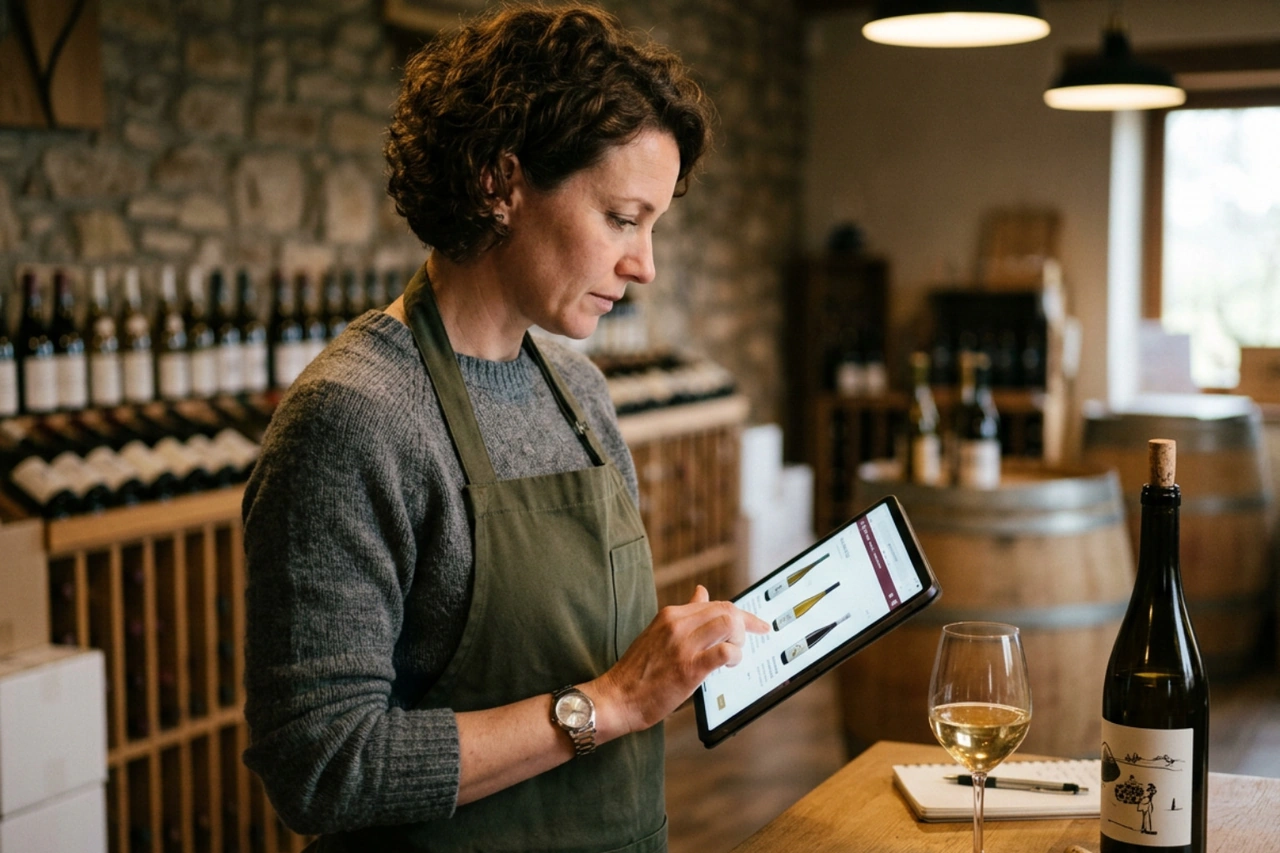


Wine website conversion optimization improves the path from first visit to first order, tasting reservation, or wine club sign-up. Focus on a fast mobile experience, clear product pages, simple checkout, helpful email follow-up, and trust signals that make buying wine online feel easy and personal.
The average winery e-commerce conversion rate is 2.45%, while top performers reach 5.15%. That gap is meaningful. A winery achieves better results with a digital experience that gives guests the same clarity, care, and confidence they expect in the tasting room.
I’m Ben Visser, founder of Social Design House, a Charlotte-based creative studio that has spent 16 years helping growth-focused brands improve their identity, website, content, and marketing. Our work in wine website conversion optimization combines clear brand strategy with practical web design and performance marketing, because clarity is a gift.
Direct-to-consumer wine sales rely on strong digital touchpoints. When a guest arrives at your site, the visual hierarchy and site architecture establish credibility within seconds. Building a high-converting website means combining digital hospitality with clean layout choices, making it simple for wine lovers to explore, select, and buy.
We focus heavily on building experiences where design serves clear business goals. Through our Service: Digital User Experience Strategy, we structure beverage sites around clear buyer journeys so every visitor finds what they need without confusion.
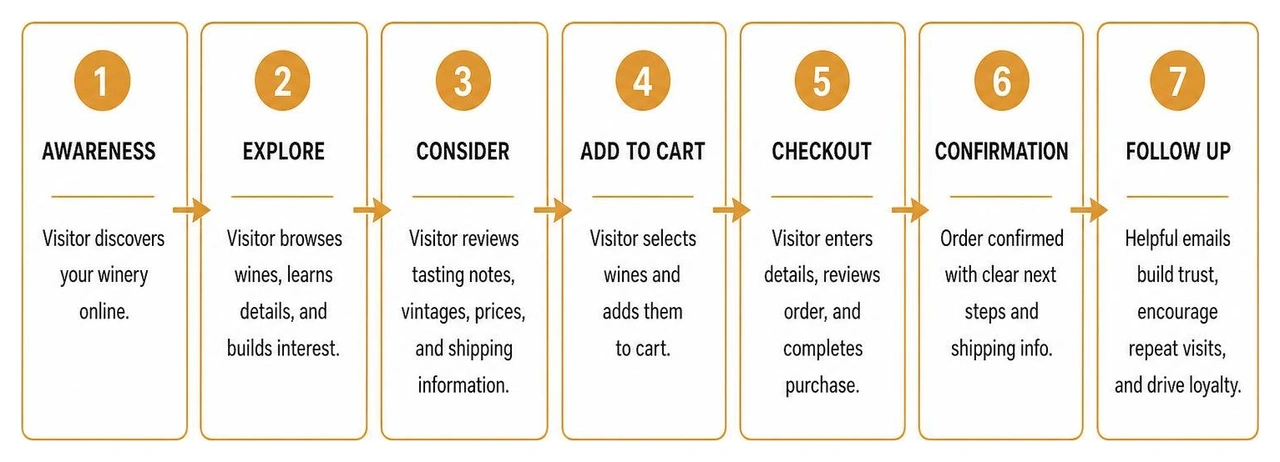
Digital hospitality translates the warmth of your tasting room into an online environment. When visitors feel welcomed and guided, they interact longer and buy with confidence. Simple layout structures, legible fonts, clear call-to-action buttons, and fast page speeds recreate the attentive service of a knowledgeable sommelier.
If you are curious about what structural components set successful craft beverage sites apart, read our detailed response on What makes a great beer or wine website.
Online wine shoppers rely entirely on visuals and descriptive text to judge quality. Subpar bottle photography reduces buyer confidence, while sharp 3D bottle renders and high-resolution images show labels clearly and accurately.
A great product detail page answers critical buyer questions immediately:
We saw this dynamic during our work with Work: Albert Bichot, where presenting rich heritage along with structured product detail strengthened brand positioning and customer engagement online.
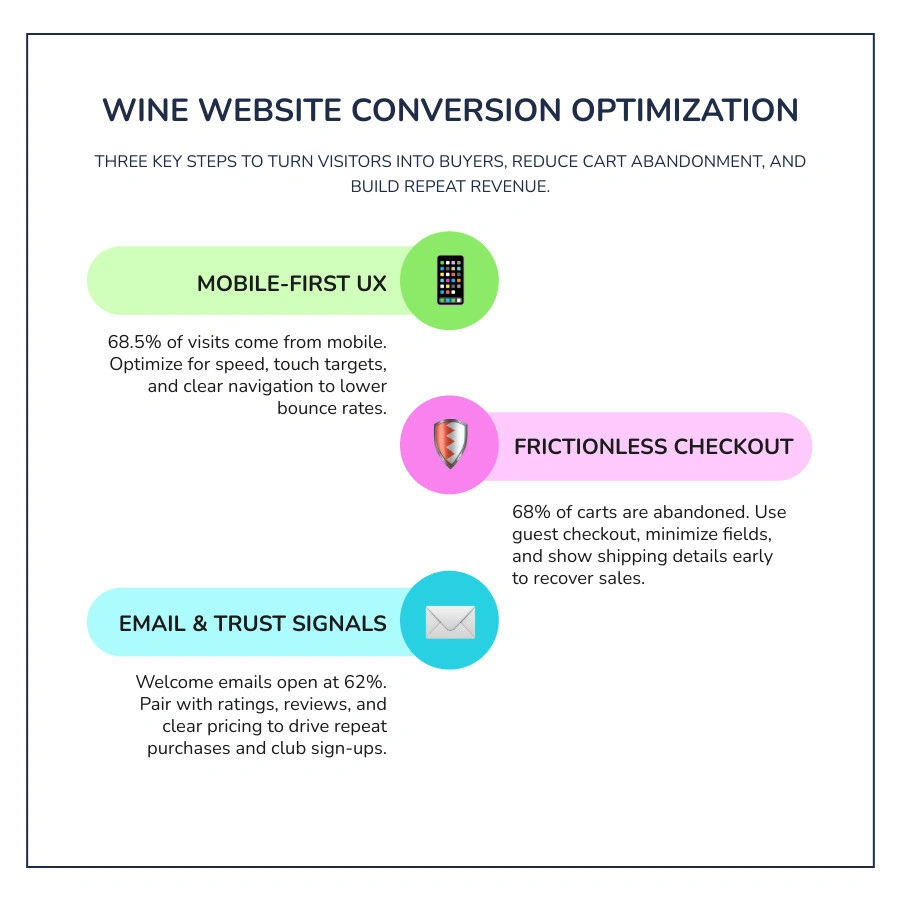
Smartphones generate 68.5% of winery website traffic. Yet mobile bounce rates average 48.5%, compared to 39.2% on desktop. If your mobile layout feels slow or awkward, more than half of your potential buyers leave before viewing a second page.
Designing for mobile devices requires focusing on speed, clear touch targets, and streamlined navigation menus. A buyer browsing your site on a phone should be able to select bottles and start checkout with minimal effort.
Studies show personalized online experiences convert 44% of shoppers into repeat buyers. Providing customized mobile navigation choices speeds up discovery and drives higher conversions.
The average cart abandonment rate across winery websites sits at 68.0%. Buyers walk away during checkout due to unexpected shipping costs, forced account creation, and cumbersome age verification prompts.
Reducing checkout friction directly recovers revenue. Implement these adjustments to streamline your cart page:
If you want to understand how customized checkout tools and reservation engines integrate into modern websites, explore our FAQ on Can you build e-commerce or tasting reservation websites.
Optimizing technical flows yields direct, measurable sales gains. For instance, industry case studies demonstrate how refining Shopify checkout flows, schema data, and mobile layouts drove a 52% conversion rate increase and a 41% quarter-over-quarter sales gain for an online Italian wine merchant.
Direct-to-consumer wine revenue relies heavily on recurring subscriptions and repeat purchases. The average winery customer lifetime value reaches approximately $1,250 over 3 years, while annual wine club churn averages 18.5% with a typical customer lifetime span of 32 months.
Increasing subscriber retention and lifetime value keeps acquisition costs manageable.
Email remains the single most effective channel for driving online wine purchases. Winery welcome emails generate an average open rate of 62.0%, presenting a golden opportunity to introduce your winery story and offer a first-purchase incentive.
Automated email sequences to implement immediately include:
Through targeted setup in our Service: Marketing Automation, we build workflow automations that keep subscribers engaged throughout the year.
A real-world example of this strategy in action is seen with Crane Family Vineyards, where combining revenue-tracked email campaigns with website UX improvements achieved an 81.5% year-over-year increase in holiday e-commerce sales.
Presenting pricing clearly reduces buyer hesitation. Presenting single-bottle pricing alongside discounted wine club subscription options side by side makes membership benefits obvious.
In another example, redesigning product detail page pricing panels to highlight tiered subscription savings created a 3.9 percentage point increase in add-to-bag clicks and a 4 percentage point rise in subscription sales.
Effective upselling strategies include:
Driving steady online sales starts with attracting visitors actively seeking specific wines, tasting room experiences, or club allocations. Combining search engine optimization with genuine customer validation turns search traffic into reliable sales revenue.
Organic search brings high-intent buyers straight to your catalog. Targeting specific search terms like "small batch Willamette Valley Pinot Noir" or "Napa Cabernet Sauvignon direct shipping" connects your site with ready-to-buy consumers.
Key SEO practices for wine digital platforms include:
We help beverage brands build durable organic search visibility through our comprehensive Service: SEO AEO GEO. If you represent a wine importer or regional distributor, check out our guide on the Most important things to consider when building a wine importer website.
Wine buying involves perceived risk, especially when purchasing high-end vintages online without tasting them first. Customer reviews, professional ratings, and media highlights provide validation that eases buyer hesitation.
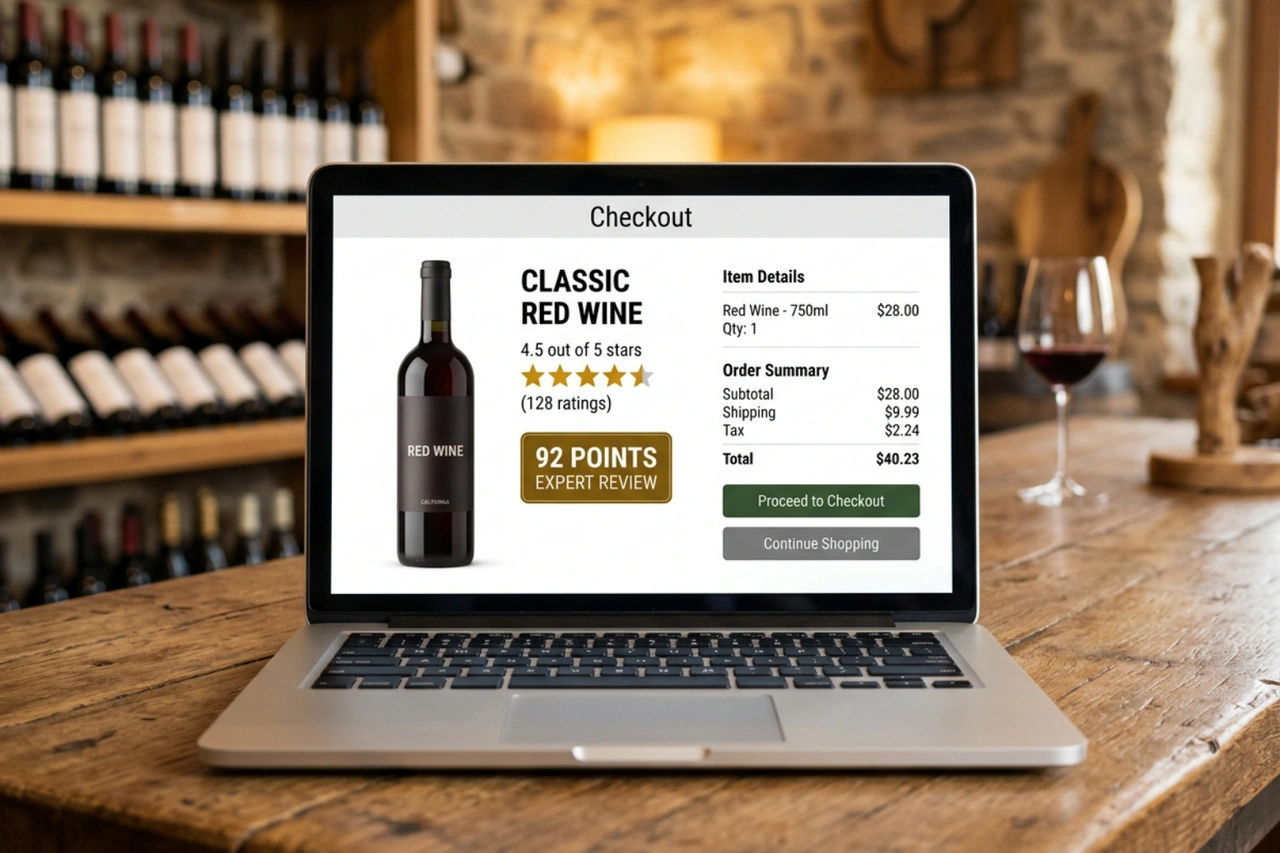
Integrate these social proof elements across your site:
Systematic testing beats guesswork every single time. Establishing operational benchmarks lets you identify performance bottlenecks, run controlled A/B tests, and make deliberate site updates grounded in real user data.
Review how standard wine e-commerce performance compares against high-performing sites based on data from Wineries Industry Marketing Benchmarks 2026 :
| Metric | Industry Average | Top 10% Performers | Optimization Goal |
|---|---|---|---|
| E-commerce Conversion Rate | 2.45% | 5.15% | Exceed 3.50% via streamlined checkout |
| Cart Abandonment Rate | 68.0% | Below 55.0% | Reduce friction via guest checkout |
| Mobile Bounce Rate | 48.5% | Below 35.0% | Sub-3-second load times |
| Customer Acquisition Cost (CPA) | $42.50 | Below $30.00 | Targeted high-intent SEO |
| Annual Wine Club Churn | 18.5% | Below 12.0% | Automated retention emails |
| Welcome Email Open Rate | 62.0% | Above 70.0% | Immediate automated delivery |
To build a continuous optimization cycle:
The industry average e-commerce conversion rate for wineries is 2.45%. Top-performing winery sites achieve conversion rates of 5.15% or higher. Reaching top-tier performance requires optimizing mobile responsiveness, improving product visual presentation, simplifying checkout steps, and using automated email workflows to follow up with visitors.
Wineries can lower mobile cart abandonment rates by providing a fast guest checkout option, minimizing required address form fields, integrating smooth age verification scripts, and ensuring site pages load in under 3 seconds. Clear shipping calculation and diverse digital wallet options like Apple Pay also keep mobile buyers from walking away.
Email marketing serves as the primary driver for repeat e-commerce sales and club sign-ups. Winery welcome emails average a 62.0% open rate, while club release campaigns achieve a 5.5% click-through rate. Setting up automated abandoned cart sequences, seasonal release alerts, and personalized re-engagement campaigns provides a consistent stream of recurring online revenue.
Building a high-converting winery website is a continuous process of refining touchpoints, eliminating friction, and delivering digital hospitality. When your brand story, visual presentation, site speed, and checkout flow align seamlessly, guests feel confident placing an order or joining your wine club.
At Social Design House, our 10-person creative team operates as a fractional creative extension of your business. Over 16 years, we have helped growth-focused craft beverage brands build custom Webflow and WordPress websites, define modern brand strategy, execute performance marketing campaigns, and apply our AI Brand Framework to connect with ready buyers.
If you are ready to refine your digital presence, explore our dedicated work for Industry: Beer Wine and let us help you find your sweet spot. Excited to continue building digital experiences that drive real growth for your winery!