A wine importer website has unique challenges that are different than other sites we build. It has to sell a portfolio to trade buyers, tell producer stories to consumers, serve a sales team in the field, support distributor partners, and hold thousands of interconnected records in a visually beautiful way.
.svg)


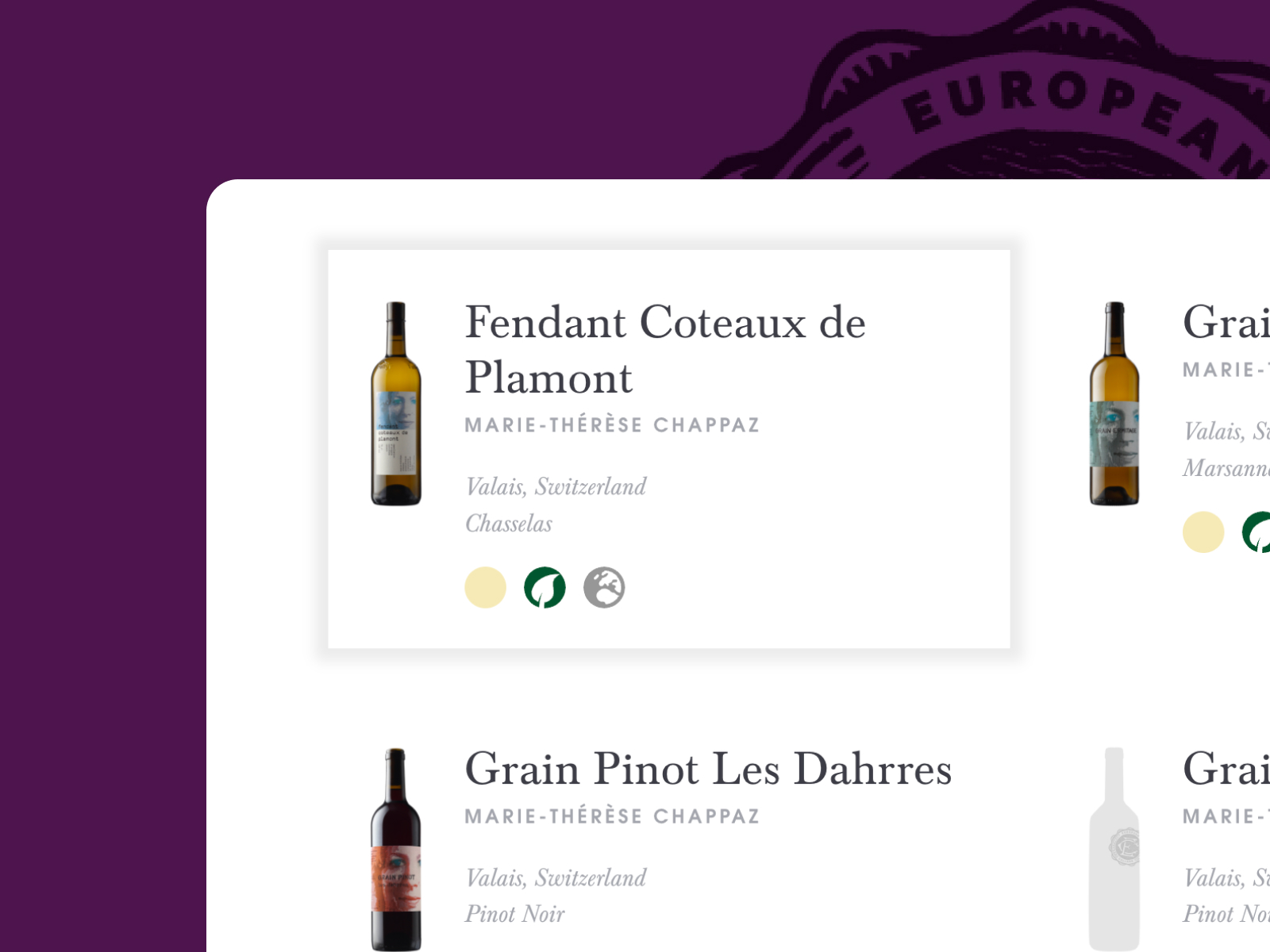
We have built and maintained importer sites for European Cellars, Albert Bichot USA, and Regal Wine Imports and more. Here is the scale we manage day to day:
About European Cellars: European Cellars is a Charlotte-based importer of small-production wines from Europe. We manage 450+ wines from 70+ producers for them, plus 2,000+ press mentions. Every wine connects to its producer, and every producer page builds itself from the wines underneath it.
About Regal Wine Imports: Regal Wine Imports is a New Jersey importer and distributor with a portfolio spanning wine and craft beer. Bigger build, two catalogs running at once: 316 producers and 1,139 wines on the wine side, 23 breweries and 150 beers on the beer side, with 4,000+ press articles behind all of it.
Those numbers grow weekly. Each site was built over five years ago, proving that a strong foundation is critical.. The decisions you make in week one determine whether you are dropping some more dough on a new website in one year or ten.
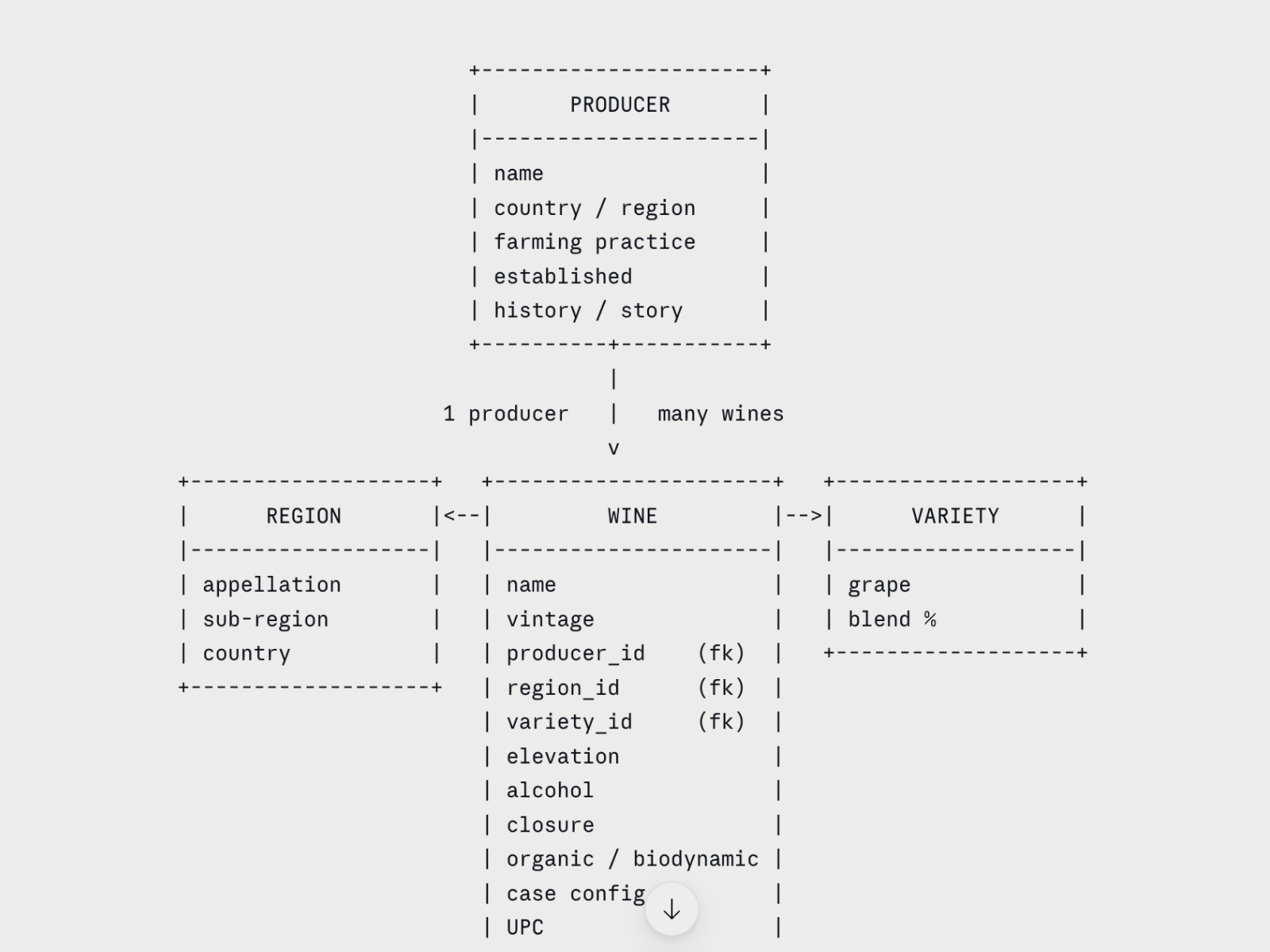
The hardest problem in wine importer website design has nothing to do with visual design or hosting. It is defining a data structure at the beginning of the project that allows for growth without a rebuild.
Each wine and producer carries specific data points that need to live in a consistent format in order to scale and be leveraged by search and filters:
When those live inside a paragraph of description copy, they are invisible to your filters, invisible to your search, and invisible to search engines. When they live as separate structured fields, they become the engine of the entire site.
A well-built importer site serves both equally, and the data structure is the reason it can.
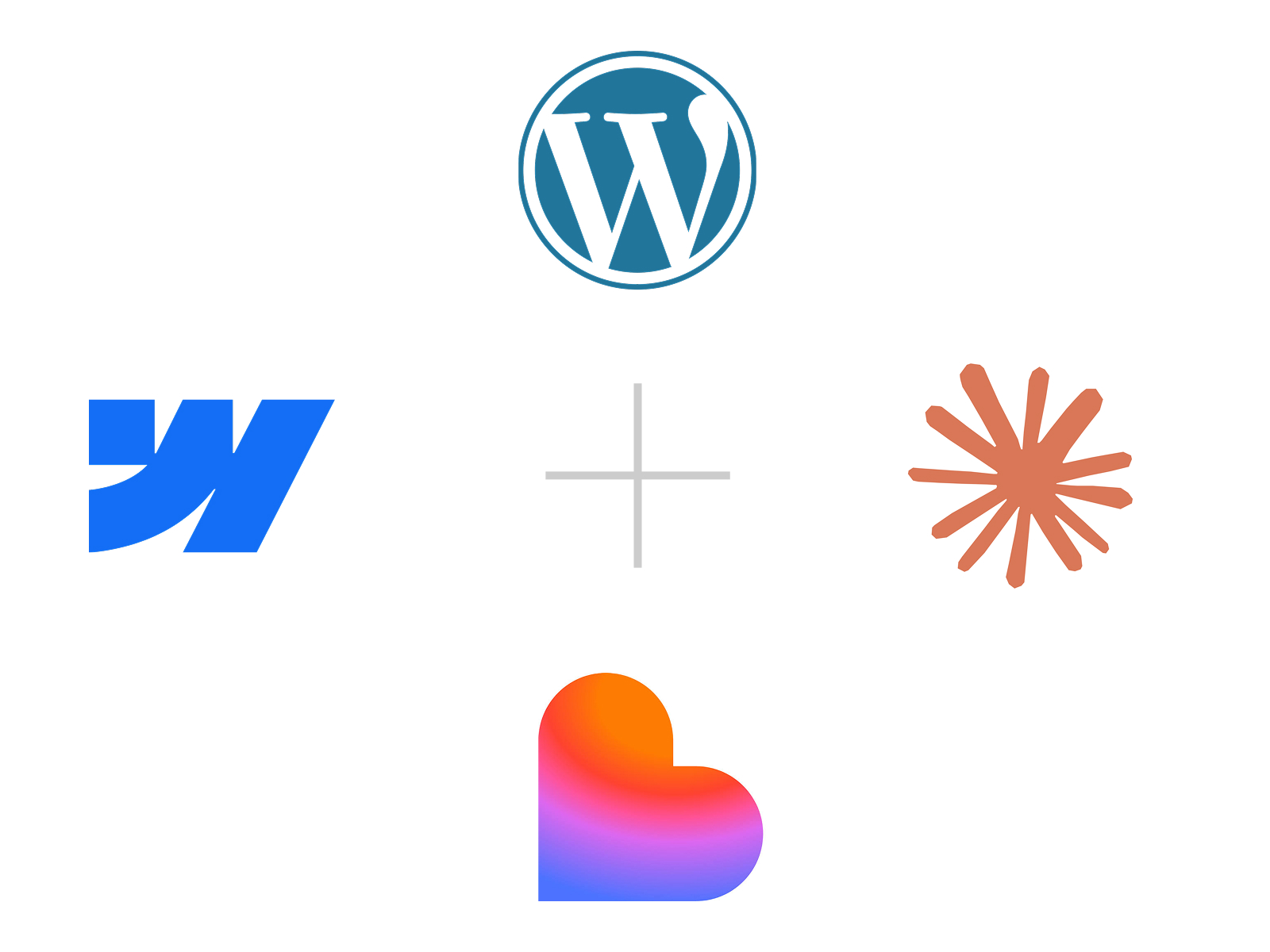
We can execute a high level build on any of these platforms. The right answer depends on your team, your content workflow, and how much technical capacity you want to carry in-house.
Strongest fit for a large, relational portfolio.
Strongest fit for teams that want to own the front end without a developer and speed up development time with MCP powered editing and AI powered build.
Real option for technically comfortable teams. Less proven at portfolio scale. This is a new way to build but is extremely powerful if done correctly and with a team who understands the benefits and the potential issues.
What you save in build time you can pay back in management time later, or you can prompt your way into a corner without a development and design partner to manage expectations.
Our recommendation: WordPress or Webflow for the core site today, with AI doing the heavy lifting inside your import and search layers rather than holding up the whole structure.

Wine buyers, sommeliers, and serious consumers look at beautiful things all day. Labels, packaging, restaurant interiors, photography. They notice when a website does not measure up, even if they never say it out loud.
The most common failure in this category is a site that has no relationship to the brand it represents. A 200-year-old Burgundy house and a natural wine importer from the Loire should not share a layout, a type stack, or a color logic. If your portfolio is built on provenance and craft, the site has to carry that weight visually or the story falls flat before anyone reads a word.
Inconsistent imagery makes a portfolio look assembled instead of considered. Set a standard and hold every producer to it:
"SDH understood our vision and brand aesthetic. Their attention to detail and consistent communication throughout the process made everything so smooth. Even when we stumbled across obstacles, the SDH team worked tirelessly to provide stellar solutions."
Patricia Trujillo, Sales Admin, Albert Bichot USA
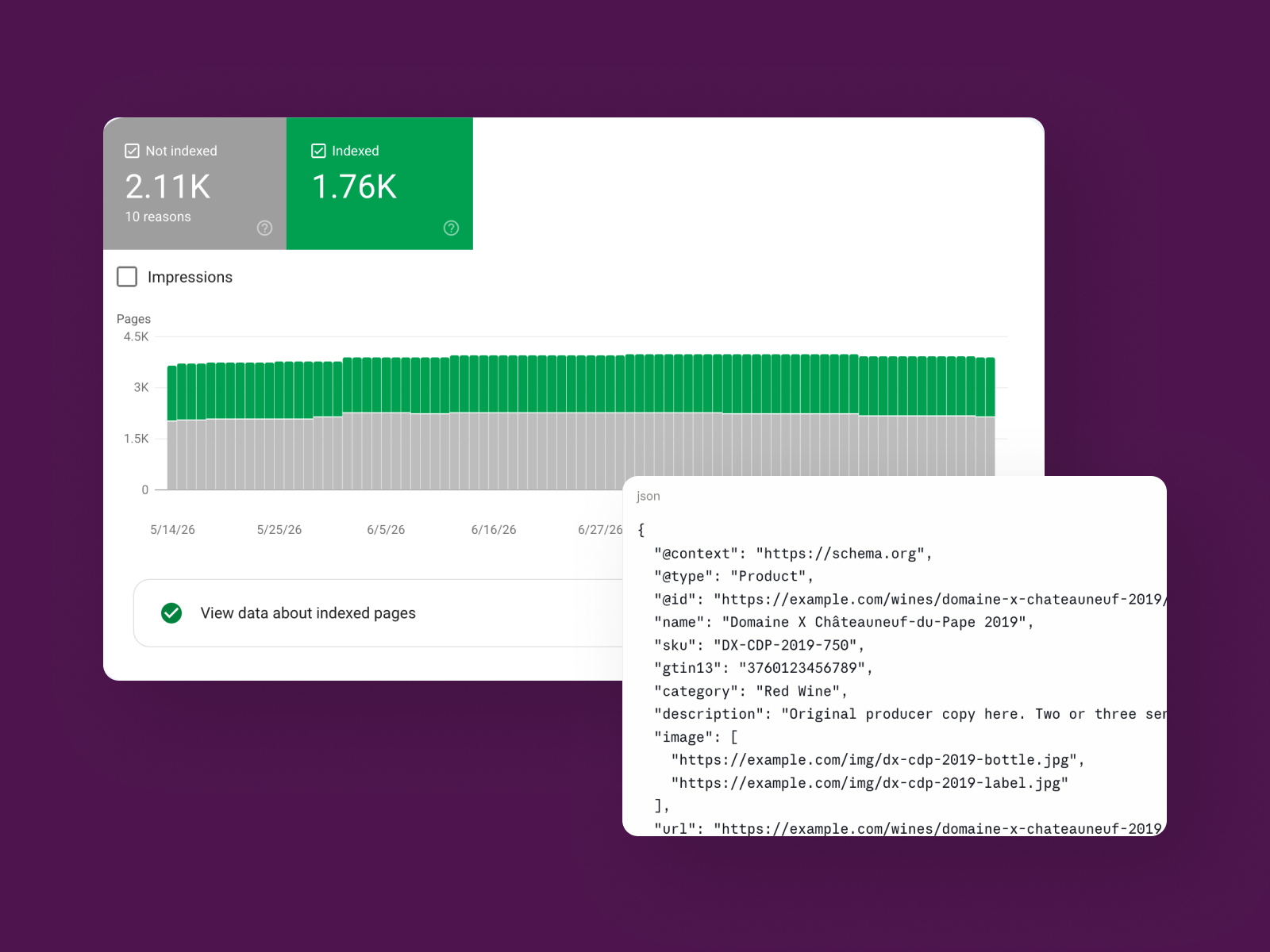
Wine importers sit on an enormous natural SEO advantage that most of them waste. Hundreds of producers, thousands of wines, decades of press coverage, ratings from every major publication. That is a content library competitors cannot replicate, and it should be structured as one.
Then link them automatically. The producer page pulls in its wines. The wine page pulls in its producer, its ratings, its press. A journalist searching a specific cuvée and vintage lands on a page that exists, is indexed, and connects outward to everything else in your portfolio.
ChatGPT, Perplexity, and Google AI Overviews are increasingly where wine research starts. They pull from structured, clearly organized pages with strong entity relationships. The same architecture that makes your site useful to a sommelier makes it citable to an LLM.
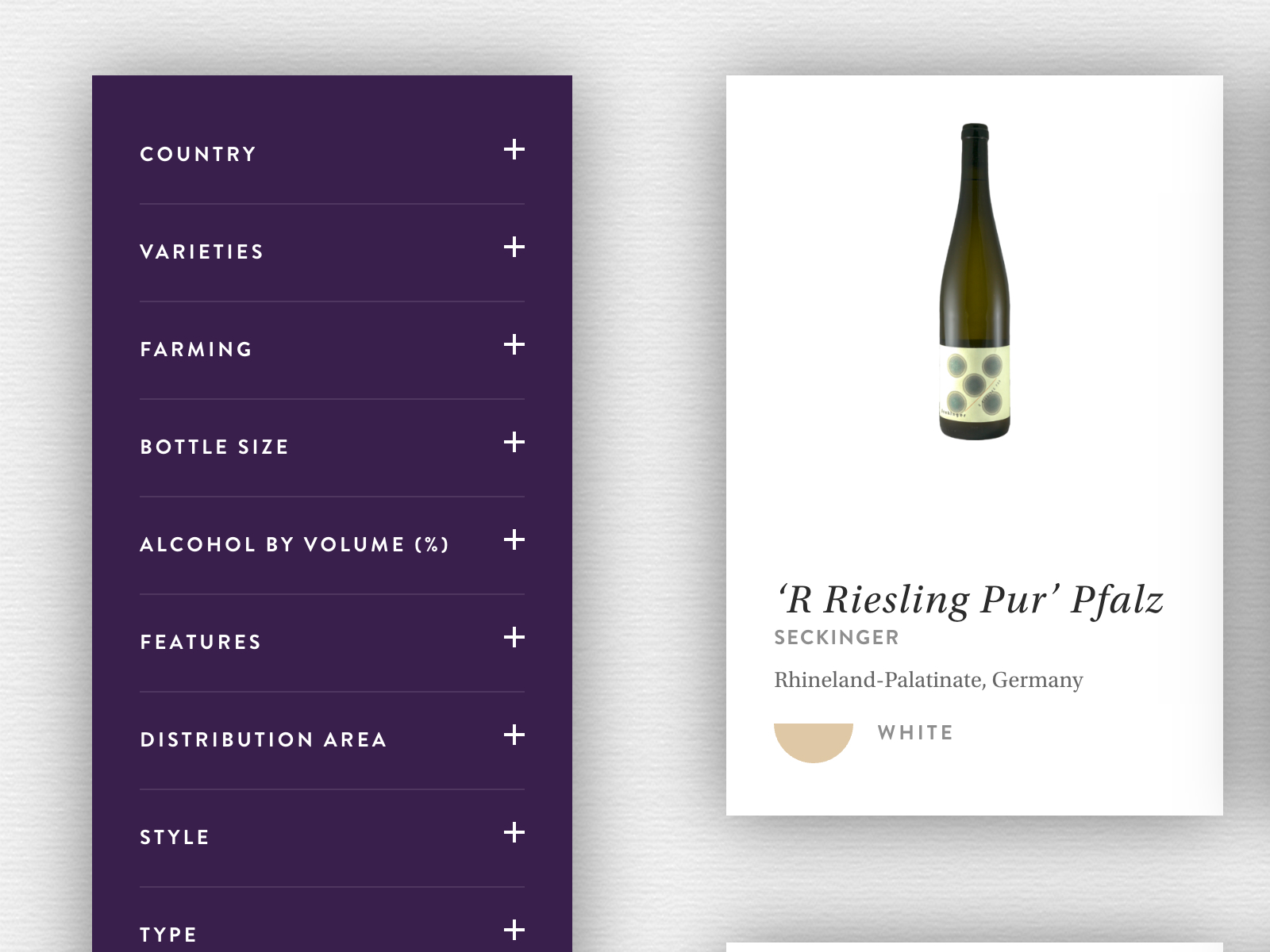
Wine vocabulary is a search nightmare. Accented characters, French and Italian and German place names, producer names abbreviated three different ways, vintages typed inconsistently.
Someone searching "Chateauneuf" without the circumflex should find Châteauneuf-du-Pape. Someone typing "Bichot" should get the producer, the wines, and the press, cleanly separated.
A search that dumps producers, wines, press, and blog posts into one undifferentiated list is a search that does not work.
We build custom AI-powered search that runs on a strict rule: the model can only return information that exists on your site.
How it works:
Why the guardrail matters more here. An unconstrained model asked about a producer will happily invent an appellation, a farming practice, or a rating. For an importer, that is a compliance and reputation problem, not a minor inaccuracy.
Constrained correctly, it gives a buyer a conversational way to ask "which of your Italian whites work for a seafood-heavy menu" and get an answer built entirely from wines you actually import.
Where to buy is one of the highest intent questions on an importer site. Most sites answer it with a text list of state distributors, which is the least useful possible format.
The choice depends on design direction and data volume. What stays constant is that the map is driven by records, not hardcoded, so adding or changing a distributor is a CMS update rather than a development ticket.
Filter by state, by distributor, and by which portion of the portfolio a given partner carries. Three-tier reality means not every distributor represents every wine, and the site should reflect that.
Producer histories, vineyard descriptions, winemaking notes, regional context. This is the material that separates an importer site from a spreadsheet with a header image, and it is the material that ranks.
The pattern we see most often is two sentences per producer, pulled from a supplier PDF, repeated across every importer carrying the same book. When five importers publish the same paragraph, none of them own the search result.
Original, well-researched producer content is genuinely defensible in a way that design and code are not.
How to budget for it:
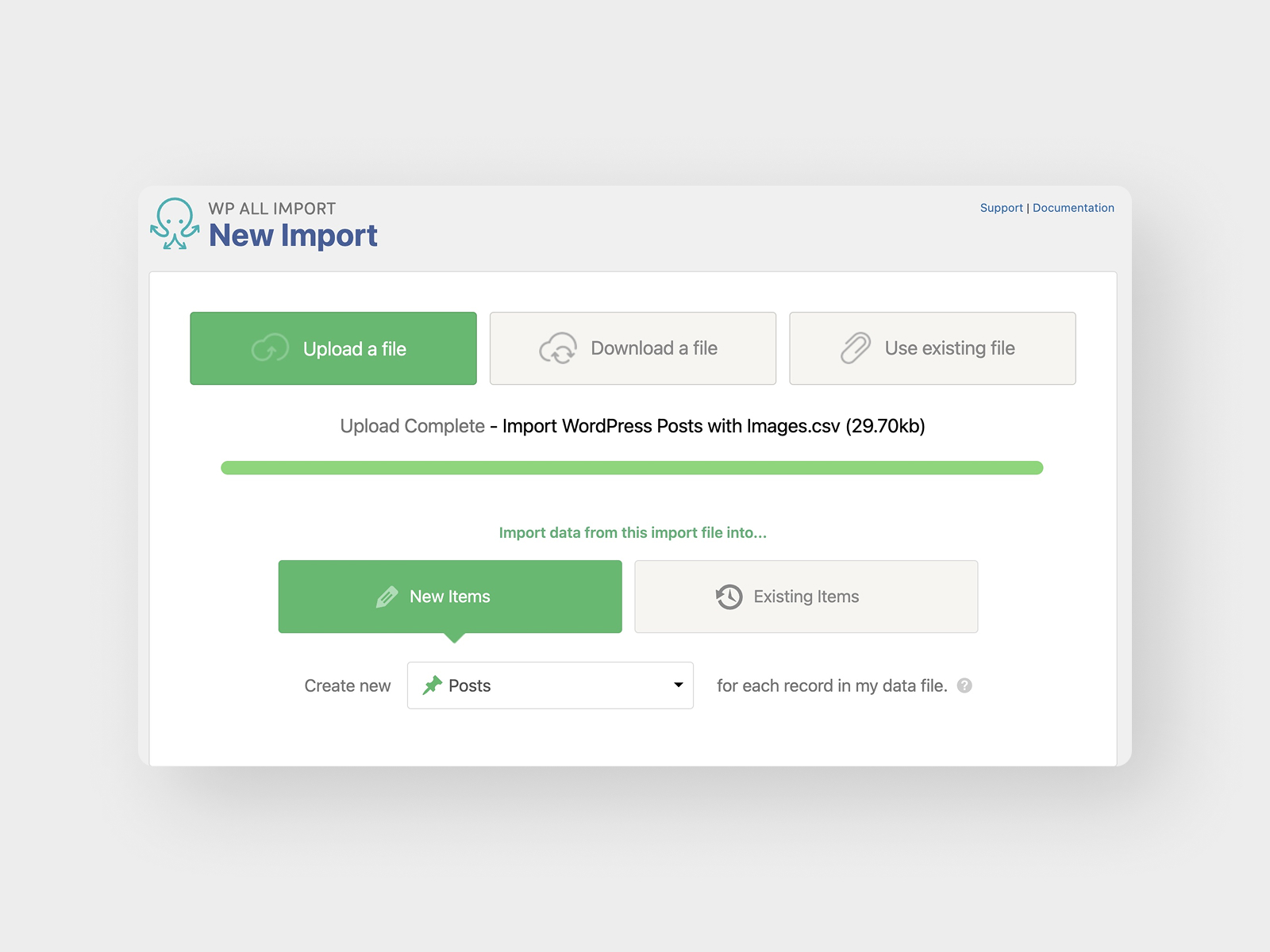
Nobody should be updating 1,139 wines one record at a time.
We have used WP All Import extensively for this, and more recently paired it with custom AI integrations for normalization and duplicate detection.
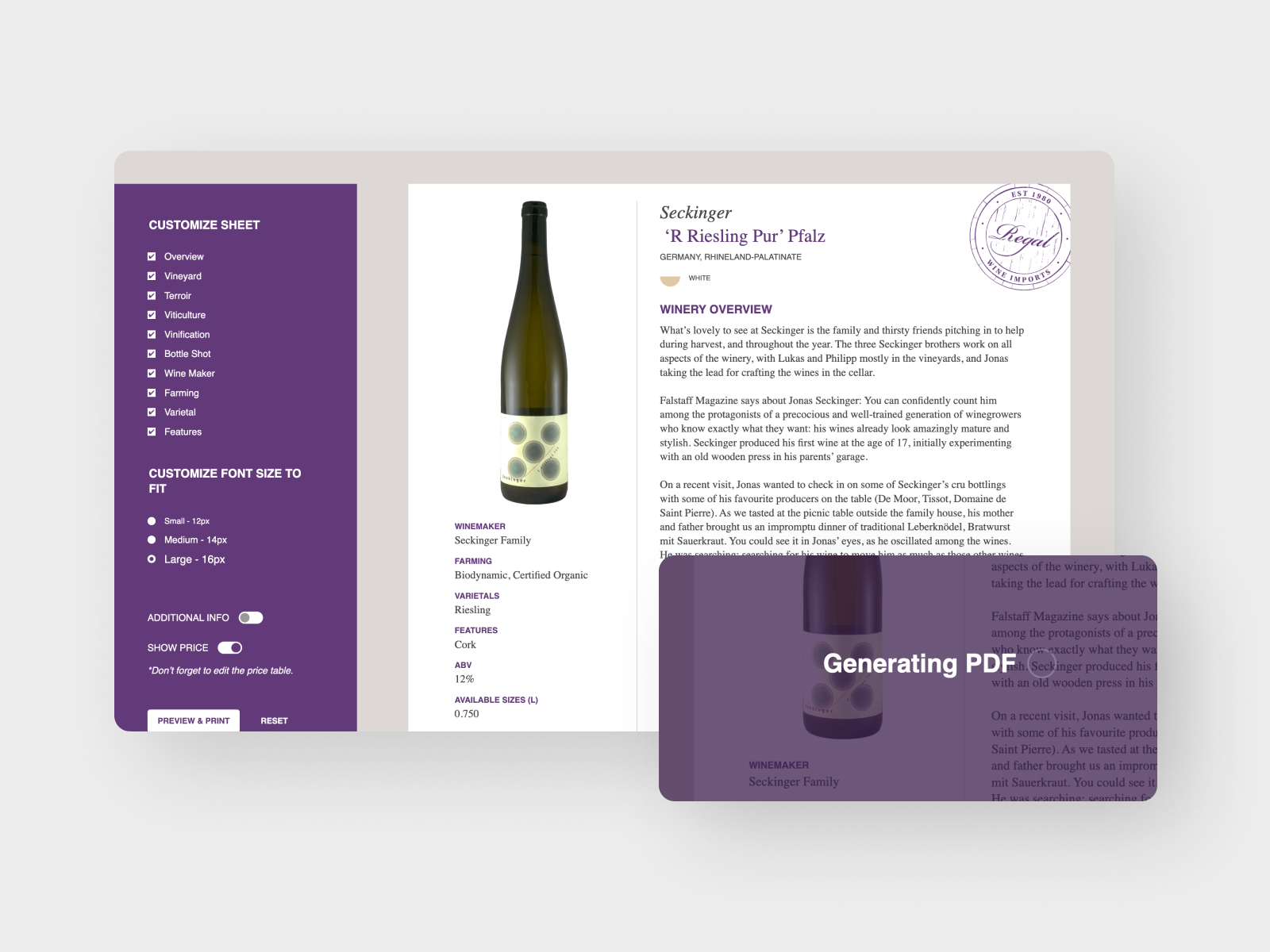
This is the piece most importers do not know to ask for, and it is the one that changes daily life for a sales team.
For Regal Wine Imports we built dynamic shelf talkers and product sheets generated directly from website records.
What that removes:
What it adds:
Update the data once and everything downstream stays right.
What is the best CMS for a wine importer website?
WordPress is the strongest fit for large relational portfolios because custom post types and plugins like SearchWP and FacetWP handle complex filtering well. Webflow is a strong alternative for teams that want turnkey hosting and a visual editor, paired with Jetboost or custom search. AI build platforms are viable for technical teams but less proven at portfolio scale.
How should wine and producer data be structured?
Store every attribute as its own field. Appellation, variety, region, elevation, farming practice, alcohol, and closure should all be separate structured data points rather than buried in description copy. That structure is what makes filtering, search, schema markup, and bulk updates possible.
Do wine importers need a distributor map?
Yes. Where-to-buy is one of the highest intent questions on an importer site. A record-based map with both map and list views, filterable by state and portfolio coverage, answers it faster than a static text list and is far easier to maintain.
Can AI search work safely on a wine website?
Yes, when it is constrained to your own content. An AI search layer that queries only your site's records and links back to source pages gives conversational discovery without the risk of the model inventing appellations, ratings, or farming claims.
How much time does bulk import actually save?
Roughly 10x on data entry. Managing updates in a spreadsheet and mapping them by unique ID removes the need to open each record, edit individual fields, and save. It also lets multiple people work the update at the same time.
How long does a wine importer website take to build?
For a portfolio of several hundred wines with producer relationships, press records, filtering, and a distributor map, plan on three to five months from kickoff. Data structure definition and content migration typically drive the timeline more than design or development.
Social Design House is a brand and web studio in Charlotte, North Carolina. We have spent 16 years building brand systems and websites, and a meaningful part of that work has been in wine, including European Cellars, Albert Bichot USA, and Regal Wine Imports.
If you are planning a new importer site, or trying to decide whether your current one can carry another 300 SKUs, we would be glad to talk it through.
Start a conversation with our team