Compare all-in-one and modular real estate website software platforms for MLS integration, lead routing, and CRM automation to choose the right tech stack.



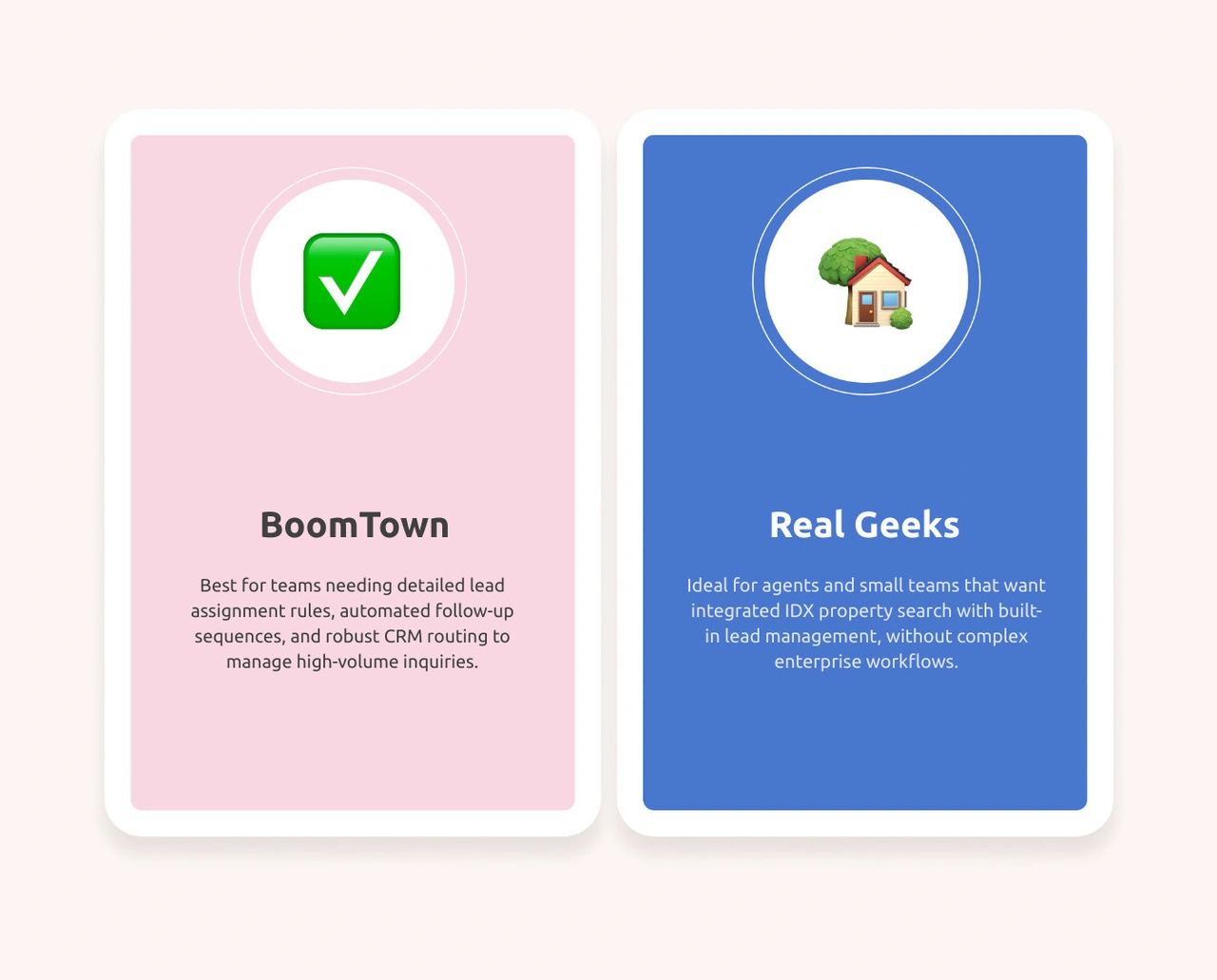
Choose real estate website software based on what happens after someone views a listing. Some platforms suit teams that need detailed lead assignment and follow-up rules. Others pair property search with lead management for agents and teams. A more distinctive website design may be the priority for some brokerages. Before choosing, confirm that a platform supports your MLS, captures inquiries from listings, and sends each lead to the right person or CRM.
I’m Ben Visser, founder of Social Design House. After more than 15 years helping brands build websites that attract traffic and turn visits into inquiries, I assess real estate website software with the same focus on clear design and dependable lead flow.
Real estate website software helpful reading:
The real estate technology sector has grown into a $10 billion industry. Modern property platforms rely on complex data pipelines to connect prospective buyers with active inventory. Real estate software functions as a public storefront and an operational engine. It must sync high-volume listing feeds, present data across screen sizes, and convert traffic into trackable contacts.
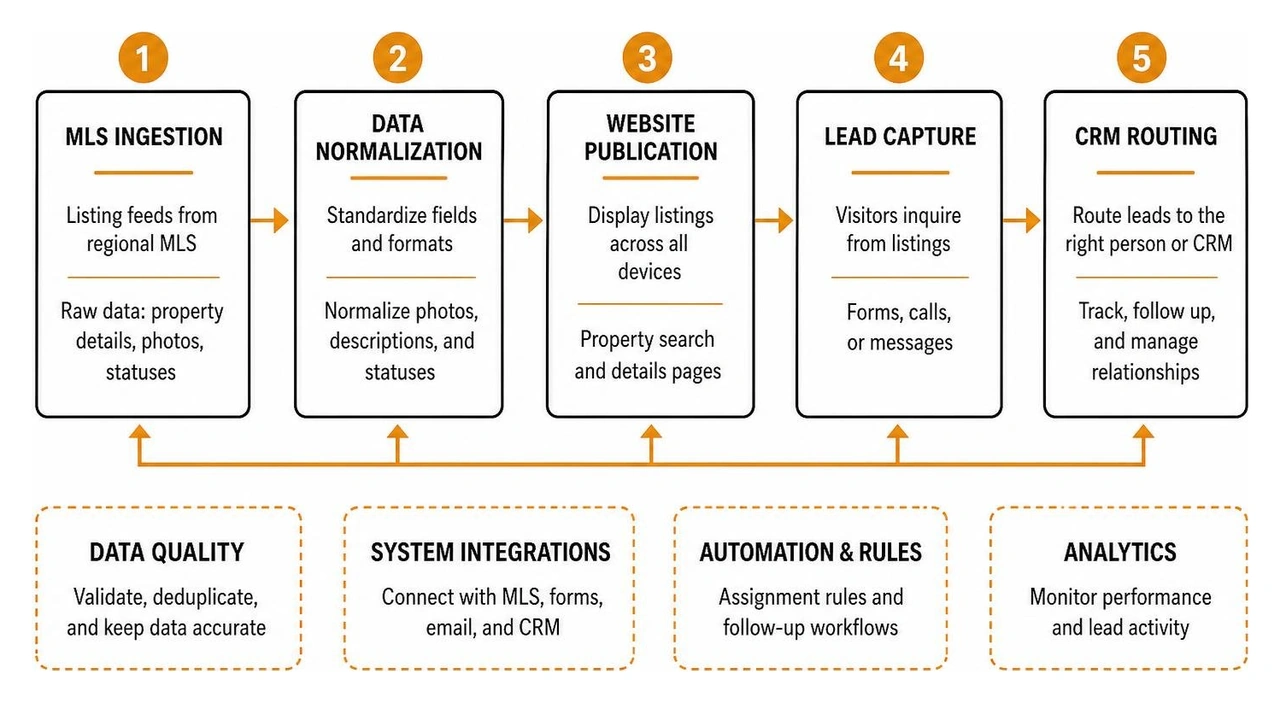
High-performing commercial real estate websites and residential portals depend on normalized data ingestion. When listing feeds arrive from regional multiple listing services, raw data varies in structure, field naming, and media organization. Reliable site architecture standardizes these feeds, ensuring property descriptions, high-resolution photo arrays, and transaction statuses render smoothly for every visitor.
When evaluating tools to power your digital presence, specific core capabilities determine how well you capture and keep user attention:
Attracting traffic to a property detail page is only half the battle. Your platform needs conversion points that prompt action without causing friction. Dynamic registration prompts, instant valuation forms, and scheduled tour triggers collect user data when buying intent peaks.
Once a visitor submits their details, backend lead scoring kicks in. The software logs viewed properties, price brackets, and search frequency, then routes the contact to your pipeline. Immediate notifications alert agents so they can respond while the prospect is still actively browsing your site.
Teams often weigh the simplicity of an all-in-one platform against the flexibility of a custom tech stack. Turnkey packages combine the website frontend, listing engine, and CRM into a single subscription. Modular stacks treat tools like building blocks, connecting a custom web experience to specialized CRMs and marketing software through APIs.
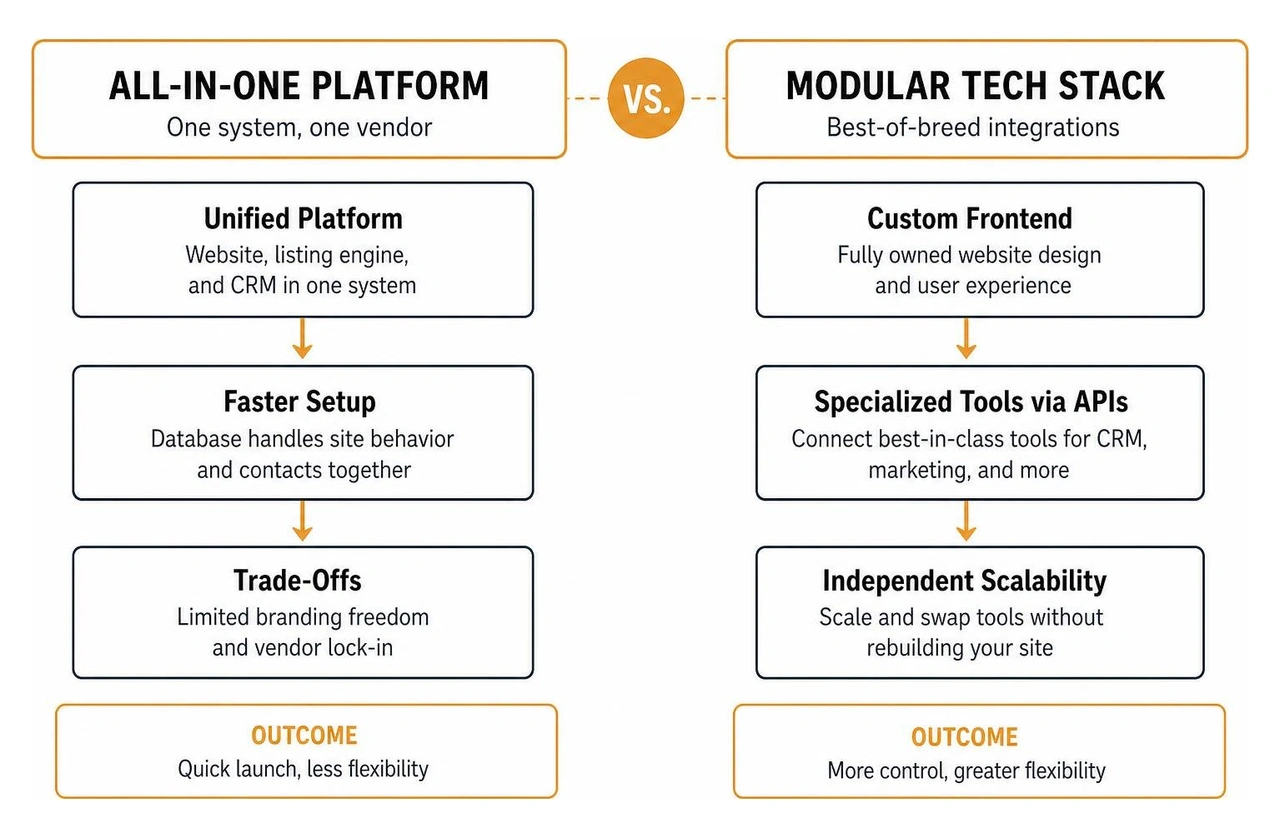
All-in-one systems speed up deployment. Because the database handles website behavior and contact records together, setup requires minimal technical coordination. However, these systems can limit branding freedom and create vendor lock-in, making it difficult to migrate your contact history if you outgrow the frontend.
A modular stack gives you complete ownership over your design and user experience. Connecting a custom frontend to dedicated platforms like Follow Up Boss, which offers over 250 integrations, allows teams to scale specific tools independently without rebuilding their entire digital presence.
| Architecture Type | Scalability Potential | Maintenance Profile | Integration Flexibility |
|---|---|---|---|
| All-in-One Platforms | Moderate (tied to vendor roadmap) | Low (vendor manages updates) | Rigid (restricted to native features) |
| Modular Tech Stacks | High (independent component upgrades) | Moderate (requires API oversight) | Broad (connects to any API-ready tool) |
Template builders help agents get online quickly, but generic layouts can make one brokerage look identical to the next. Off-the-shelf real estate website design templates work well for solo operators starting out.
Teams establishing authority in competitive markets lean toward bespoke development. Tailored residential real estate website design gives you complete control over narrative presentation, community guides, and conversion workflows. Building on modern frameworks like Webflow or headless WordPress ensures custom designs load fast, rank well on search engines, and reflect your brand accurately.
Selecting the right platform requires understanding how different tools handle lead flow, backend governance, and team adoption.

Automation tools handle routine initial contact, allowing teams to focus on active clients. Smart valuation models provide instant property equity estimates that convert curious homeowners into prospective seller leads.
Automated assistants and behavioral triggers keep leads warm over long sales cycles. Systems track when past prospects return to your website to view new listings, triggering contextual follow-up messages automatically. This immediate response bridges the gap between initial property discovery and an agent-led showing.
In digital lead generation, response speed determines conversion rates. Some platforms enforce response-time rules that automatically reassign inquiries if an agent does not follow up within a set window.
To maintain fairness and ensure rapid coverage, brokerages set up structured distribution protocols:
Your website works best when connected directly to your everyday operational tools. Synchronizing calendars, communications, and listing records prevents data silos and administrative delays.
Modern platforms connect smoothly to property operations tools. If your team manages commercial assets, multifamily communities, or single-family portfolios, learning how to integrate with property management software and CRMs keeps your public availability aligned with internal leasing records.
Bi-directional synchronization with Google Workspace and Microsoft Outlook ensures client interactions log to your contact database automatically. Automated social media feeds publish newly listed inventory to your brand channels, driving local traffic back to your site without extra manual data entry.
Operating a property platform requires consistent attention to MLS display rules, privacy regulations, and listing accuracy. Compliance extends beyond simple copyright notices; platforms must maintain secure data handling and respect local consumer protection standards.
Maintaining catalog integrity across multiple listing sources prevents duplicate entries and broken image links. Reviewing the corporate real estate software ecosystem and working alongside the regional tech ecosystem in Charlotte helps operators select technology stacks that protect listing data while delivering reliable performance to visitors.
Real estate website software provides the public-facing property search interface, ingests MLS listing feeds, and captures contact information from active searchers. A standard CRM serves as the internal database where you organize client history, set reminders, and manage your pipeline. While some products bundle both functions into one package, the website software focuses on listing discovery and lead capture, while the CRM handles ongoing relationship tracking.
Lead routing uses automated logic to distribute incoming web inquiries to team members. When a visitor submits an inquiry on a listing, the platform checks criteria like property location, price point, or agent availability. Rules assign the contact via round-robin queues, direct assignment, or performance-based routing. Many platforms include response timers that reassign the inquiry if the first agent does not confirm contact within a specified window.
Template-driven websites offer fast setup and lower initial investment, but they limit unique branding, custom search experiences, and deep workflow integration. Custom-built websites require a larger upfront investment and longer build timelines, but they deliver tailored design, distinct brand positioning, faster site speeds, and full control over how data connects to your CRM and marketing tools.
Choosing the right technology stack comes down to finding the sweet spot where functional property search meets clear brand positioning. When your web presence displays active inventory accurately and routes prospective buyers straight to your team, your digital platform becomes an active growth engine for your business.
Social Design House is a Charlotte-based creative studio with 16 years of experience operating as a 10-person fractional creative team and extension of client teams. We help businesses clarify their market presence and build custom digital platforms using our AI Brand Framework. If you are ready to build a distinct web presence that drives measurable inquiries, explore our approach to commercial real estate website marketing in Charlotte and let's craft something special together.