Discover essential Museum Website Design best practices for balancing aesthetic storytelling, functional UX, and visitor conversion.
.svg)


Art institutions and cultural centers carry distinct identities. Translating those identities into digital spaces requires a clear visual hierarchy, thoughtful brand strategy, and reliable navigation structures. When prospective guests open a homepage, they immediately judge how easy it is to navigate. A smooth user experience keeps visitors focused on the artwork and exhibits.
Mobile responsiveness is critical for modern cultural organizations. Visitors routinely check exhibition schedules, grab last-minute tickets, or look up parking instructions while walking down the street. If a website breaks on mobile screens, visitors bounce quickly. Modern layouts must adapt seamlessly to smartphones, tablets, and desktop displays without losing visual clarity or interface speed.
Building an engaging experience requires balancing artistic character with clean layout principles. Structured visual grids, intuitive search tools, and deliberate whitespace give visitors room to appreciate visual content. For creative inspiration, review our list of Museum Website Design Inspiration or visit institutions like The Mint Museum | Charlotte, NC to see how high-impact imagery works alongside simple navigation menus.
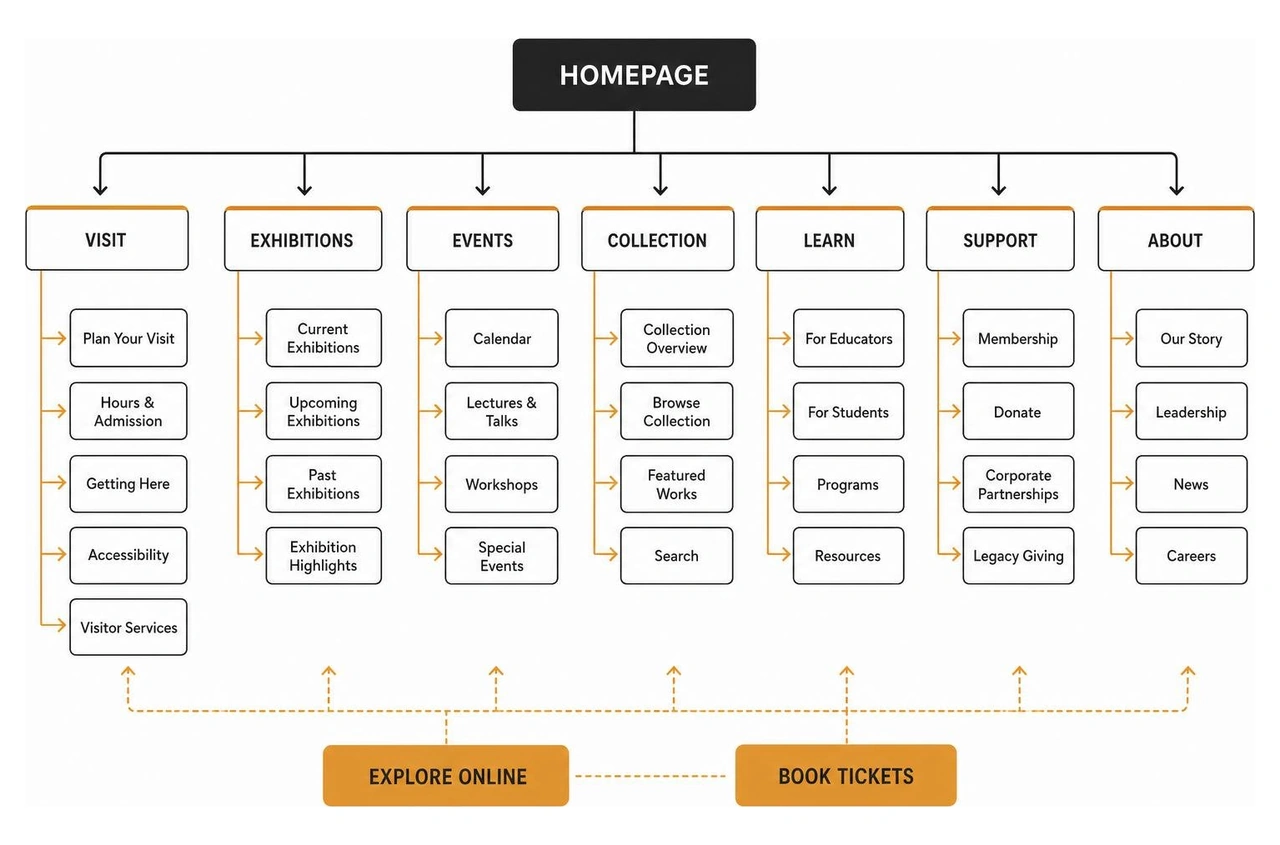
Every modern cultural site must serve two distinct groups at the same time: online explorers and prospective physical attendees. Balancing both audiences requires distinct visual signals and predictable layout logic across the entire homepage.
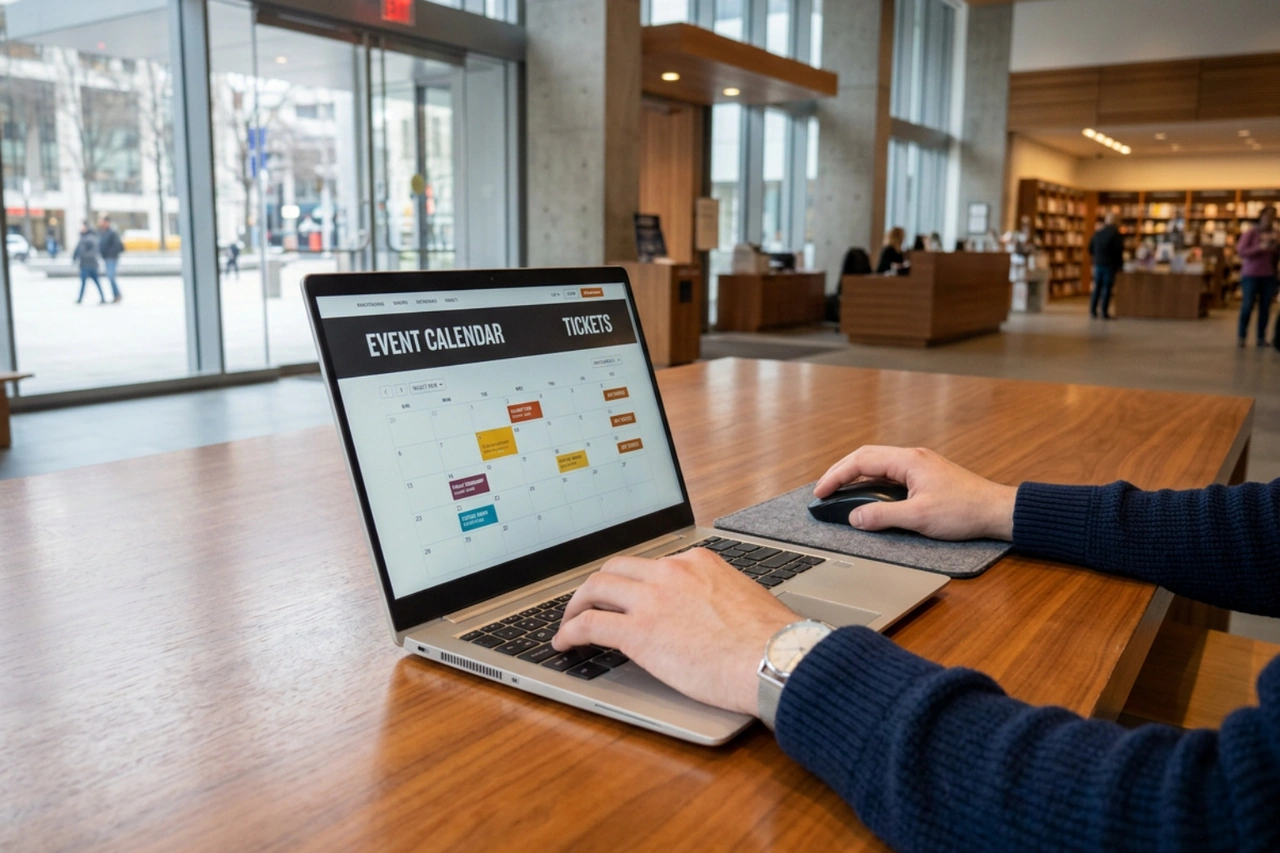
When organizations ask us Do you build websites that support exhibitions, programs, and events, we always emphasize organizing event details clearly. When practical details are front and center, visitors feel comfortable making plans and attending events.
A great visual system highlights art without distracting from it. Modern institutions often lean into monochromatic primary color schemes, like stark black and crisp white, paired with energetic color accents to direct user attention toward primary actions.
When a featured gallery opens, unique secondary accent colors help brand the exhibit within the overarching website framework. High-resolution imagery brings physical galleries to life on desktop monitors and phone displays. Custom typography choices also set a welcoming tone while remaining easy to read across screens of all sizes. Our work with The Mint Museum highlights how energetic typography and clean editorial grids make rotating visual art displays look amazing.
A rich user experience pairs narrative storytelling with clean conversion paths. A beautiful portal is only effective if people can easily purchase entry passes, join workshops, or register for special events. Simple, clear design makes visitor interactions painless and memorable.
Revenue streams support educational programs and community outreach. The digital experience must nurture these channels without overwhelming the browsing experience. Clear layout structures guide supporters directly toward action without unnecessary steps.
Organizations often wonder Can you build websites with donation functionality, and the answer is always yes. Direct conversion funnels give supporters a quick way to contribute without clicking through multiple complicated pages.
Public institutions serve everyone in the community. Adhering to Web Content Accessibility Guidelines (WCAG) ensures that every community member can access educational resources and plan a visit effortlessly.
Key accessibility practices include:
When clients ask Do you work with organizations that need ADA compliant or accessibility focused websites, we emphasize that accessibility benefits every user. Great regional presences, such as The Charlotte Museum of History, demonstrate how prioritizing accessibility creates a welcoming community resource.
Interactive components turn casual visitors into active participants. High-resolution collection viewers, online educational guides, and custom collection searches encourage visitors to spend more time exploring digital exhibits.
Our collaboration with the Greensboro History Museum demonstrates how organizing historic records into interactive digital displays brings local stories directly to regional audiences.
Institutions often manage thousands or millions of physical artifacts. The Metropolitan Museum of Art displays over two million works spanning 5,000 years of global culture, while the British Museum manages over 8 million objects. Online gallery platforms like Nature Morte host curated collections of 14,000 world-class artworks. Organizing databases of this scale requires careful categorization, fast server infrastructure, and structured metadata search tools.
| Feature Category | Physical Exhibition Experience | Digital Collection Platform |
|---|---|---|
| Capacity | Limited by gallery square footage | Unlimited object database capacity |
| Accessibility | Requires physical travel and operating hours | Available globally 24 hours a day |
| Searchability | Guided by wall labels and floor maps | Direct search by artist, year, medium, or style |
| Interactivity | Observation from safety distances | High-resolution zoom, 360 views, and digital audio tracks |
Nostalgic digital aesthetics offer exciting creative opportunities. Early 1990s web development, Y2K graphic trends, pixel art motifs, and legacy interactive formats carry immense charm when applied thoughtfully.
Preserving web history shows us how modern interfaces grew out of early design experiments. The Web Design Museum exhibits thousands of screenshots and videos of websites, software interfaces, and legacy media from the 1990s to the late 2000s. Referencing historical aesthetics helps creative teams build playful, memorable digital experiences that stand out from cookie-cutter corporate designs while maintaining clear navigation and fast page speeds.
The most critical features include clear operational details like hours and location, direct ticketing, mobile responsiveness, accessible digital collection galleries, WCAG compliance, and dynamic event calendars.
Major institutions use simple top-level visual navigation to separate visitor planning from collection databases. Clear visual buttons guide physical attendees toward tickets, while clean secondary links lead researchers and students straight into digital archives.
Regional cultural organizations can succeed by focusing on fast load speeds, distinct visual branding, easy mobile navigation, and community stories. Simple, clean layouts built on web platforms like Webflow or WordPress allow smaller teams to update exhibits quickly without needing massive technical budgets.
Creating an extraordinary web experience for a cultural institution takes careful planning, creative focus, and reliable technical execution. Simple, clear design principles help institutions showcase artwork, connect with local communities, and grow admission numbers.
The best museum website design work starts with clarity. Guests need to understand what is on view, how to plan a visit, where to buy tickets, and how to keep exploring after they leave the building. Staff teams need a site they can update without stress when exhibitions change, programs sell out, or new donor opportunities go live. That balance between guest needs and internal team needs is where thoughtful digital strategy gets really, really useful.
At Social Design House, our Charlotte-based 10-person creative studio has spent 16 years operating as a fractional creative team for ambitious organizations. We offer full strategic services including brand strategy, brand identity, web design and development in Webflow and WordPress, content creation and copywriting, performance marketing, and our AI Brand Framework. We love sitting down with cultural institutions to clarify their visual messaging and build tools that delight prospective guests. We live by simple mantras, including "Be the meeting you want to go to," "Simple, not easy," "Clarity is a gift," and "We're an extension of your team." Our official tagline is "Find your sweet spot," and that idea fits museum projects beautifully because every institution has a distinct mix of mission, audience, collection, and community energy.
Explore how we support creative institutions by reviewing our dedicated work in the Arts & Museums Industry. We are always pumped to discuss new digital projects and help institutions find their sweet spot. Excited to continue building special digital experiences together!