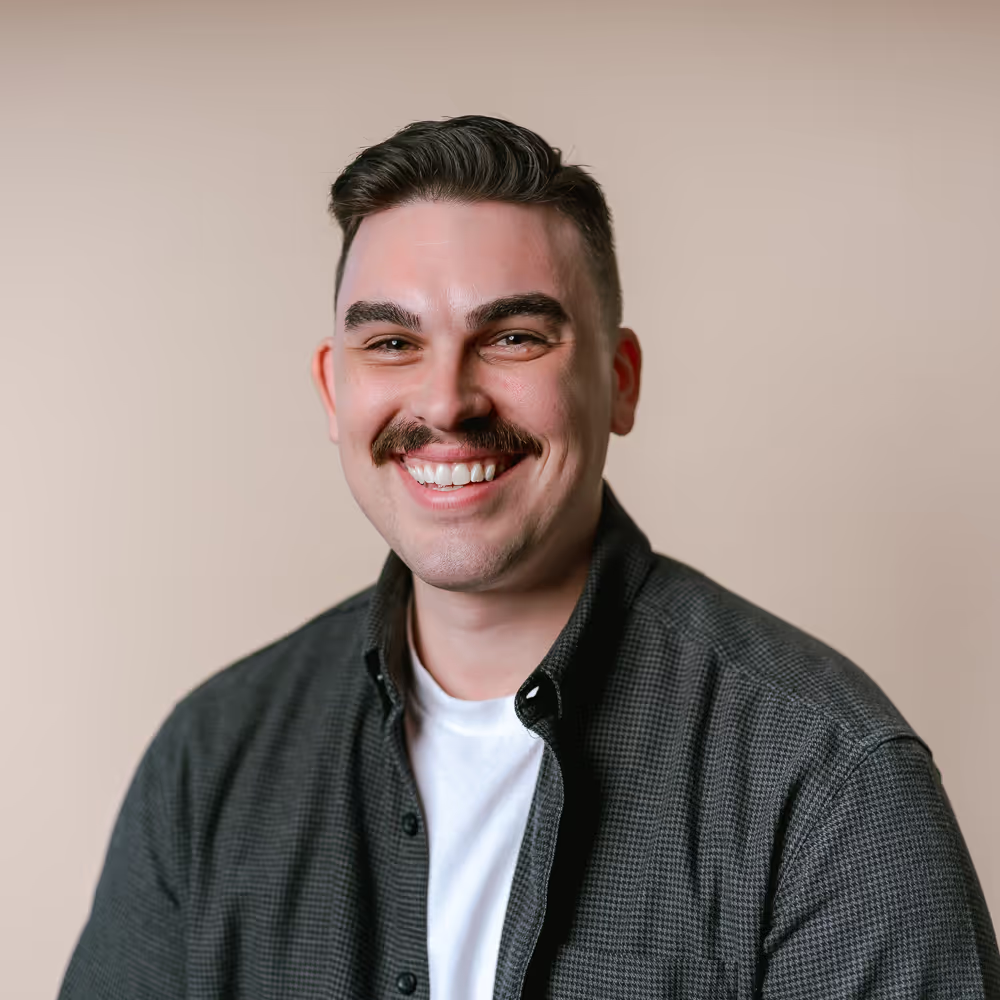
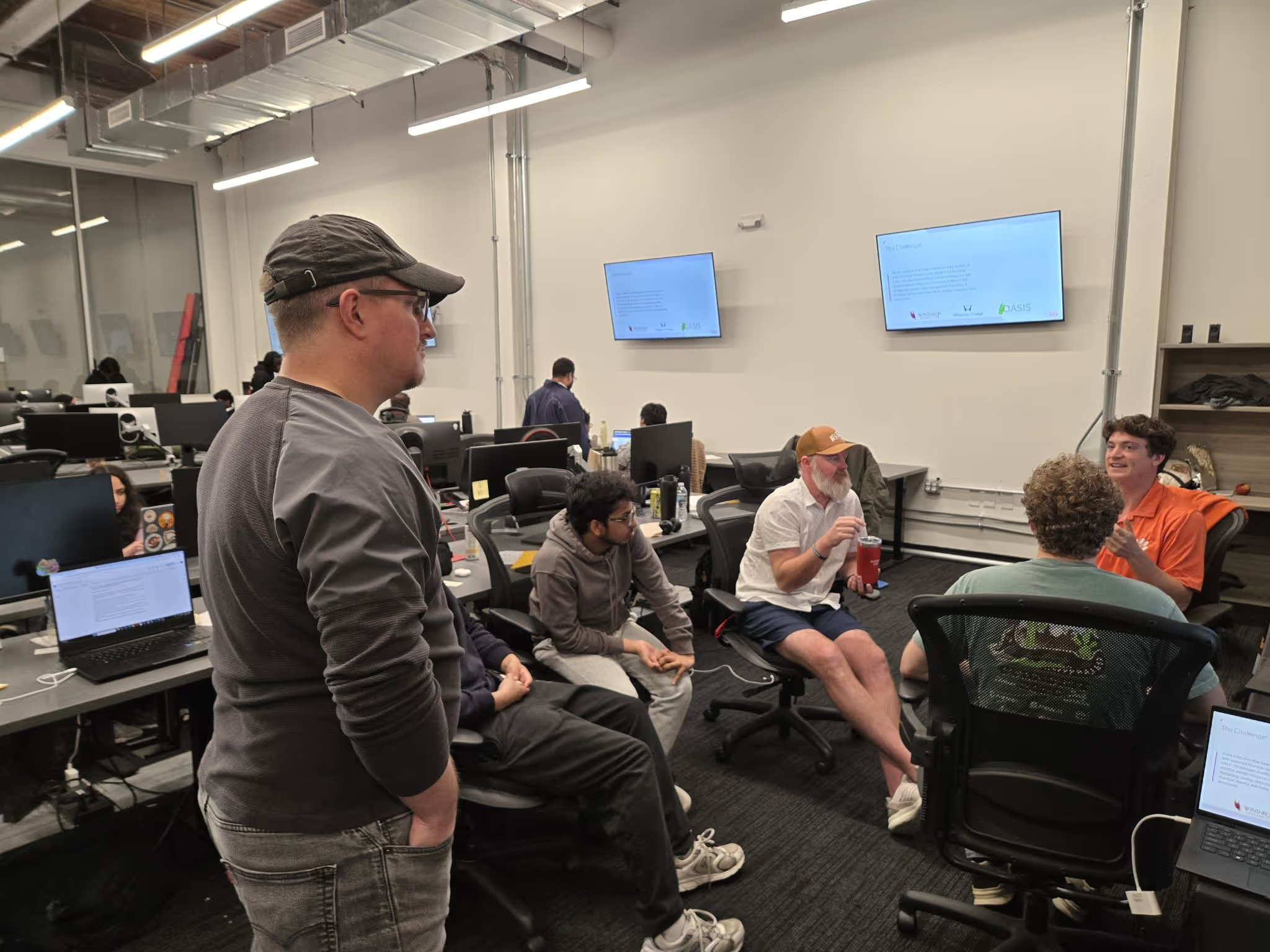
I had the recent pleasure of mentoring a Fintech AI Hackathon organized by Winthrop University and sponsored by Microsoft. I wasn't there to write code. I was there to ask questions that engineers don't always stop to ask themselves. Brand strategy, user experience, go-to-market thinking. I loved that role. I think it made a difference.
.svg)


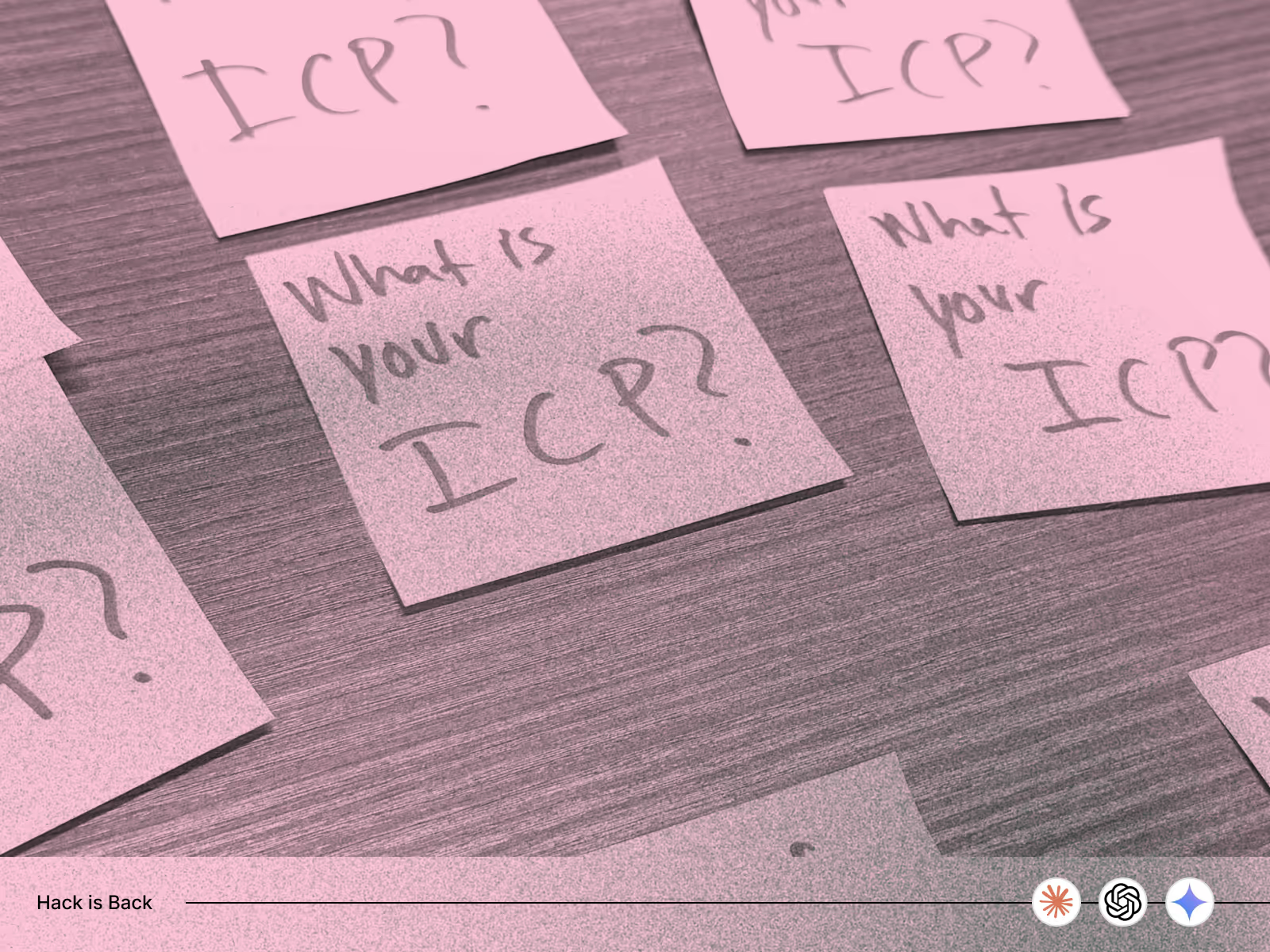
I kept it simple. I'd write a question on a sticky note, hand it to a team, and circle back to talk through it.
Three questions to guide our conversations throughout the 24 hours.
.avif)
Sticky One: What is your ICP?
No...not what is your Insane Clown Posse...but maybe?
Most of the teams hadn't thought past the product. So we stopped and built personas. Gave them a name, a backstory, a real financial challenge, whether that was debt, financial literacy, organization. Now they weren't building features because AI made it easy. They were building for someone specific.
That matters more now than it ever has. AI lets you ship a dashboard with 40 features in a weekend. That's not the win. When you have a person in the middle of every decision, you cut differently. You build what matters for THEM, not everyone else.
Sticky Two: What are your three key differentiators?
We're about to see thousands of new products hit the market. iOS deployments, SaaS tools, AI-native apps. The barrier to building is basically gone. Which means the barrier to standing out just got higher.
I asked every team: why would someone download your app instead of the 100 others that do the same thing? Brand, story, clarity of problem. Gamification. Simplicity. Integration. The teams that could answer that question clearly, those were the teams that had a pitch worth watching.
Sticky Three: Who are you on this team?
I came back the second morning and wanted to do something a little different. These teams had stayed up all night building together, most of them having never worked with each other before. I wanted to give them some language for how they operate.
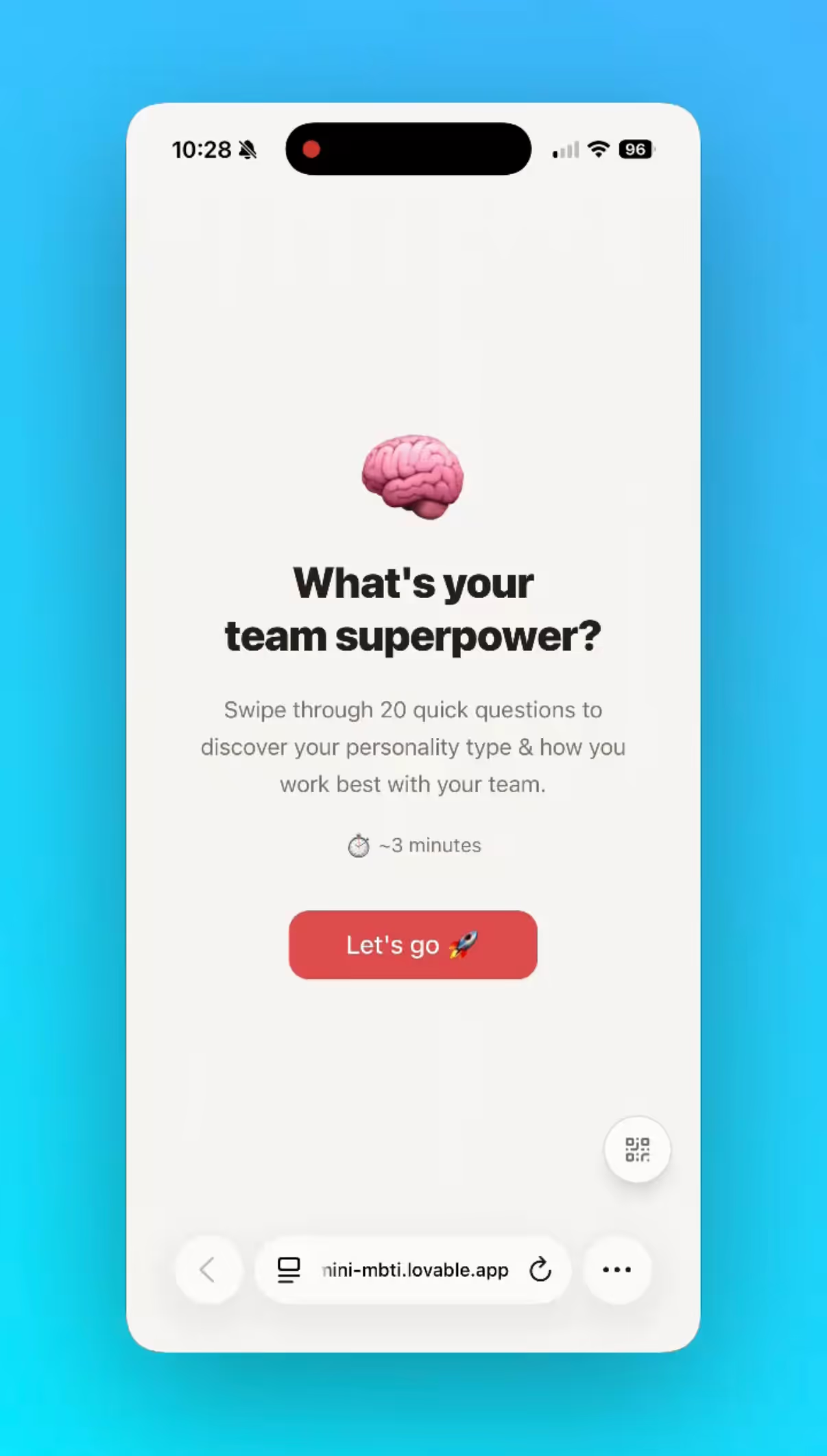
On the drive over, I voice-prompted Lovable to build a quick Myers-Briggs-style personality quiz. Swipe left, swipe right, yes or no, done in three minutes with a QR code. It wasn't a formal exercise but a quick and informal conversation starter.
What I found wasn't surprising, but it was interesting: almost everyone in the room was wired the same way. Task-oriented, detail-driven, structured. Two ENFPs in the whole room (me and my guy Christian). When you've got four people with near-identical profiles, someone has to stretch into a role that doesn't come naturally. Identifying that gap early makes a difference. We talked about using AI to fill it, building a Claude project or a prompted model to challenge you from the perspective you don't naturally operate from. A visionary counterpart for the analyst. A sales voice for the builder.
We do this at SDH. The idea of building an AI working partner to fill a gap rather than just spinning a hire, that's where a lot of organizations are headed.
The output.
.avif)
In a traditional hackathon (say early 2000s era), you get scaffolding. A rough framework, some core functions, and a pitch that's mostly aspirational. These teams were getting to something close to production-ready by morning. Dashboards, financial logic, security protocols, at a level that gave the judges something real to evaluate.
That speed created something unexpected: free time. Teams had room to talk to each other, to walk around, to actually connect. Professor Bessemer mentioned it specifically. In past hackathons, you're too heads-down to come up for air. This time, people were networking mid-event. Collaborating across teams. Being human.
That's the opposite of what people fear about AI, and it was great to see in real time.
A few other things I noticed:
I went in thinking AI might make junior developers less competitive. I left thinking the opposite.
The students who understood these tools, who came at it with curiosity and a little fearlessness, they could walk into most organizations and provide real value quickly. The risk isn't the junior developer. The risk is the mid-level person who's resistant to changing how they work. That's where I see the friction building.
A kid with a year of hackathon experience, a professor who actually gets it like Bessemer, and a willingness to move fast, that's a real hire. Companies are going to figure that out.
The hackathon energy is back. I missed it. Ten years ago, I found one of our developers, Taylor Foxx, at a hackathon. Being in that room again, watching these teams build something real under pressure, it reminded me that building can be fun.
Get people in a room. Give them a hard problem. See what happens.
That's still the best interview in the world.
=====
Big thanks to Winthrop University, Professor Andrew Bessemer, Zack Oxendine, Microsoft, Oasis, and Williams & Fudge for putting this together.