Build a standout portfolio website for software developer careers with creative layouts, case studies, and recruiter-friendly design strategies.
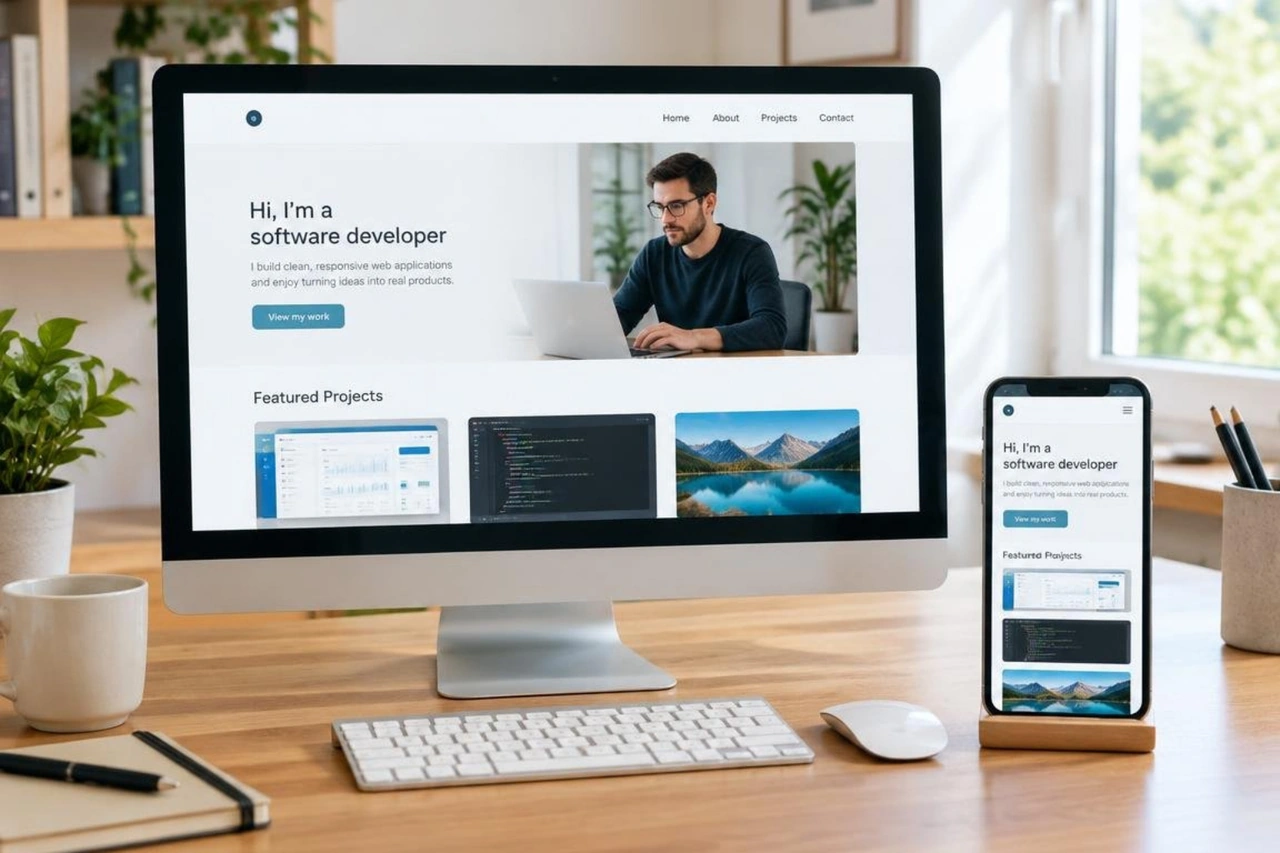


Start with two strong live examples: Brittany Chiang's portfolio uses clear navigation and direct project links, while Zack Ng's portfolio pairs each project with its specific tech stack and a concise description. When you browse these sites, look for practical ideas you can borrow: a clear headline, three to five standout projects, accessible code repositories or live demos, and a clean way to get in touch.
The best layout ensures a hiring manager understands your technical contribution, your problem-solving process, and the business impact of your work right away. A well-structured portfolio website for software developer roles makes that evaluation smooth and straightforward.
I'm Ben Visser, founder of Social Design House. For 16 years, our 10-person fractional creative team in Charlotte has focused on crafted digital experiences, brand strategy, and high-performing websites. We see how strong visual hierarchy and clear storytelling turn simple code repositories into compelling career assets. Let's look at design ideas that make your engineering projects easy to explore and assess.
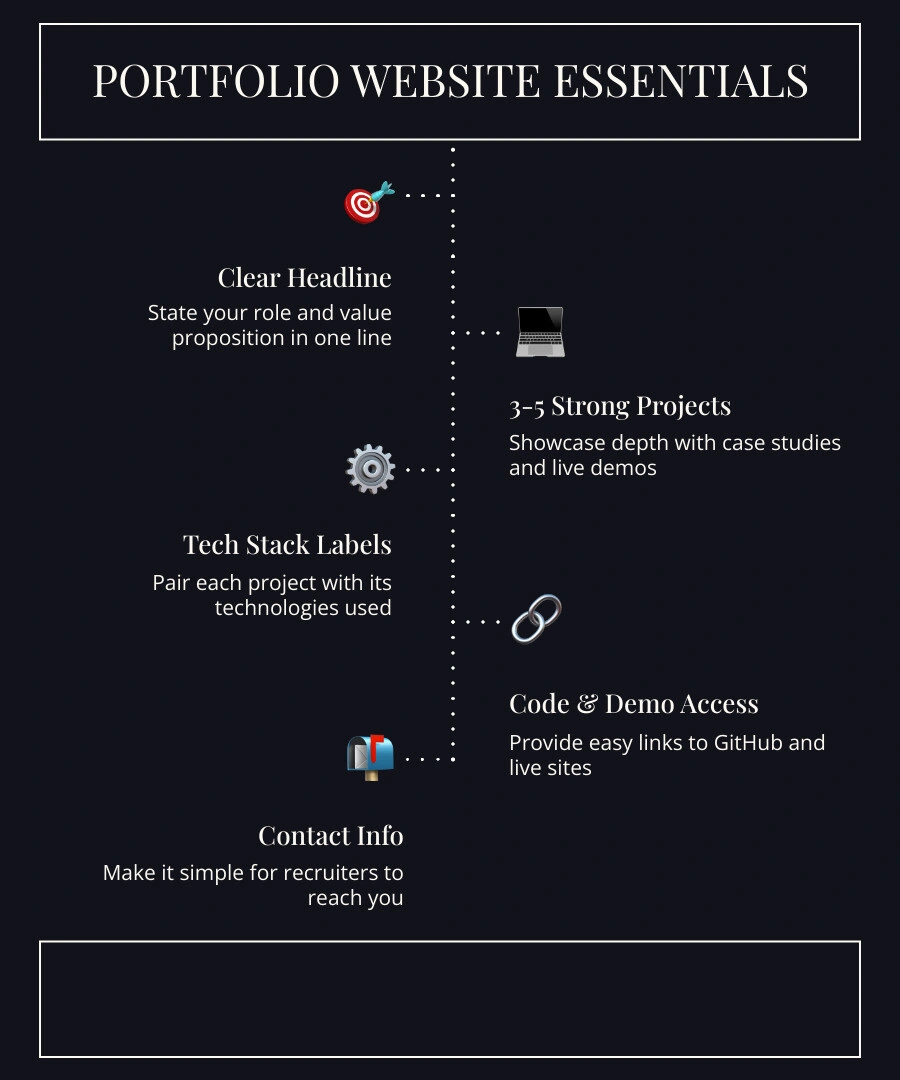
Handy portfolio website for software developer terms and resources:
A standout engineering portfolio balances clear visual hierarchy, readable typography, and solid technical proof. At Social Design House, one of our core mantras is that clarity is a gift. When a hiring manager lands on your URL, you have only a few seconds to communicate your core specialty, the systems you build, and the quality of your code.
Applying smart layout principles from our Custom Website Design Guide 2026 helps you construct an intuitive experience instead of throwing digital spaghetti at the wall. Whether you prefer clean minimalism, command-line interfaces, or dynamic motion, here are proven approaches to structure your digital footprint.
Developer ergonomics favor dark themes. A terminal-inspired interface or IDE-style aesthetic creates instant familiarity for technical recruiters and engineering peers. Monospace typography, subtle syntax highlighting, and bash-style navigation prompts turn your personal site into a natural extension of a modern development environment.
Take inspiration from Zack Ng's Coding Portfolio, which pairs clean dark aesthetics with concise project breakdowns. This style reduces cognitive load and directs immediate focus to your code architecture, live deployment links, and Git commit history without visual distraction. It also provides an excellent canvas for highlighting code snippets and technical milestones.
If you specialize in creative front-end engineering, immersive WebGL environments, Three.js canvases, or custom physics interactions show off your technical depth. Interactive design elements transform static screenshots into hands-on experiences that encourage exploration.
You can browse hundreds of developer portfolio designs for inspiration on Dribbble to see how creators balance high-end visual polish with snappy performance budgets. Keep interactive animations smooth, optimized, and lightweight so they enhance usability without slowing page load times or overloading mobile GPUs.
Engineering leaders look for structured problem solvers. A organized case-study grid arranges your work into clear business challenges, architectural solutions, and measurable outcomes.
A great benchmark is Tran Thach Nguyen's project showcase, which organizes diverse AI utilities, DevOps simulators, and full-stack web applications into distinct categories. Each card outlines the stack, system workflow, and business impact. This structure helps recruiters evaluate your technical decision-making and project execution.
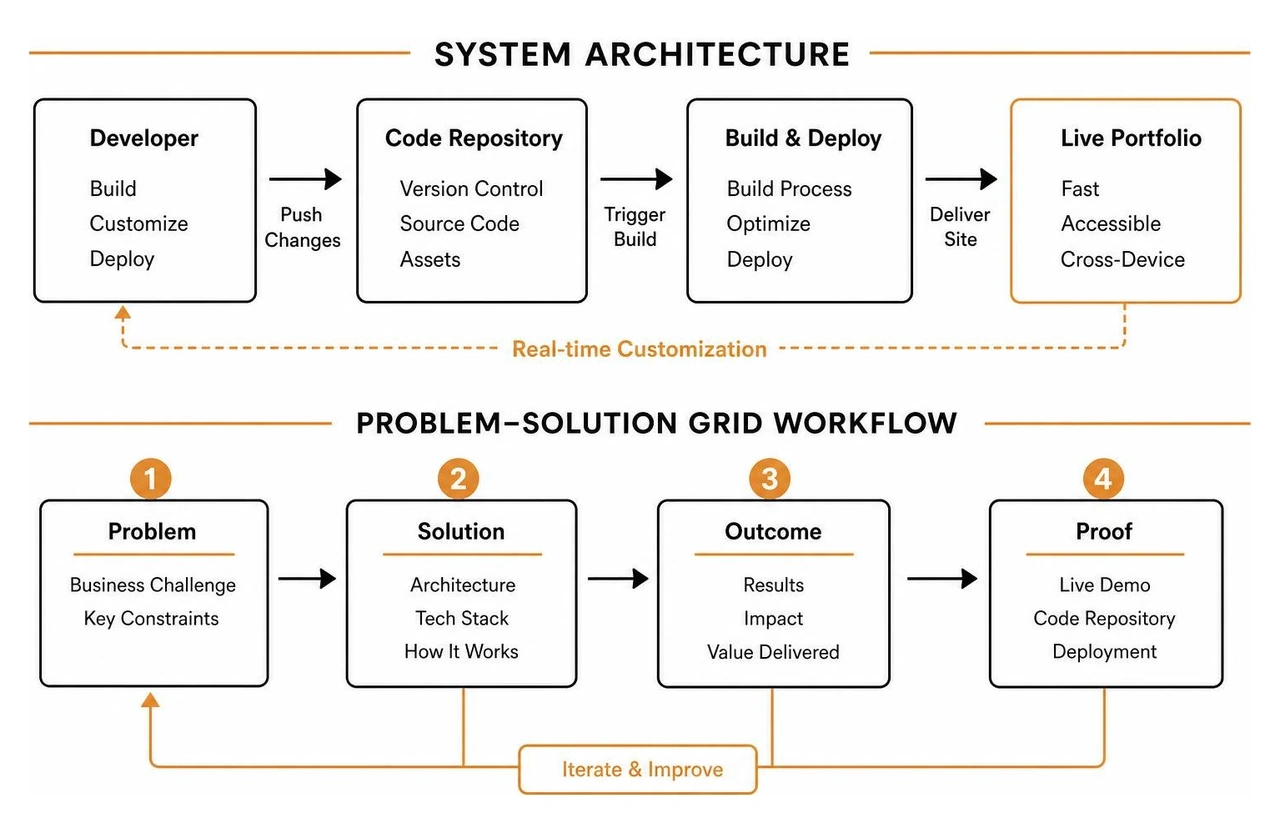
Every high-performing developer portfolio rests on solid foundational pillars. You need a fast, accessible, structured layout that works seamlessly across all screen sizes.

The essential portfolio anatomy includes:
A simple code repository link rarely tells the complete story of your engineering ability. Great case studies walk the reader through your technical decisions, database schema trade-offs, and third-party API integrations.
Look at Adam Smith's portfolio, which blends clean Framer Motion micro-interactions with detailed walkthroughs of full-stack applications, Next.js setups, and headless CMS architecture. You can also explore open-source layouts like the Nevin100 GitHub portfolio repository or clean live sites like Jacob Broughton's portfolio, Hitesh Gupta's site, and Berkley Olmstead's showcase to see how engineers present technical achievements clearly. Reviewing curated roundups like 12 software developer portfolio examples offers additional inspiration for component hierarchy and narrative flow.
Technical recruiters often spend under ten seconds scanning candidate profiles during initial screenings. Your portfolio must pass the scan test effortlessly.
To maximize discoverability and engagement:
For a deeper look at technical accessibility, clean information architecture, and structured search visibility, study our Web Design & Development Guide 2026.
Your technology stack reflects your engineering philosophy. Static site generation and modern component libraries provide rapid performance and straightforward deployment pipelines.
Deciding between a custom code build and a visual development platform depends on your primary career goals, available time, and target roles.
| Portfolio Approach | Development Speed | Customization Depth | Maintenance Overhead | Best Suited For |
|---|---|---|---|---|
| Custom Code (React / Next.js) | Moderate to Slow | Unlimited control over DOM and animation logic | Ongoing dependency management | Front-end and Full-Stack Engineers |
| Visual CMS / Webflow | Fast | High design precision with visual canvas | Minimal infrastructure management | Back-end Engineers and Product Leads |
| Pre-Made Static Themes | Very Fast | Limited to predefined theme components | Low | Junior Developers launching quickly |
When development velocity is critical, platforms like Webflow website development offer strong design control without complex server configuration or heavy maintenance.
For full-stack and front-end engineers, building on Next.js, React, and Tailwind CSS provides an ideal foundation. Server-side rendering and static export ensure fast delivery and solid search visibility.
Pairing a static site generator with Git-backed deployment on platforms like Vercel or Netlify enables automated CI/CD workflows on every push. If you are starting fresh, follow our practical guide on how a developer creates a website to structure your component hierarchy efficiently and establish clean styling tokens.
Focus on three to five exceptional projects rather than dozens of basic tutorial apps. Curate applications that demonstrate complete full-stack architecture, clean database schema design, robust error handling, and live production URLs. As you complete more advanced work, archive older practice repositories to keep your showcase focused and relevant.
Yes. Back-end and infrastructure specialists benefit from visual portfolios. Highlight your expertise with cloud infrastructure architecture diagrams, interactive API documentation, schema entity relationship maps, and CLI terminal outputs. Demonstrating how data flows through a distributed system proves technical competence quickly and effectively.
Use progressive disclosure across your layout. Provide clean, scannable summaries upfront with key performance metrics, tech stack tags, and quick preview buttons. Allow technical reviewers to expand into detailed architectural walkthroughs, database schema rationales, benchmark data, and raw GitHub source files when they want deeper detail.
Building an exceptional software developer portfolio is an iterative process. As you master new frameworks, optimize complex databases, and ship production applications, your digital presence should reflect that ongoing growth. Highlighting your best work with clarity and thoughtful design sets your technical capabilities apart in any hiring market.
At Social Design House, our 10-person creative team has spent 16 years bringing strategic craftsmanship and fractional creative support to growing organizations. If you want to build high-converting digital platforms or expand your market presence, explore our dedicated Website Design & Development capabilities and our specialized work in commercial real estate website marketing.