Learn how a modern brand identity builds trust and drives revenue. Explore core elements, best practices, and how to evolve your visual system.

.svg)


A Modern brand identity acts as the face and voice of your company. It shapes how people feel when they interact with your business. Research shows that 94 percent of first impressions are design-related. When your visual system looks clean and thoughtful, people naturally feel more comfortable doing business with you.
Consistent branding can increase revenue by 10 to 20 percent. The reason is simple. People buy from businesses they recognize and trust. When your visual language stays uniform across your website, social channels, sales presentations, and product packaging, you build strong brand equity over time.
For example, Coca-Cola ranks No. 7 on Interbrand’s Best Global Brands list with a brand value of $60.1 billion, serving roughly 2.2 billion beverages every single day. That level of recognition comes from decades of protecting and refining their core visual assets.
Building customer loyalty starts with making your business easy to remember. A solid identity builds trust because it shows care, attention to detail, and professional confidence. Understanding what's the difference between brand strategy and brand identity? helps teams build systems that look great and achieve real business goals. Explore our Brand Strategy services to see how clear positioning lays the groundwork for great design.
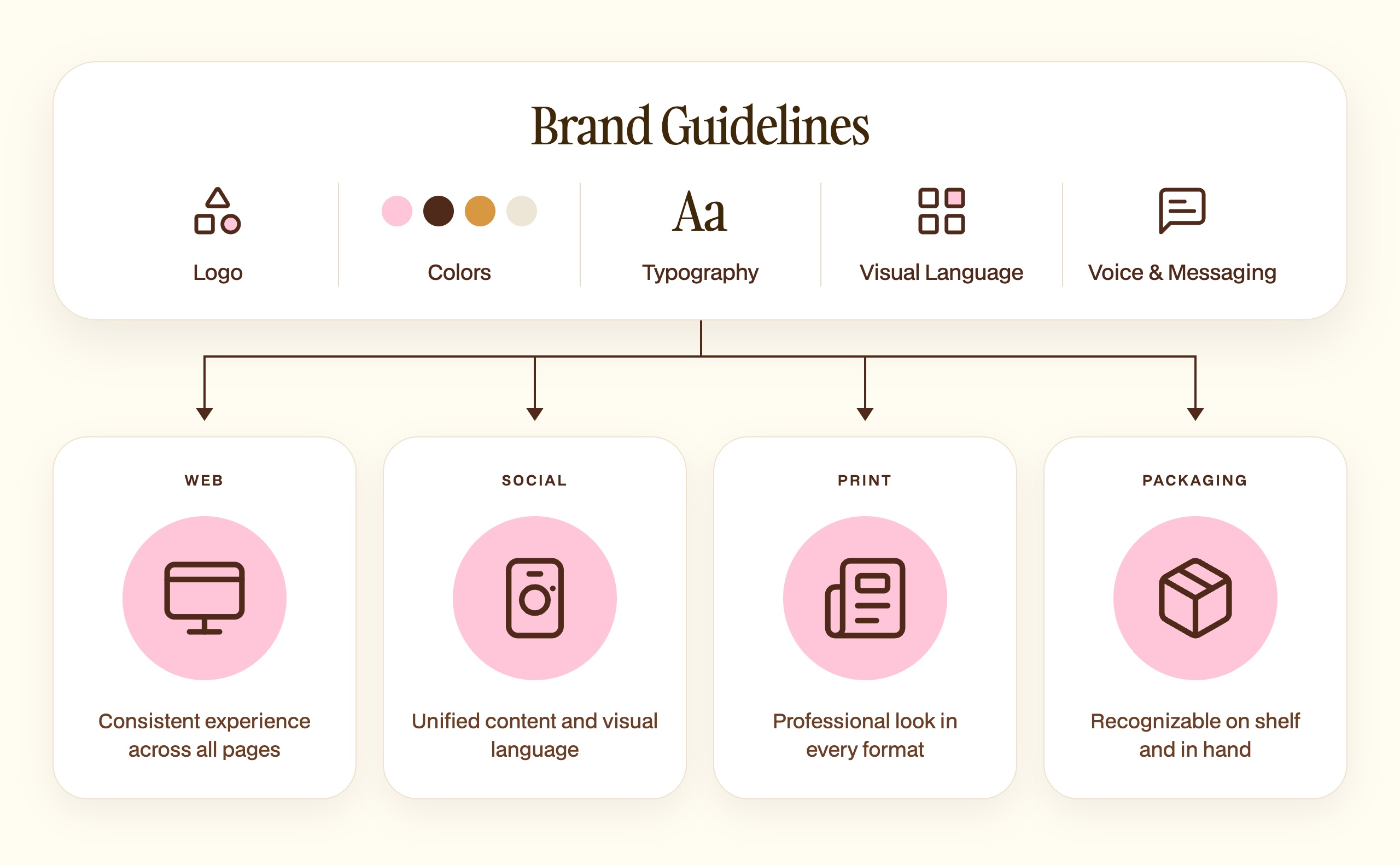
A successful visual system combines several distinct pieces into one cohesive experience. Every piece plays a specific role in communicating who you are.
Here are the key elements every team needs to define:
A great real-world example of physical design language comes from Golf Pride. Their Reverse Taper Putter Grip became the number one putter grip at a major global retailer within three days of launch after implementing a new Visual Brand Language that communicated performance directly through form and texture.
Maintaining a consistent identity across modern channels requires intentional planning. Digital environments move quickly, so assets must perform everywhere without breaking down.
Creating an identity that grabs attention starts with market clarity. Before sketching logos or choosing color schemes, spend time looking at competitors, researching target audiences, and pinpointing what makes your offer distinct.
Knowing how do you translate strategy into visuals? allows designers to convert abstract values like speed, reliability, or warmth into concrete design elements. Color psychology, line weights, and layout structure give visual form to your core strategy.
Brands face choices when updating their image. This table breaks down the differences between a gradual refresh and a full brand redesign:
StrategyGradual RefreshFull Brand RedesignPrimary FocusRefining existing assets, modernizing typography, and tightening color systemsResetting core positioning, recreating visual assets, and changing brand directionBrand EquityPreserves and amplifies high-value historical equityRebuilds brand perception from the ground upBest Used WhenCore strategy works well, but visual standards feel outdatedTarget audiences, business models, or core offerings undergo major shiftsImplementation RiskLow risk, smooth transition for existing customersHigher risk, requires careful customer communication
Updating established companies requires balancing legacy equity with modern expectations. Amplifying recognizable brand assets allows heritage brands to feel fresh without losing historical recognition.
For instance, Myers Industries generated double-digit sales growth in each of the seven quarters since its 'One Myers' brand introduction. Updating a 60-year-old corporate identity helped them unify acquired businesses under one clear culture and brand presence.
Recent developments show how legacy organizations handle identity shifts. The Coca-Cola 2026 Refresh Case Study details how the beverage company refreshed iconic elements like the Spencerian script and dynamic ribbon while using custom AI tools for global design governance.
Conversely, the Jaguar Reimagined Launch represents a complete brand reset, introducing a geometric wordmark and new makers marks under a creative philosophy termed Exuberant Modernism.

Technology plays a huge role in design execution today. Internal AI tools allow creative teams to search vast archives, run quick contrast checks, and maintain asset governance. At Social Design House, we built our AI Brand Framework to help growing teams organize strategy, speed up content creation, and maintain visual standards efficiently.
Brand identity design offers exciting paths for creative professionals. Companies continually seek skilled designers who understand both visual artistry and business strategy.
Common roles within the industry include:
Breaking into the industry requires mastering fundamental tools like Adobe Illustrator, Photoshop, and InDesign. Building a strong portfolio matters more than formal credentials.
To stand out, present your work as complete case studies. Show client discovery insights, initial concept sketches, competitor research, and final applications across digital screens, physical merchandise, and packaging layouts.
Most businesses update their visual identity every five to seven years. Small tweaks, like updating website typography or refreshing template layouts, can happen more frequently. Full rebrands are typically reserved for major company shifts, business acquisitions, or new product launches.
Consistency comes from building detailed brand guidelines and maintaining an easily accessible asset hub. Provide clear rules for logo clear space, print CMYK color values, web RGB/HEX codes, and typography scales across both media formats.
Yes, existing brands can easily be modernized while preserving core equity. By focusing on asset amplification, designers identify high-value elements like a signature color or iconic shape and refine everything around them. Read our guidance on can you redesign an existing brand or website? to see how visual updates protect established brand recognition.
Use this quick checklist to evaluate whether your current visual system is ready for growth:
Building a clear Modern brand identity takes time, strategy, and careful execution, but the rewards are huge. When your visual system feels connected across every customer touchpoint, recognition grows, customer trust deepens, and your team moves with confidence.
At Social Design House, we love helping growth-focused businesses find their sweet spot through sharp positioning, stand-out visuals, and functional Webflow and WordPress websites. Simple, not easy. Clarity is a gift. We're always excited to act as an extension of your team and turn big ideas into flexible brand systems that drive real business growth.
Learn more about our Brand Identity & Logo Design services and get ready to create something special. Excited to continue building awesome brand experiences together. Can't wait to share what we can create for your business.