Learn how cultural institution branding reduces cognitive overload and boosts audience recall with strategy, identity, and real-world case studies.
.svg)


Strong cultural institution branding starts by choosing one clear idea people can quickly remember, then carrying it through your name, voice, visual system, programming, website, signage, and visitor experience.
People make thousands of decisions every day, and their brains simplify information to avoid overload. In a crowded field that includes museums, galleries, live events, streaming platforms, and major entertainment brands, a clear mental image makes your institution easier to choose and easier to recall.
A logo alone cannot carry that work. A strong Perceptual Identity creates familiar signals across digital, print, and physical spaces while leaving room for exhibitions, artists, and communities to have their own voice. Clarity is a gift, especially when your programming is rich, varied, and always changing.
I am Ben Visser, founder of Social Design House, a Charlotte-based 10-person creative studio with 16 years of experience serving as a fractional creative team. We bring brand strategy, identity design, websites, content, performance marketing, and our AI Brand Framework to cultural institution branding work that helps organizations find their sweet spot.
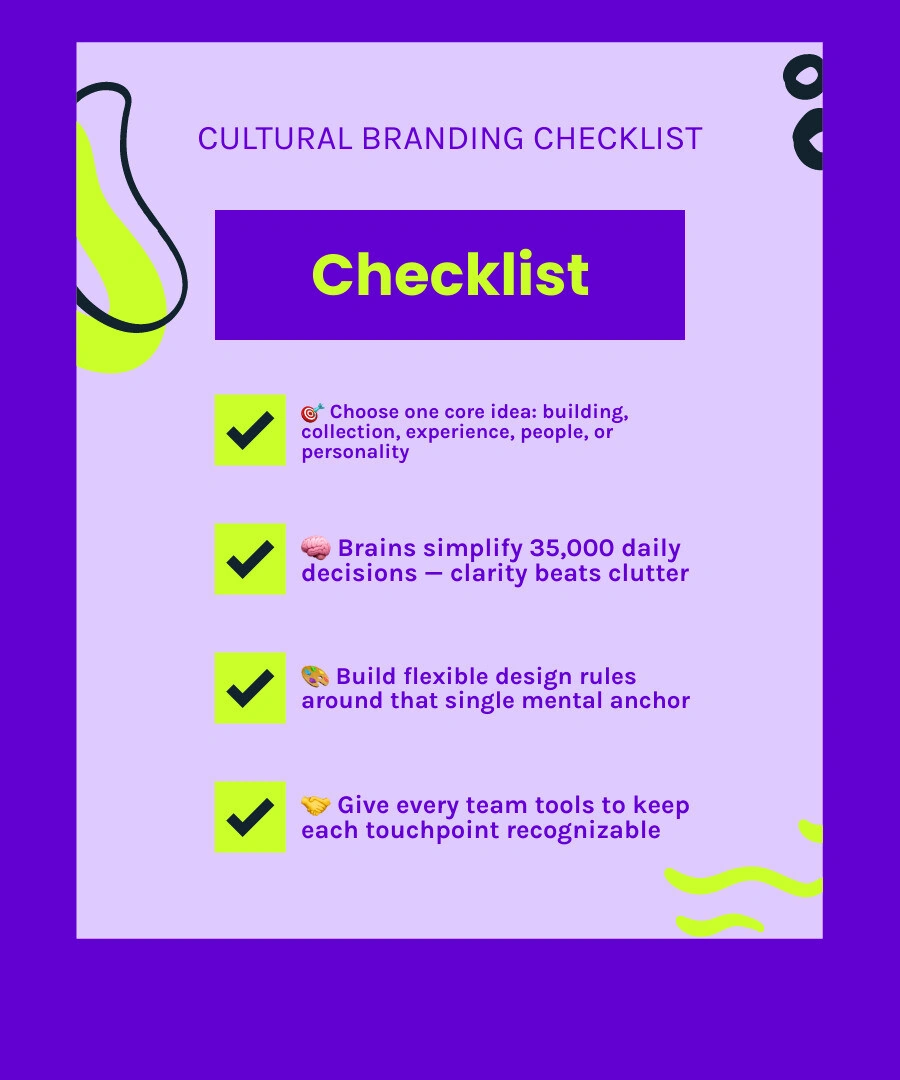
Quick look at cultural institution branding:
Our brains process a massive amount of sensory input every single day. Cognitive science shows that humans make roughly 35,000 decisions daily. To keep from wearing out, the human mind uses mental shortcuts to group, sort, and store information.
When people decide how to spend their weekend or where to direct their philanthropic gifts, they rely on quick memory structures. In our work with partners in the Industry: Arts & Museums space, we see how museums compete directly against theme parks, streaming apps, gaming platforms, and dining districts for limited attention.
To stand out, an arts organization must anchor itself around the Power of One. That means aligning every signal around a single, undeniable core thought.
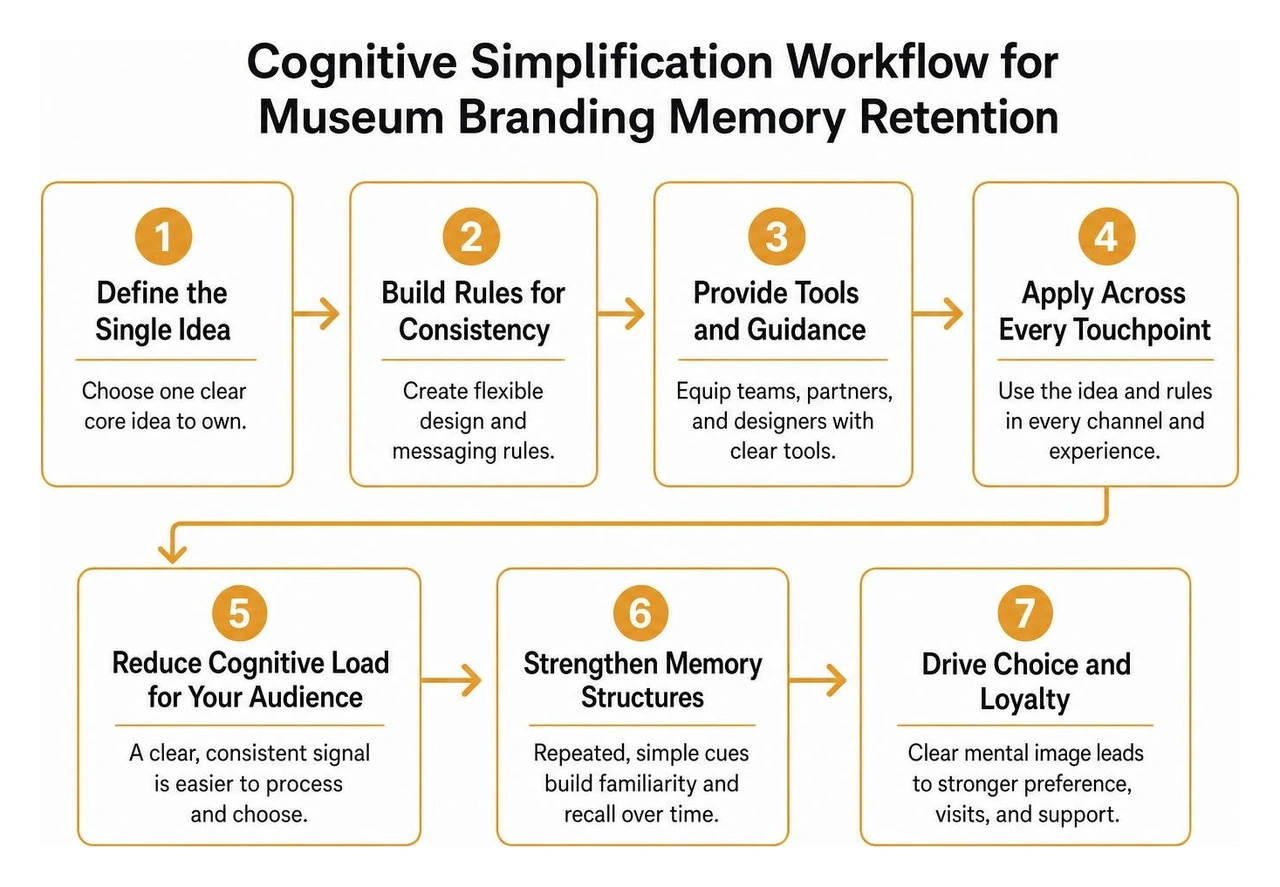
The mind constantly discards visual clutter. Subconscious associations form within milliseconds of seeing a poster, scanning an Instagram story, or walking past a banner.
Radical simplification gives cultural brands staying power. When an identity system tries to communicate twelve different programmatic initiatives at once, it communicates nothing memorable.
Simplifying a brand does not mean flattening its artistic depth. It means building a durable mental anchor that grounds every exhibition, workshop, and public talk. Simple, not easy. Sticking to a unified core idea takes discipline, but it creates deep long-term recall across every audience segment.
Every great cultural venue needs a specific foundation to build its identity upon. We partner with leadership teams using our Service: Brand Strategy process to discover which pillar genuinely defines their institution.
| Strategic Anchor | Primary Focus | Best Suited For | Real-World Example |
|---|---|---|---|
| Building | Architectural presence and iconic physical space | Institutions with landmark structures or distinctive spatial design | Guggenheim Bilbao |
| Collection | Curated objects, historic archives, or artistic focus | Venues with globally recognized, highly focused holdings | MoMA |
| Experience | Immersive, participatory visitor journeys | Interactive science centers, family spaces, and living history sites | Exploratorium |
| People | Founders, resident artists, curators, or community voices | Single-artist museums, cultural community hubs, or founder-led spaces | The Dali Museum |
| Personality | Provocative, rebellious, or irreverent institutional tone | Contemporary spaces aiming to disrupt traditional museum tropes | MONA |
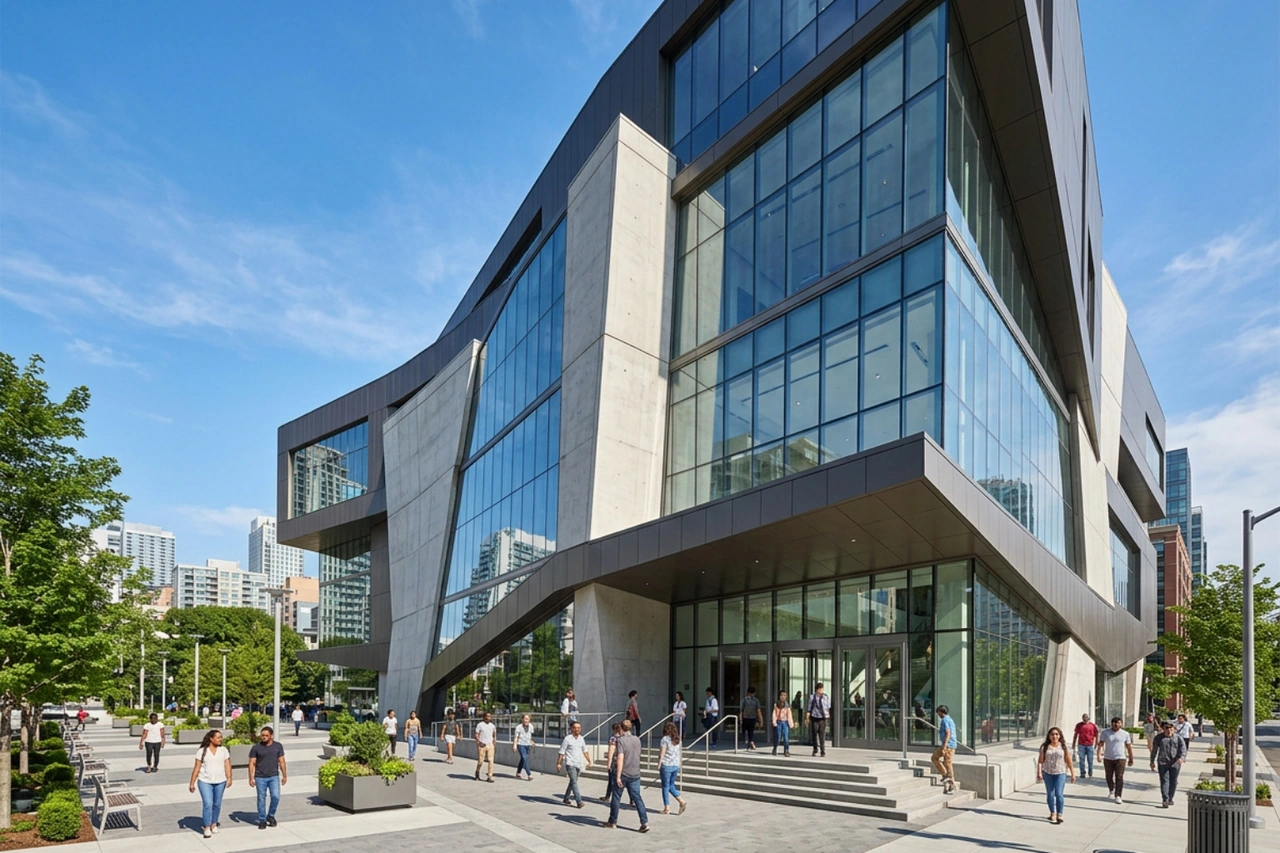
Landmark architecture can become the literal face of an organization. The titanium curves of the Guggenheim Bilbao turned the building itself into a global visual shortcut. When an institution has a structure that distinct, the building becomes the visual anchor for tickets, merchandise, and digital campaigns.
For other spaces, the collection is the primary driver. The Museum of Modern Art built its identity around modern and contemporary mastery. That specific focus shapes visitor expectations, gift shop curation, and publication design worldwide.
Some cultural centers shine brightest through experiential wonder or bold leadership voices. When an organization focuses on visitor discovery, hands-on participation drives the entire brand narrative.
In other settings, a fearless attitude sets the tone. The Museum of Old and New Art in Tasmania built an international reputation by rejecting academic museum formality in favor of a provocative, delightfully irreverent personality.
For institutions looking to clarify these attributes, pairing strategy with focused Service: Brand Identity & Logo Design helps turn internal values into distinct visual elements.
A logo is just one piece of a much larger puzzle. A true Perceptual Identity shapes how a person feels during every stage of their journey, from browsing an exhibition schedule online to walking through the main gallery doors.
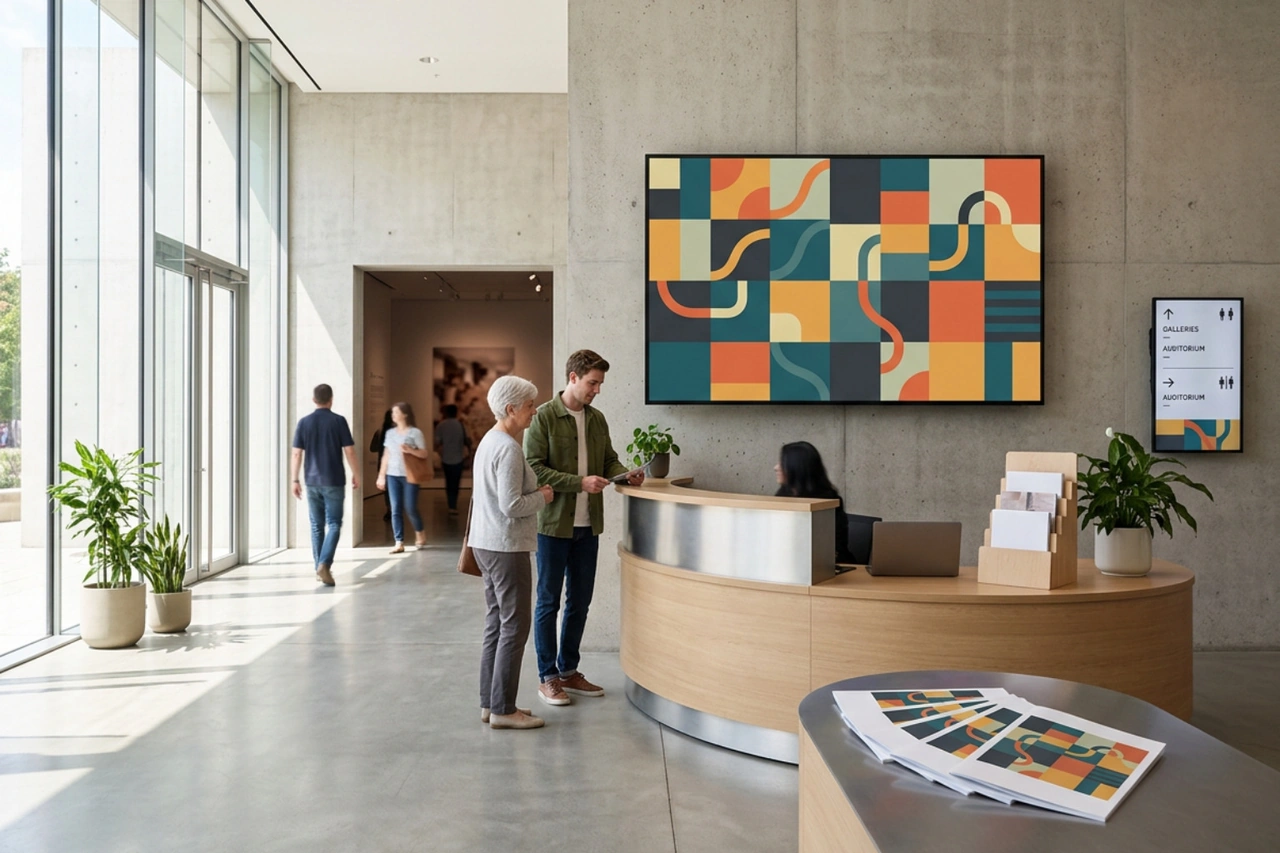
When we collaborated on Work: The Mint Museum, we focused on creating a vibrant, inviting digital environment that reflected the physical energy of their galleries. A unified perceptual system coordinates typography, material choices, color palettes, and environmental signage to tell one cohesive story.
Cultural institutions need visual toolkits that flex without breaking. A dynamic system provides structured rules while leaving room for creative expression across rotating exhibits and seasonal campaigns.
Exploring approaches to modern brand identity shows how modular systems allow teams to move fast while keeping their brand instantly recognizable. For instance, the award-winning brand refresh documented for the Mo Museum | Mo Museum Brand Refresh | The One Club utilized a living plane graphic motif, proving that structured flexibility yields incredible cultural resonance.
Museums often juggle educational programs, permanent archives, touring showcases, and community galas. If each sub-program invents its own visual style, the parent brand gets lost.
We saw the power of unified storytelling while designing for the Work: Greensboro History Museum. By establishing a primary institutional umbrella, every historic gallery, temporary display, and community workshop connects back to one trusted civic home.
Strategic rebrands create measurable gains in foot traffic, donor engagement, and international reach. Thoughtful design changes the trajectory of historic and contemporary institutions alike.
Major cultural repositioning projects provide valuable data on how clear identity systems drive public participation:
Cultural institutions often navigate complex governance boards, community committees, and civic oversight. In civic creative ecosystems, such as the initiatives supported by Arts and Culture - City of Charlotte, balancing stakeholder input with artistic vision requires clear communication.
Charismatic museum directors and passionate curators bring bold ideas to the table. When designers and leadership collaborate openly, bureaucratic hesitation gives way to confident, lasting brand choices. Be the meeting you want to go to. Keeping alignment sessions productive and collaborative allows visionary ideas to flourish within structured governance models.
Honoring history while refreshing a visual identity requires careful auditing of legacy assets. We often preserve iconic architectural shapes, historic colors, or classic emblems, refining their execution with modern typography and clean digital layouts. You can learn more about how our team approaches existing organizational updates in our guide covering FAQs: Can you redesign an existing nonprofit brand or website?.
Brand strategy defines the foundational thinking: who the institution serves, its primary anchor idea, its voice, and its competitive positioning. Brand identity is the tangible visual and verbal expression of that strategy, including logos, typography, color palettes, motion systems, and signage. We break down this relationship in detail in FAQs: What's the difference between brand strategy and brand identity?.
Consistency relies on clear, accessible governance tools rather than rigid, complicated rulebooks. Providing internal teams and external agencies with modular design systems, pre-built layout templates, and intuitive digital asset libraries ensures every poster, ticket, website update, and social asset aligns with the core brand. Explore our step-by-step translation process in FAQs: How do you translate strategy into visuals?.
Building a lasting cultural brand requires finding the single sweet spot where your history, your collection, and your community meet. When an arts organization commits to one clear mental image, visitors remember why your space matters in a busy world.
Social Design House is a Charlotte-based 10-person creative studio with 16 years of experience operating as a fractional creative team. We're an extension of your team, bringing deep care to every brand strategy, visual identity, Webflow or WordPress build, copywriting initiative, performance marketing push, and our AI Brand Framework.
If your team is ready to build an identity that connects with audiences across every gallery and screen, connect with our Charlotte branding and website design agency. Excited to continue building memorable brand experiences together, so let's find your sweet spot.